
x
N
G

The Dutch Oven and the Mango — Why the Vessel Is Never Just the Vessel
A Tramontina collaboration — and an Alphonso cobbler that made me put the spoon down.
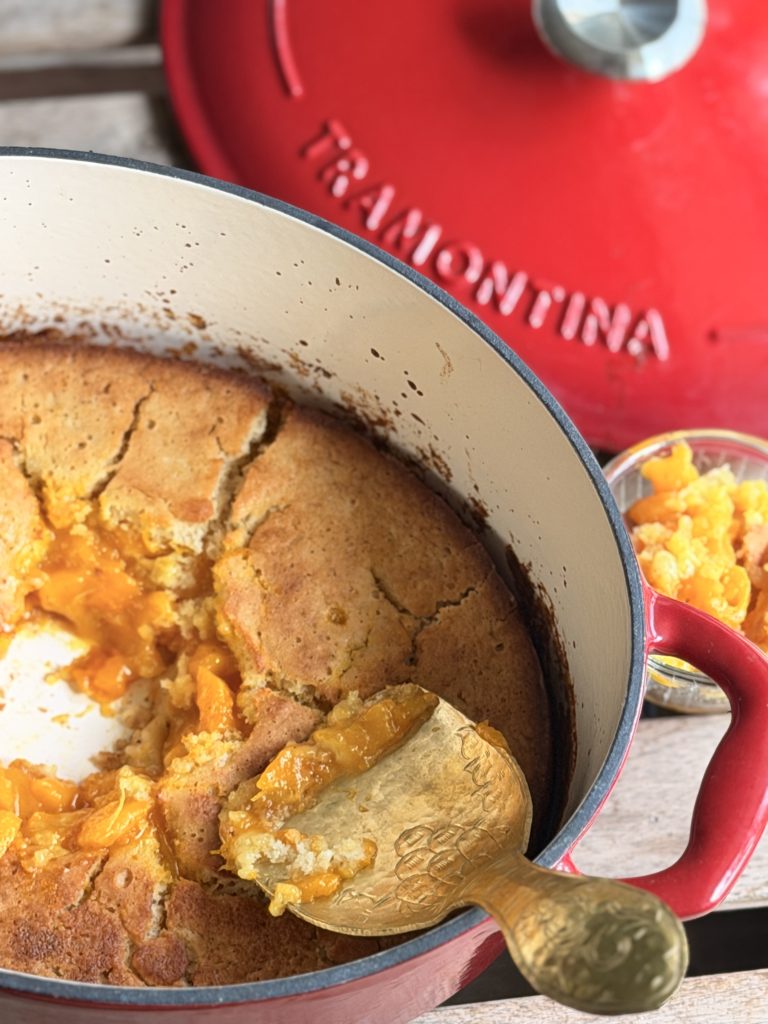
Alphonso Cobbler, Tramontina Dutch Oven
The Vessel Changes Everything
I feel Dutch ovens are the most versatile vessels a kitchen can own. Not a pan, not a pot — and the best part, they are truly capable of a variety of purposes in cooking style and techniques. My relationship with them started a long time ago, around Covid, when I was baking (just like the world was). One of my first serious kitchen investments was a well-made Dutch oven — and it changed how I thought about cooking at home in a fundamental way.
When I came back to India and began working across professional kitchens again, I found that good cast iron was harder to come by at a sensible price than it should be. Then Tramontina arrived in India — and I’ll be direct about this: it does the job perfectly, at a price point that doesn’t make you dig deep into you pockets. For a brand with over 115 years of manufacturing history behind it, that accessibility is definitely not a compromise.
The House Behind The Pot
Tramontina entered India in 2024 with a clear mandate — to offer chefs and establishments the tools they need to deliver exceptional dining experiences, leveraging over a century of expertise and commitment to excellence. That’s not marketing language in this case. It’s a statement of intent backed by a supply chain that has been serving professional kitchens globally for decades.
In 2013, Tramontina expanded its professional kitchen line specifically for the food service sector — hotels, restaurants, and cafeterias — delivering a complete service from planning and design through to assembly and operation. The same rigour that goes into a professional kitchen installation goes into the enamelled Dutch oven sitting on your home stove. That continuity of standard is what separates a serious cookware brand from a lifestyle one.
Within its first year in India, Tramontina sold over 500,000 units of cookware, with strong adoption in both consumer households and the HoReCa segment. The brand’s knives in particular gained traction among chefs and culinary professionals across hotel chains, independent restaurants, and cafés. The professional kitchen community here recognised what it was looking at quickly. That’s a meaningful signal.
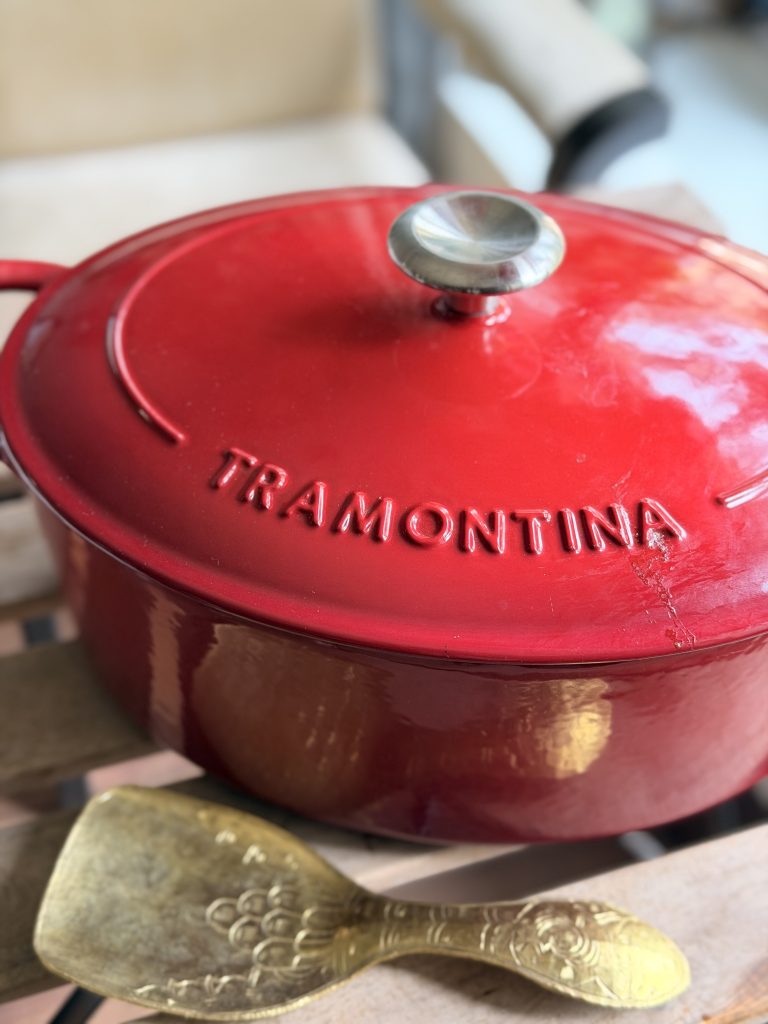
Alphonso Cobbler, Tramontina Dutch Oven
What This Dutch Oven Actually Does
The Tramontina Enameled Cast Iron Dutch Oven is a specific thing. Not just cast iron — enamelled cast iron, which means the interior surface is non-reactive, easy to clean, and visually something worth putting on the table. That deep red exterior is not decoration. It is the whole point of serving straight from vessel to table — which is how I use it, every time (It is a showstopper and one doesn’t even need a flower arrangement to boost your table setting)
The technical specifics matter here. Cast iron retains heat at a level that no stainless, no aluminium, no non-stick surface can match. Once it reaches temperature, it holds it with an evenness that professional chefs rely on for exactly the kind of cooking that requires patience — braises, slow cooks, bakes that need consistent bottom heat without hot spots. The enamel interior means you can cook acidic ingredients — tomatoes, citrus, fruit — without the metallic interaction that bare cast iron produces. It is, in the most literal sense, built for this very recipe which I had to attempt this seasons — the cobbler.
Incidentally, I’ve used this pot for a Malai Kofta that came out with a depth of flavour I hadn’t expected. A country bread that had a crust worth the effort (you can pop this entire lid-on vessel in the oven to give you the perfect baker-style bread / sourdough). And most recently, the thing that started this piece — an Alphonso cobbler that made me put the spoon down and basically wonder if this should be shared.
The Alphonso Diaries
There are about six weeks in the year when the Alphonso is at its absolute peak. Every person who grew up in India knows this — the anticipation, the specific smell of a crate of them arriving, the inevitable grief when the season ends. I have never been someone who wastes that window. (apart from the quintessential ras-puri thali)
This year I made a cobbler. It is not a complicated dish. It’s a fairly easy put-together — batter poured over melted butter, stewed spiced mango piled on top, yes the very same one its cooked in — this cast iron placed in the oven, and then just a wait to bake.
What comes out is not what you expect from a fruit dessert. The cast iron caramelises the mango base rather than stewing it. You get depth where you’d expect sweetness. A slight char at the edges. The biscuit top goes genuinely golden in a way that a ceramic or glass baking dish simply doesn’t produce.
The colour when you lift the lid is, I’ll say it plainly, one of the better things I’ve seen come out of my kitchen.
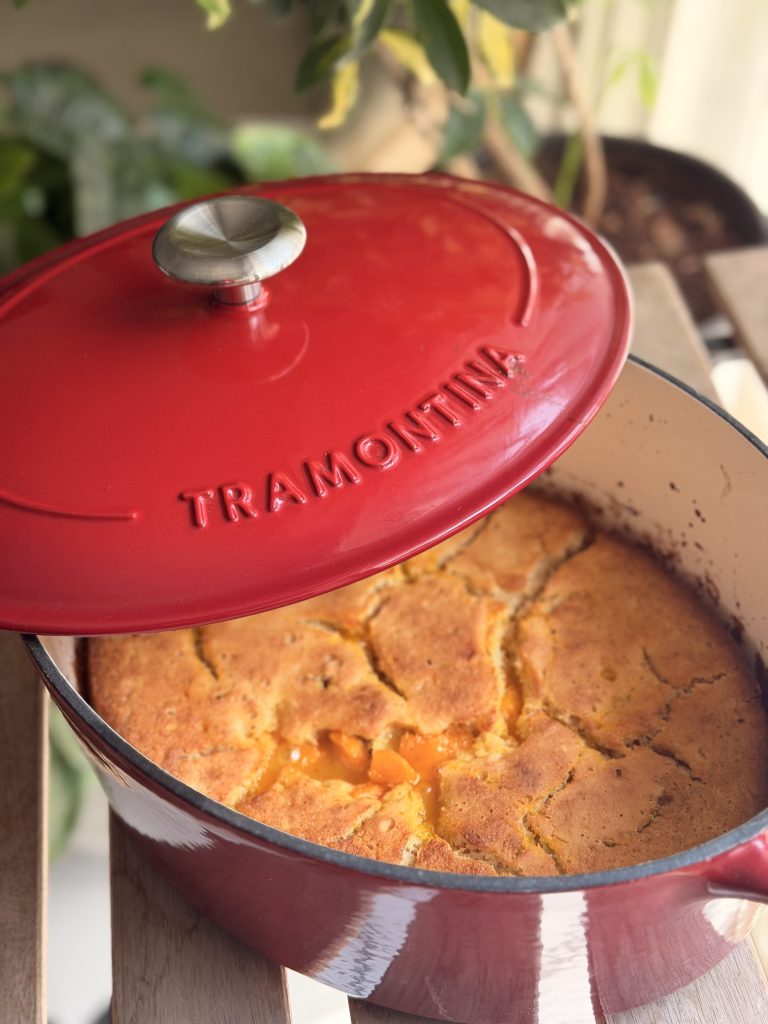
Alphonso Cobbler, Tramontina Dutch Oven
Alphonso Cobbler
Serves 4–6. Bakes in the Tramontina enamelled cast iron Dutch oven.
- 1⁄2 cup butter
- 1 cup all-purpose flour
- 1 cup granulated sugar, divided — adjust depending on how sweet your mangoes
- 3 tsp baking powder
- 1 tsp vanilla extract
- Pinch of salt
- 1 cup milk
- 6 Alphonso mangoes, cut into generous chunks
- 1 tbsp freshly squeezed lemon juice
Ground nutmeg to taste
Meathod
Preheat your oven to 375°F / 190°C.
Melt the butter directly in the Dutch oven — on the stove, low heat, watching it go from solid to liquid to gently foaming. Pour it so it coats the base evenly and leave it there.
In a bowl, combine the flour, half the sugar, baking powder, and salt with a fork — don’t overthink this, you want it just combined. Add the milk and vanilla and stir until you have a loose batter. Pour this over the butter in the Dutch oven. Do not stir them together. This is important. The layers work because you leave them alone.
In a separate pan, combine the mango chunks, lemon juice, the remaining half of the sugar, and several generous dashes of ground nutmeg. Bring to a boil over high heat — 3 to 5 minutes, stirring constantly, until the sugar dissolves and the mango begins to release its juice. Pour this over the batter. Again — do not stir.
Place in the oven and bake for 38 to 45 minutes, depending on your oven, until the top is genuinely golden brown and the edges are bubbling. The cast iron will hold heat long after it comes out — give it five minutes before you serve.
Serve warm, straight from the Dutch oven. A dollop of whipped cream or a scoop of vanilla ice cream alongside — both are correct answers. On its own is also correct.
A Final Note
The best kitchen equipment doesn’t make you a better cook. It removes the obstacles between what you started with and what ends up on the plate. A Dutch oven that holds heat evenly, that moves from stove to oven to table with ease, and just becomes a part of your everyday — that is what a serious kitchen tool do.
This post is written for a collaboration with Tramontina India. The Dutch oven was provided for this feature. All opinions, recipes, and the decision to eat the entire cobbler in one sitting are entirely my own.
The Tramontina enamelled cast iron Dutch oven is available at tramontina.in and across 2,000 retail outlets in India.

Nikhil Merchant
Hospitality Writer | Culinary & Bar Consultant | Restaurateur | Brand Evangelist