
x
N
G
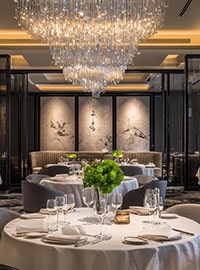
No Reception, Just Champagne
Sultry Nights and Island Life in the Lap of Luxury with Ozen Reserve Bolifushi
You land on water. That’s the first thing that catches you about the Maldives — not the count of islands, close to a thousand of them scattered across water that shifts from turquoise to navy depending on the light, but that the plane genuinely seems to be touching down on the sea itself, the runway appearing out of nowhere at the very last second. It’s absurdly close for something this far removed from real life — two and a half hours out of Mumbai, and you’re in Malé, straight into Ozen’s own private lounge at the airport, skipping the idea of a regular terminal altogether. From there it’s a private catamaran, air-conditioned, twenty unhurried minutes with real sea salt on your lips by the time you dock, and just as you alight on the island, a glass of champagne turns up in your hand. A day or two in, you realise it’s their own private label, and that this one glass has already told you everything about how the hotel operates: even the welcome drink is spot on.
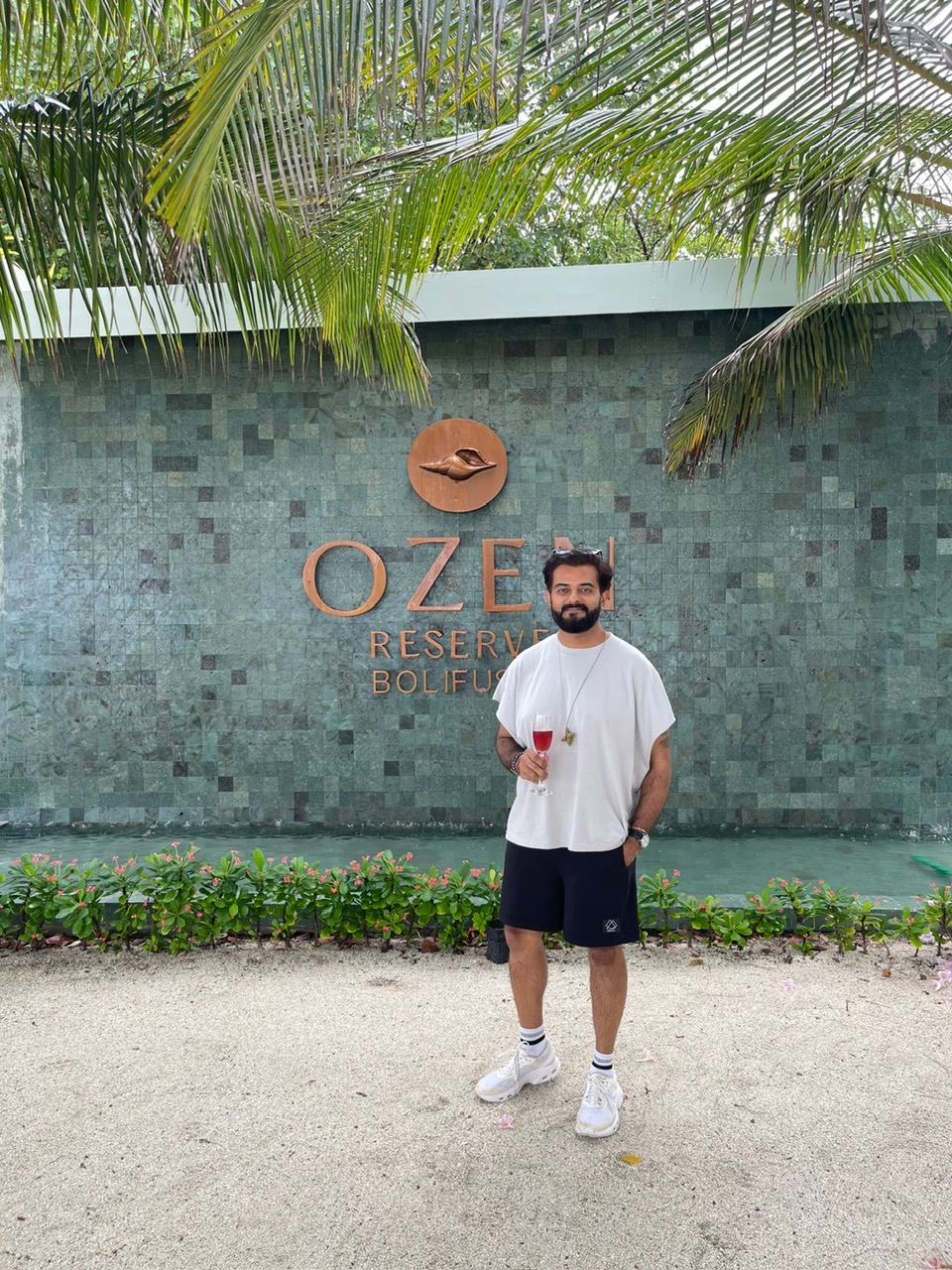
An observation somewhere around day two that Maldivians seem constitutionally incapable of a bad mood around guests, and there’s something real in that beyond the standard resort-brochure line about warm service. Tourism isn’t an industry adopted here so much as a culture — simply what the islands do, the way certain families are just good at hosting — and you end up feeling like you were overdue for a holiday and finally showed up.
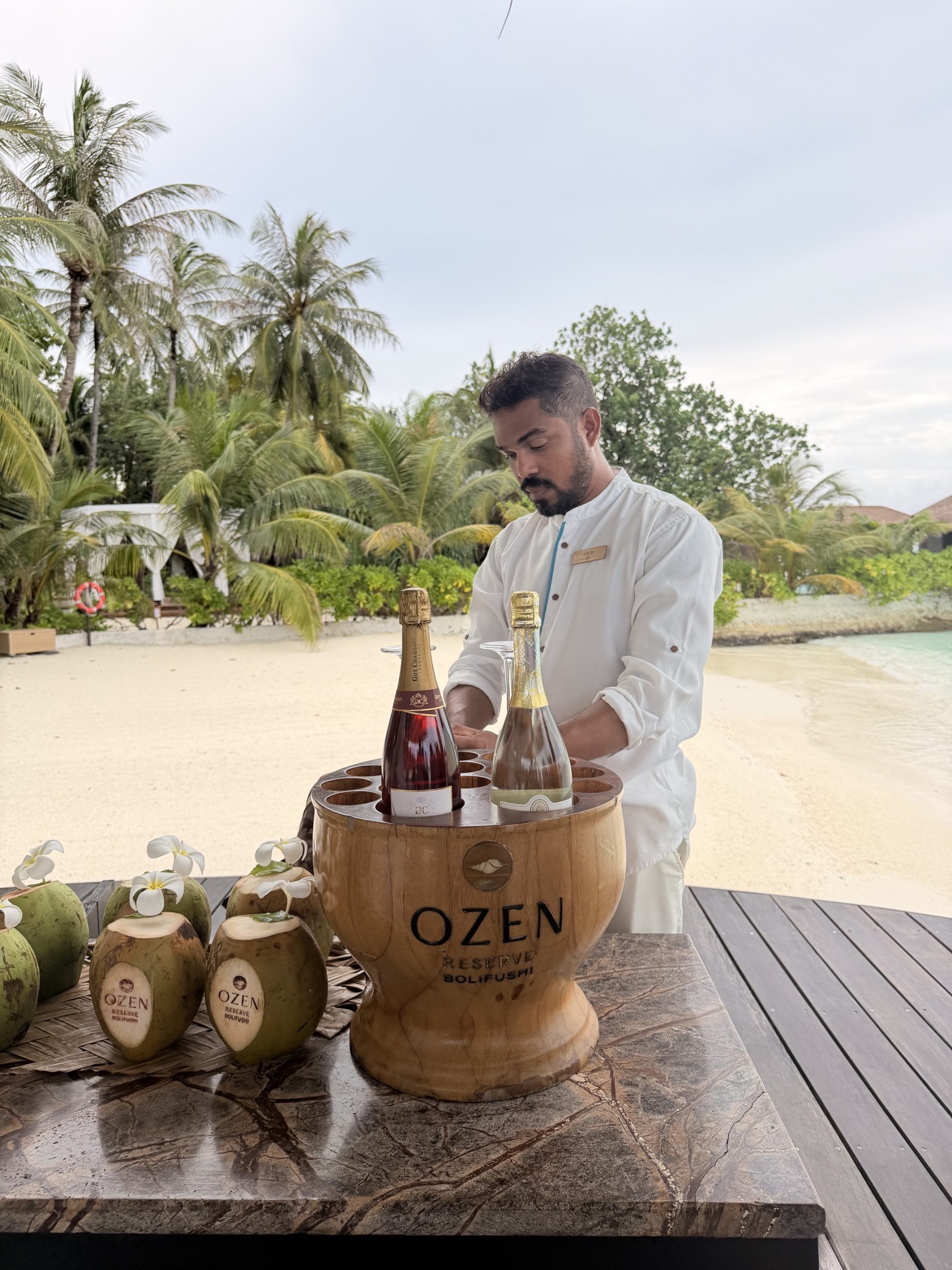
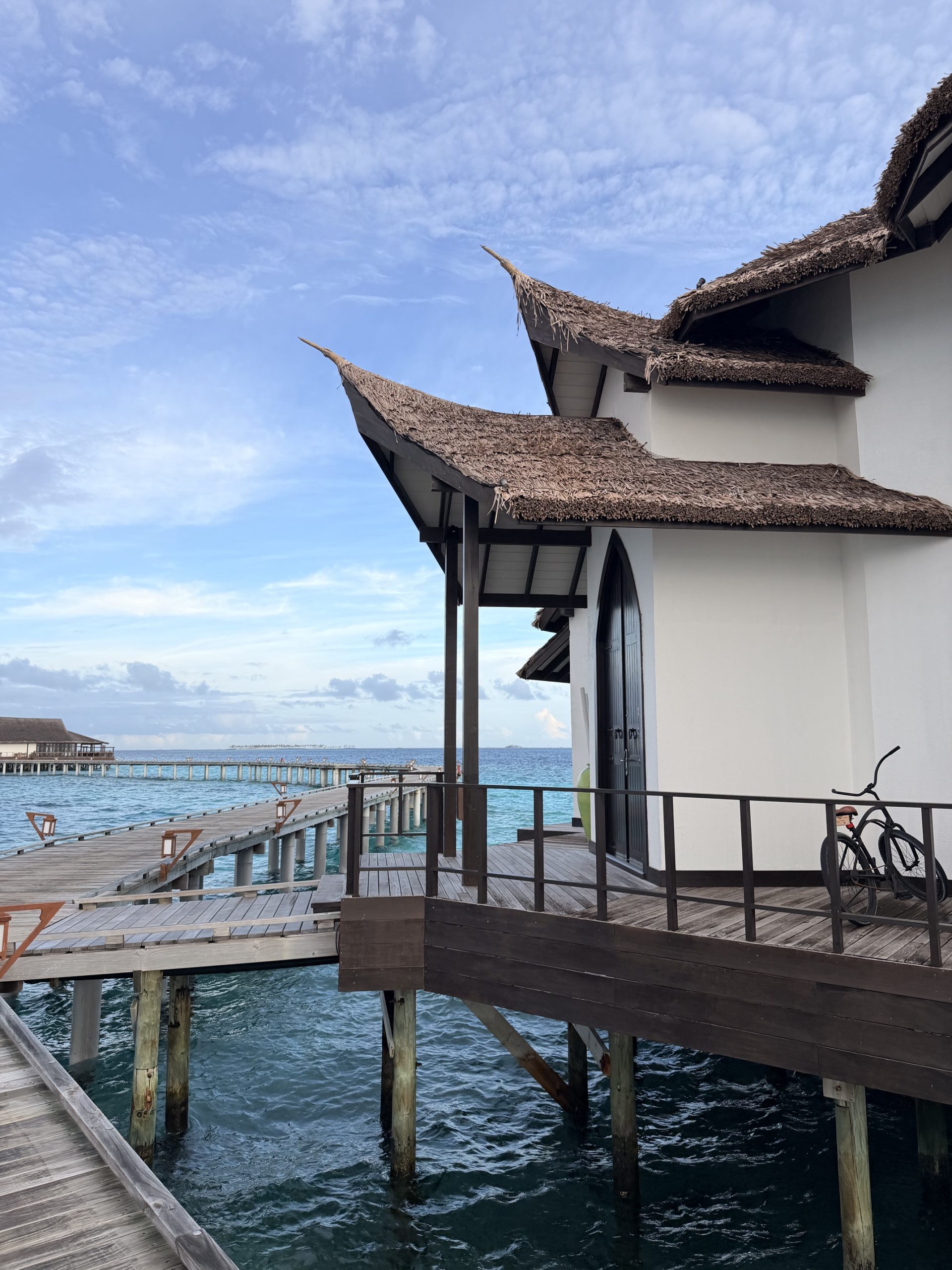
There’s no reception desk at Bolifushi. Instead you’re introduced to a Hiyani, already messaging you on WhatsApp before you’ve stepped off the jetty, who walks you toward whichever half of the island you picked at booking — sunrise or sunset, Earth villas or the overwater ones on stilts. I took sunrise, and on the strength of evenings at the bar with a very good view, which meant mornings were not the alarm clock but lilting breezy, salty air and the waves doing the wake-up call.
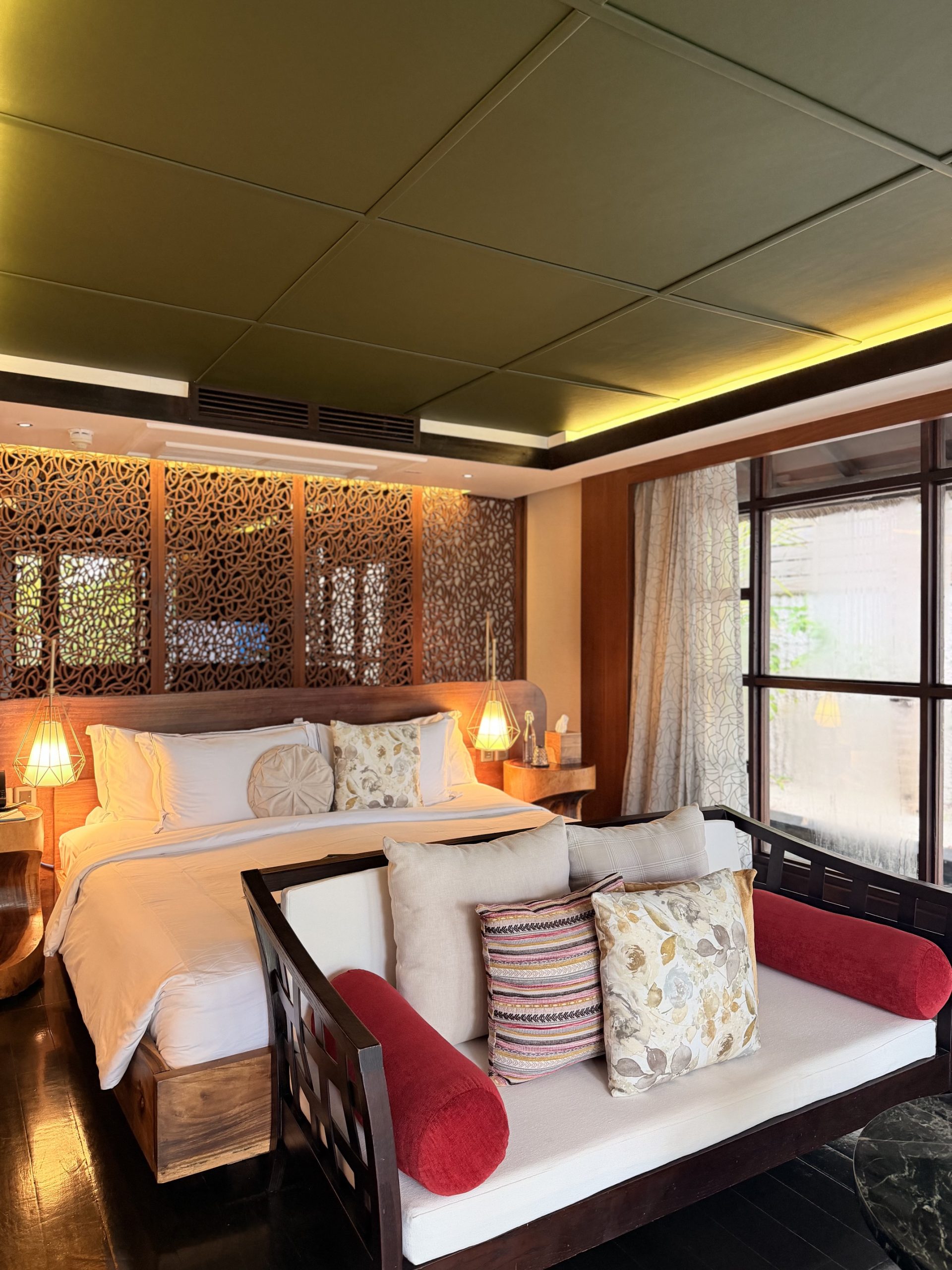
I was in a two-bedroom Earth Pool Reserve villa — one tier below the Royal Reserve, more on that shortly — with a private plunge pool, a few steps to the beach, Chopard amenities in the bathroom, and robes soft enough that I asked, quite seriously, if they were for sale. The RESERVE plan is the property’s top all-inclusive tier, and once you’re checked into it the arithmetic just stops: five restaurants rotate through your meals, the minibar restocks itself before you’ve even noticed that it ran low. I walked out spotted my ride for the stay, a bicycle which was tagged with my name, so I could go explore a stretch of island that felt now already my own.
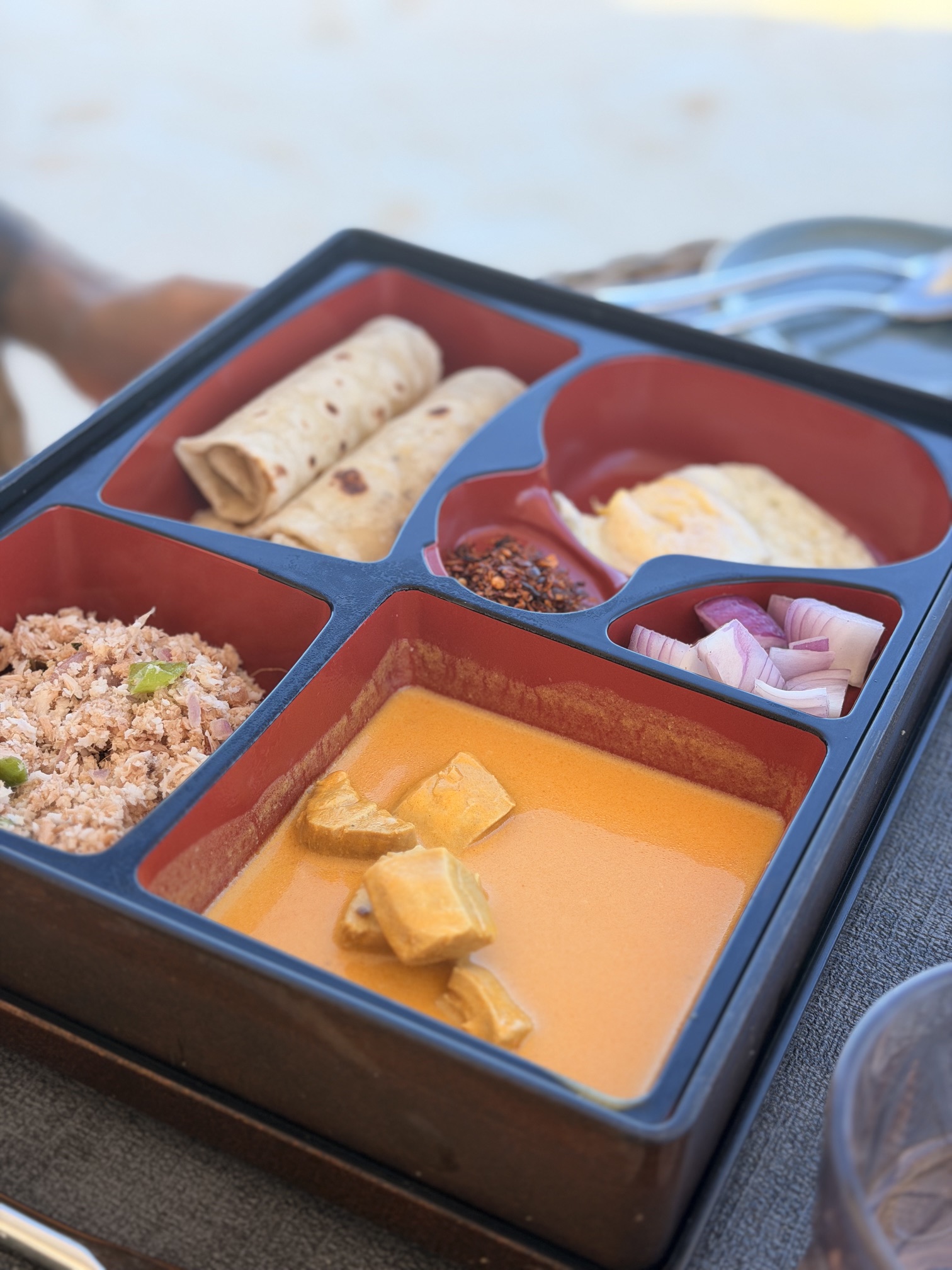
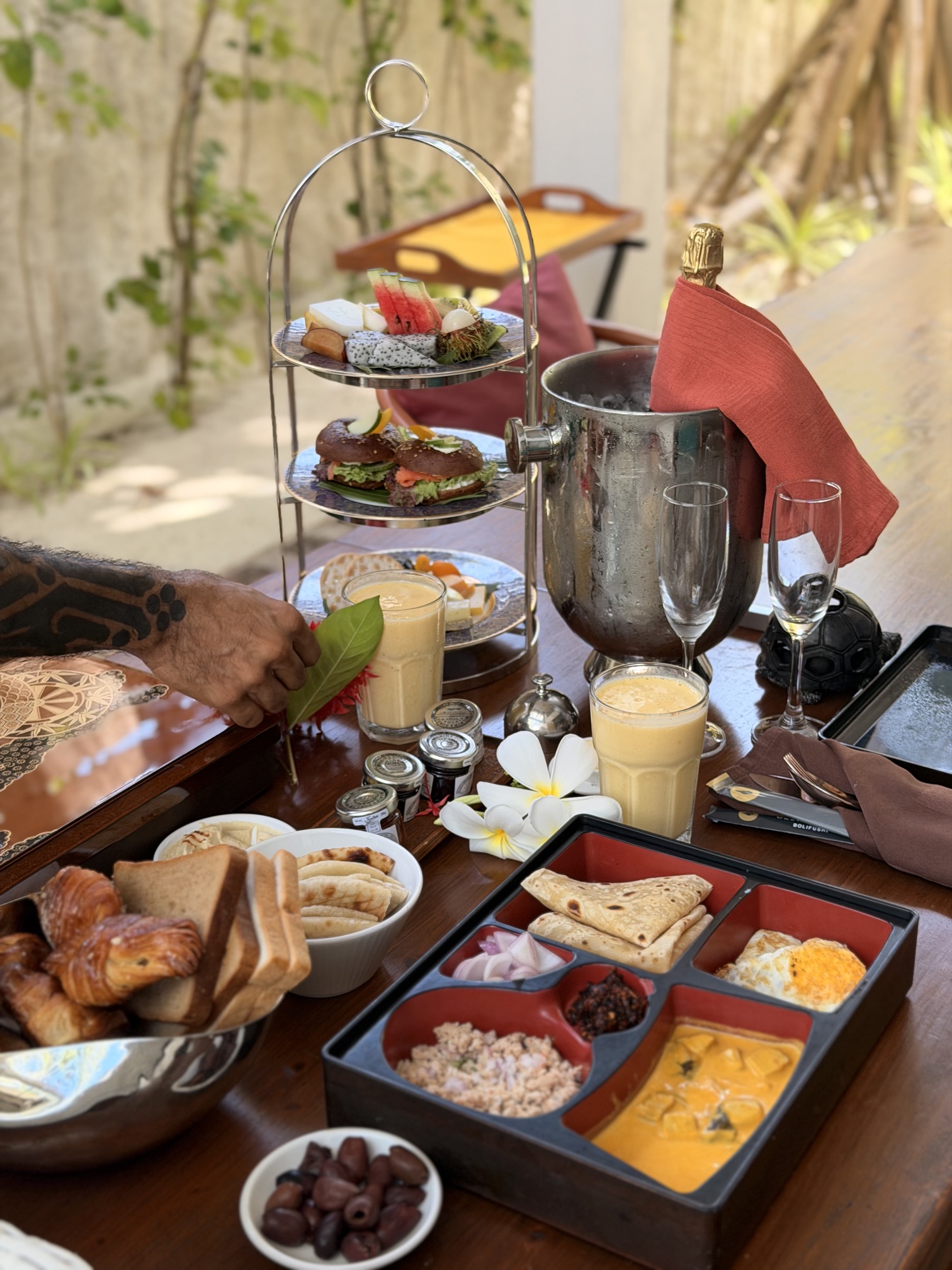
Mornings begin at Vista Del Mar, the all-day dining room built around a “by the ocean” idea that mostly just means the sea is doing half the work for them. The Maldivian breakfast is the one worth ordering without fail — reef tuna, onion, chilli, roshi on the side, a coconut-heavy fish curry, a fried egg alongside because some healthy-habits are worth continuing — though there’s a live sushi counter and eggs to order for anyone easing in more gently. Dinner turns à la carte, catch of the day next to a fairly serious steak, and I noticed other guests around us ordering things closer to a lunch menu — sandwiches, pizza — which tracks with a few reviews I’d read flagging the dinner card as slightly more casual than the setting suggests. Didn’t bother me. I wasn’t there for sandwiches.
Saffron has an Indian thali, and it’s run by a chef with an Oberoi background, which explains why the butter chicken and the bread off the live tandoor are quite delightful, a notch up for a resort thali that one can be usually bothered with. It’s served all at once, rather than coursed out, which is traditional — but does mean less room to manoeuvre if you’re staying long enough to want variety. One TripAdvisor review I came across, half joking, said Saffron’s only real gap was proper Indian reds — a Nashik Cabernet or two — instead of leaning entirely European on the pairing. Fair point, and one I’d make myself whilst I settled with a lovely robust burgundy.
Sangu Beach leans Levantine — good hummus, olives and capers with a generous hand, fish grilled thankfully not too complicated — and turns into a livelier spot after dark, with belly dancing on certain nights and a champagne brunch that comes up often enough in other guests’ accounts that it’s clearly not a one-off. The bar staff here get named constantly in reviews, which tends to be the real tell for how a bar’s actually run, rather than how it’s styled.
Soyi, the pan-Asian kitchen, is sharper and punchier than the others — dumplings, a good pork belly fried rice, kung pao chicken with quite a bit of heat for your to sit up and notice — which by day three felt like exactly the shake-up the palate wanted. It runs on a more restricted schedule than the others, so it’s worth asking your Hiyani early rather than assuming you’ll get a table on demand. Cozy, intimate and well, get the sake!
The wine program, or why I kept going back to Origine
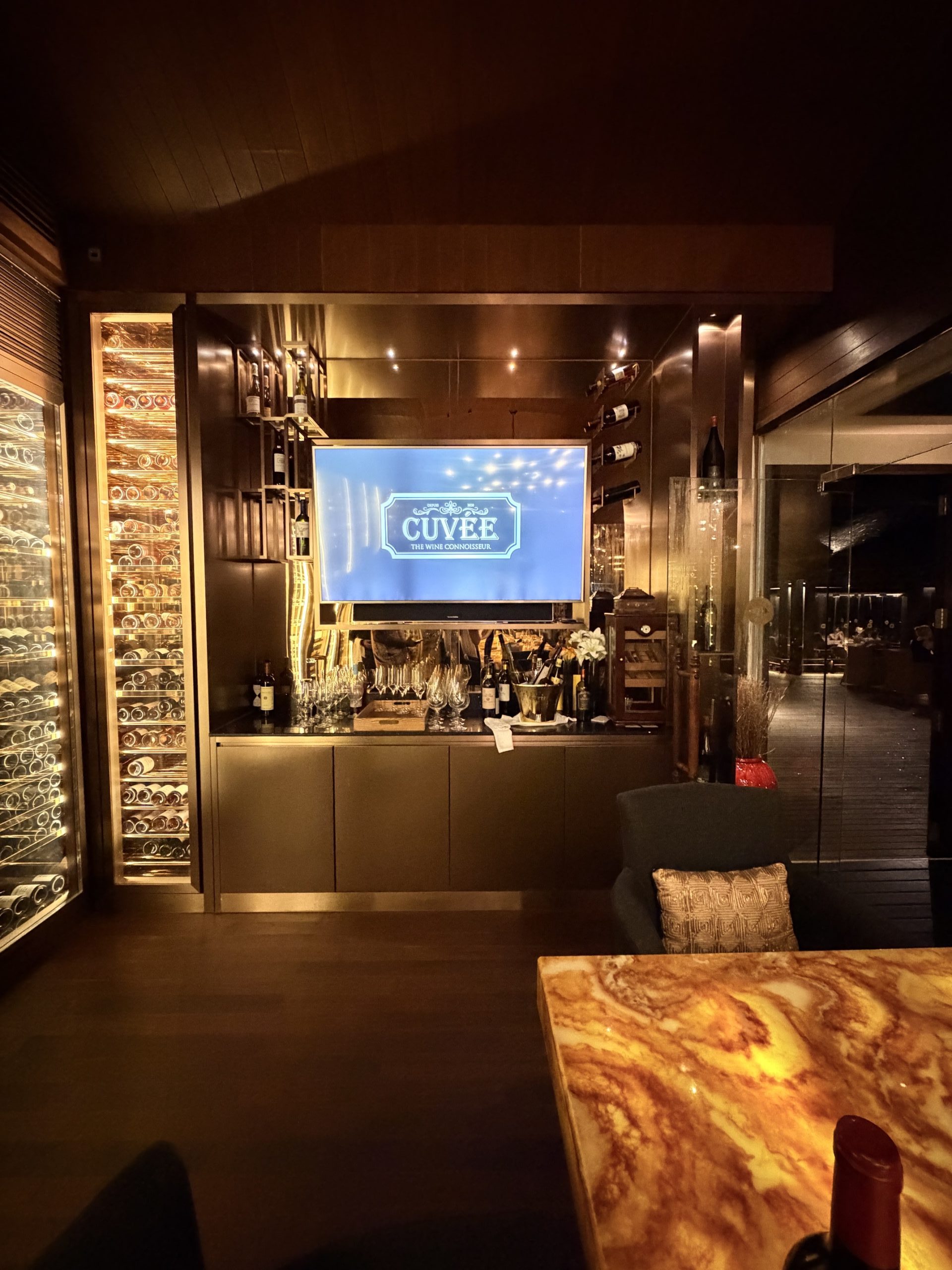
If I had to pick one thing to write home about — and I did, more than once, to people who hadn’t asked — it’s this. Origine and Cuvée sit side by side sharing a cellar (whoops, library! Cause one cant really call this a cellar sitting on an island) that runs past two thousand bottles across roughly 350 labels, close to 20% of it is organic. The size of the list matters less than how much of it actually moves — proper pours by the glass, bottles turned over fast enough that nothing sits and goes tired, a harder trick than most wine programs let on. It’s not just my impression, either: the property has picked up recognition from the World’s Best Wine List Awards for its all-inclusive wine and spirits list in Asia, which is a strange thing for a resort to be quietly good at and an even stranger thing for so few people to talk about.
Cuvée runs a seven-course pairing menu, eight to twelve pours depending on the night, opening on their own-label Champagne and working outward from there; at close to $250 a head it’s a serious ask, though the pacing of the courses makes the number feel beside the point by the third glass. Somewhere in that library sits a Château La Fleur-Pétrus at $10,000 a bottle, mentioned almost in passing, which makes it more interesting. Origine’s wagyu, for what it’s worth, is the one dish on the island worth planning a return trip around — and I wasn’t alone in that; it comes up in nearly every account I’ve since read of the place, alongside the resident sommelier who apparently makes a habit of talking total non-wine-people into a genuinely good glass.
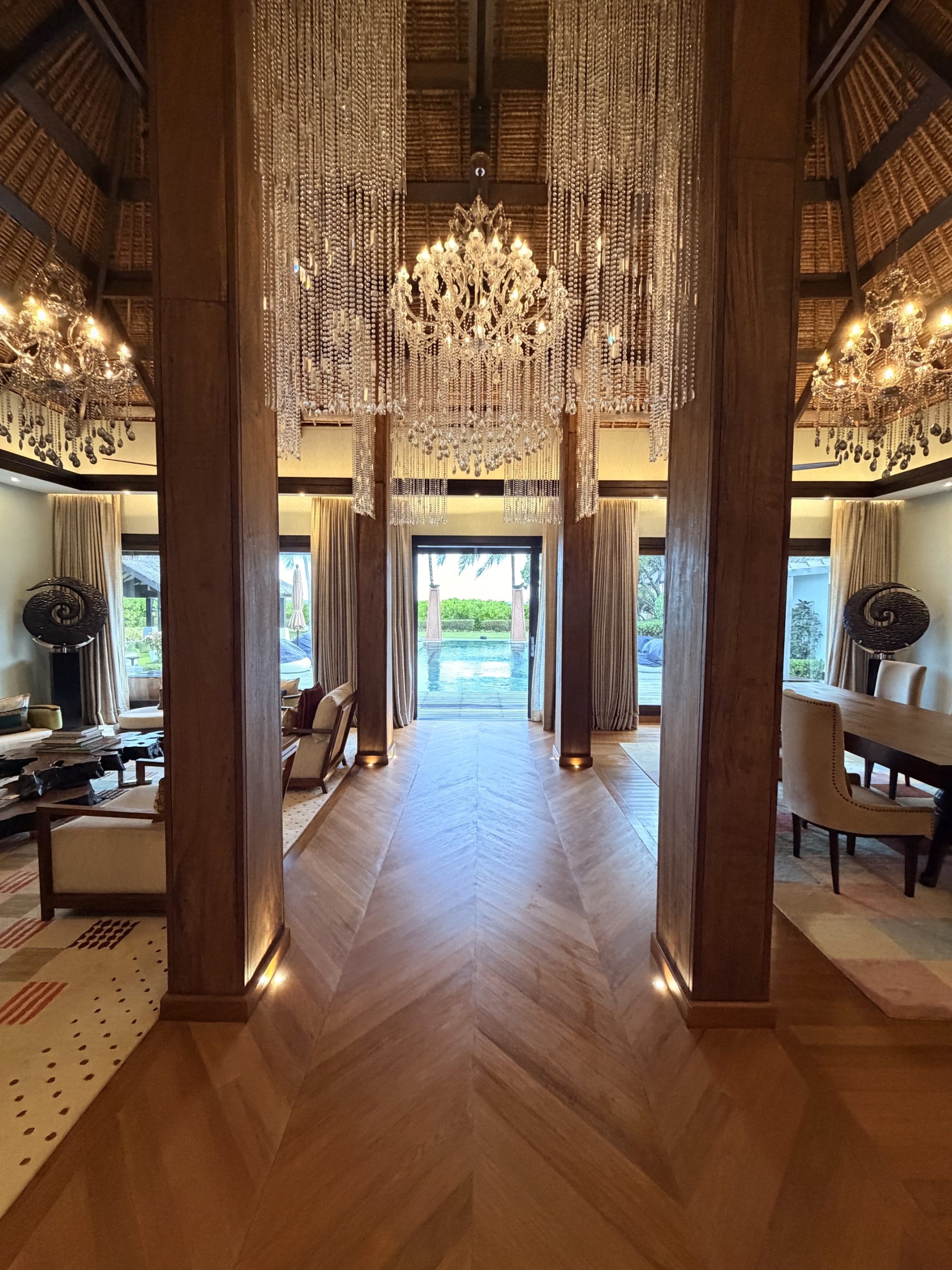
I got the walkthrough of the Royal Reserve — Bolifushi’s top-tier compound, and reportedly one of the only two-storey villa setups anywhere in the Maldives. It’s three villas banded into one: a main Sanctuary with its own living room, gym, and spa, flanked by two Guest Villas — one king-bedded with a soaking tub deep enough to properly disappear into, the other twin-bedded for friends or teenagers who’d prefer their own wall. There’s a private Teppanyaki chef built into the space, a private boat for arrivals and departures, a personal trainer for those who want one, and a private beach entrance straight into the sea (well, actually all of them have this, including the overwater ones with their own slides from the bed to the sea. At peak season it runs $35,000 to $40,000 a night, a fair price for privacy.
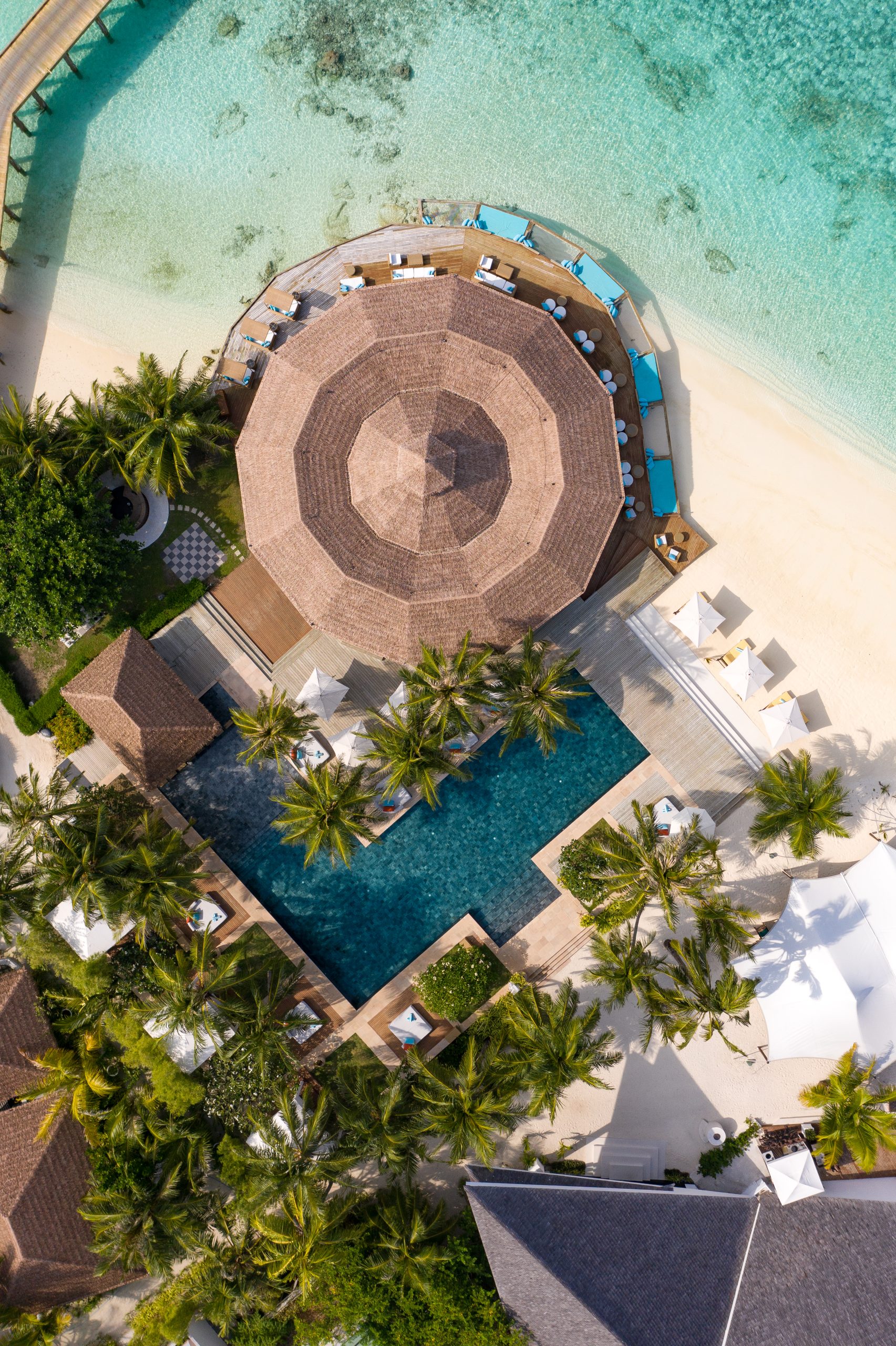
The rest of the island backs this up with its own set of exclusive details: a dive centre stocked well enough that four days feel short, an overwater spa with glass floor panels so reef fish move beneath you mid-massage, a kids’ club that takes children from age three without parents in tow, and four boutique stores carrying international perfume houses, an unlikely find this far from anywhere with a postcode. Bolifushi also recently became the first resort in the Maldives to receive a Michelin Key — a fairly well deserved credential.
Ozen runs nine resorts globally, two of them under this specific name, with plans to bring the brand to India in the next few years — they already have the Ozen Mansion in Kolkata and Ozen Villas Jaipur first, Goa sometime after. Seven years in, the team at Bolifushi has clearly settled into exactly the holiday they set out to build, and keep sharpening the details rather than chasing anything new.
Read the full feature — “Blue Blooded” New Indian Express FLAUNT: READ HERE
THE_SUNDAY_MAGAZINE_05-07-2026
All photographs, Nikhil Merchant and Ozen Group for the top shot.
Nikhil Merchant
Hospitality Writer | Culinary & Bar Consultant | Restaurateur | Brand Evangelist