
x
N
G

Lychee Chundo
What happens when lychee season meets a Gujarati pickle tradition — you basically just recreated an upscale homely condiment for your everyday meal
This is a given, a sort of food logic that Gujaratis are born with. It is not written down anywhere but, from the first time you sit at a table where the food has been properly thought through, that every element on the plate is there for a reason and to compliment something else on the plate.
Sweet needs spice. Spice needs something sour. Bitter finds its balance in sweetness. Savoury opens up with acid. The idea is not complexity for its own sake — it is activation. Every part of the palate, every corner of the tongue, brought into the experience at once. This is why Gujarati cuisine, for all the jokes made about it being sweet, is actually one of the most finely calibrated in the world when it comes to the interplay of flavour, texture and taste. The sweetness is never the point its about balance.
The Tale of the Thepla
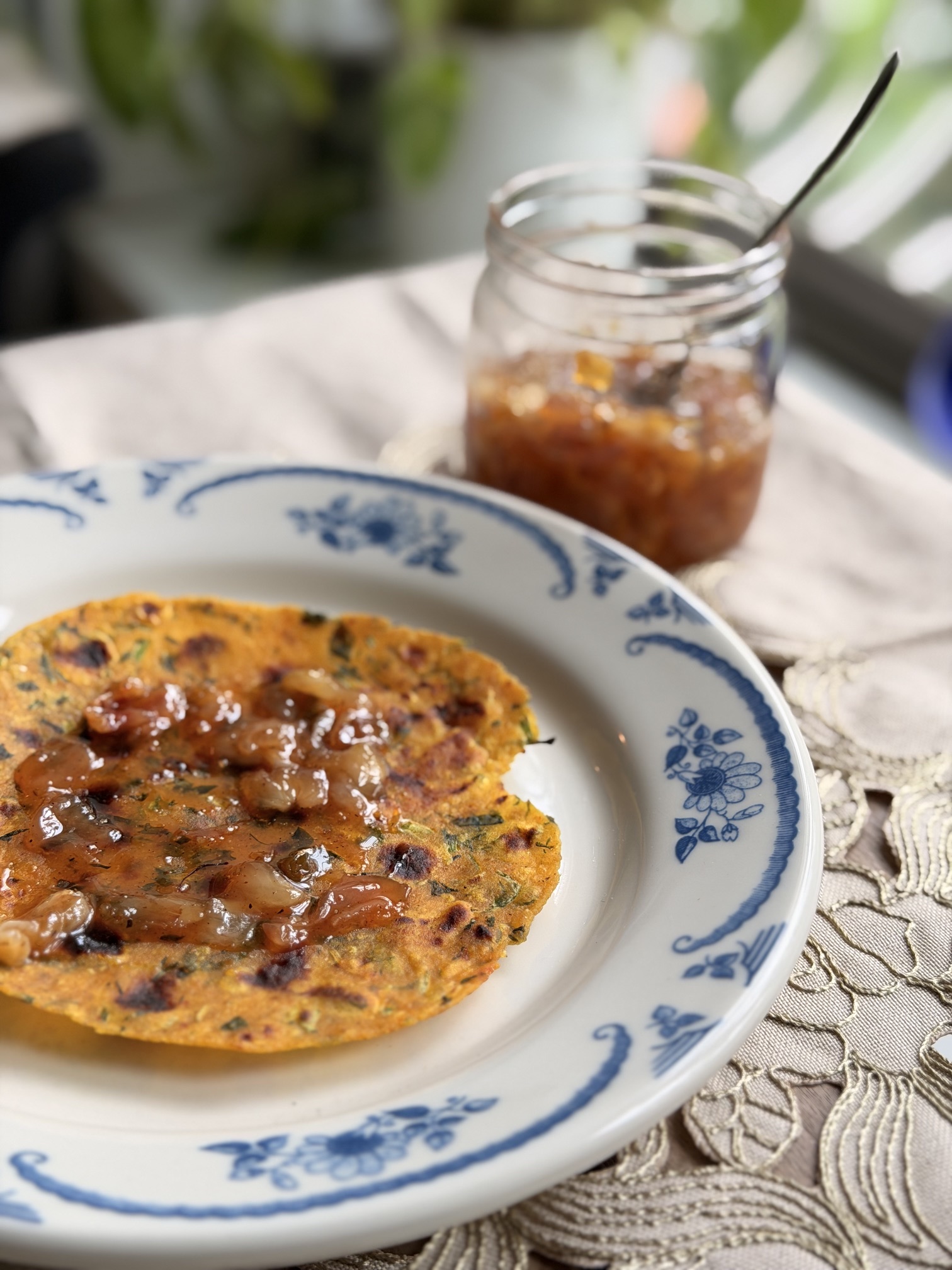
Of all the combinations that define Gujarati eating, none is more quietly iconic than thepla and chundo.
Now, I know there are those among you who will argue for the spicy mango pickle — and I respect that position entirely. But there is something about chundo specifically, that sweet and slightly sour preserve made from shredded raw mango, simmered low and slow with spices until it becomes glossy and incredibly flavoured, that feels like home in a way that is difficult to articulate.
We used to get the thin-shredded variety — delicate, almost translucent threads of raw mango suspended in that spiced syrup. There are the thicker shreds too, more substantial, more bang for your buck. Both have that long shelf life that comes from the combination of acid and sugar doing its preserving work quietly in the jar. Both have fuelled more long train journeys, and more lazy Sunday mornings, and of course, more moments of needing comfort quickly, than I can count.
A Mango Tree and a Market Find
We have a mango tree, quite generous through the seasons perhaps fruiting twice a year. Come monsoons and the mango season concluded — and I found myself in the market one morning, slightly at a loss, when I spotted a vibrant bunch of lychees.
I had been eating them all summer, as one should. There is very little that compares to a lychee at peak ripeness — that moment when the skin gives way and the flesh emerges, translucent and jewel-like, juice-filled and fragrant. It is one of those fruits that demands to be eaten immediately, standing over the kitchen sink, not bothered with a bowl.
The flavour of a good lychee it unique. Floral first — rose-like, perfumed, but never cloying. Then a muscat-grape sweetness that is lush without being heavy. Then a delicate juiciness that is less aggressive than a berry, and not as one-dimensional as a grape, more complex than either. It is a fruit that manages to taste simultaneously like summer and something rare.
Standing in the market, looking at this bushel of lychees, I started thinking. The mango tree was done. But this fruit — juicy, fragrant, sweet with enough edge in the juice itself — felt like it had something to say in the context of a chundo. It had the right properties. The sugar. The juice. The acidity lurking underneath the sweetness. The floral character that might actually work with the pickle ingredients like ginger and chilli and cumin.
I thought briefly about going the western route — vinegar, a more European-style preserve. But that felt like a waste of a good instinct. This called for something desi. So I set about experimenting. And what emerged was one of the more successful bits of recipe development I have done in a while.
The Trick is in the Two Part Fruit
The problem with making chundo from lychee is heat. Mango is a robust fruit — it concentrates when cooked. Lychee is the opposite. The floral aroma, the juiciness, that delicate muscat character — it sort of changes. Cook it the way you’d cook mango chundo and you end up with something flat, jammy and slightly perfumed in all the wrong ways. The lychee’s nuances disappear.
Fifty percent goes in — finely chopped, cooked low and slow with sugar and ginger into a glossy spiced syrup. Much like a compote. Then the spices: cumin, black pepper, green chilli, a pinch of saffron, a touch of black salt. Then, off the heat, the remaining fresh lychees, hand torn to maintain their lushness are folded in. The residual heat, wit a tad bit of stove time burns off the excess water.
What you get is a preserve that has everything a chundo should have: the jamminess, the spice, the sweetness, the slow build of heat. And then, scattered through it, these bursts of fresh lychee. Sweet first, the heat of ginger and slight sharp burn of chilli, citrus notes and then the earthy cumin grounding it up.
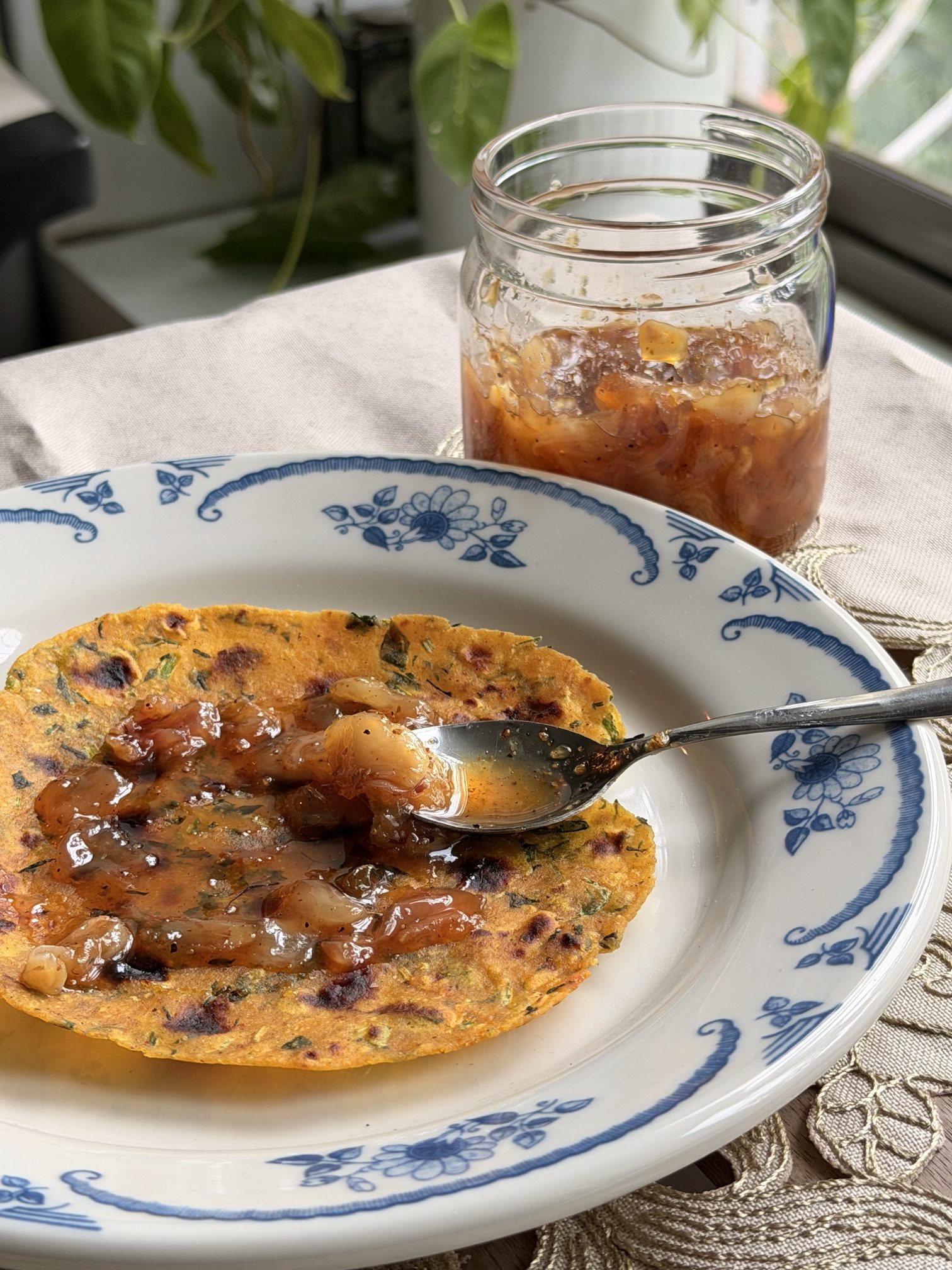
Lychee Chundo with Thepla
Lychee Chundo
Makes 1 large jar | Prep: 15 mins | Cook: 20 mins
Ingredients
500g peeled lychees, divided into:
- 250g finely chopped
- 250g roughly torn
For the syrup:
- 120g sugar
- 1 tbsp grated ginger
- 1 green chilli, finely chopped
- ½ tsp roasted cumin powder
- ¼ tsp black pepper
- Pinch of saffron
- Pinch of black salt
- Juice of ½ lime
Method
Step 1 — Cook the syrup base Combine the sugar, finely chopped lychees and grated ginger in a heavy-bottomed pan over low heat. Cook for 15 to 20 minutes, stirring occasionally, until you have a glossy, slow-moving compote. You want it to hold some texture and move with a little resistance.
Step 2 — Add the spices Stir in the cumin, black pepper, green chilli and saffron. Let it cook for another two minutes, just enough for the spices to bloom into the syrup and the saffron to bleed its colour through. Remove from heat and allow to cool slightly
Step 3 — The fold This is the critical step. Gently fold in the roughly torn fresh lychees, lime juice and black salt. Do not stir aggressively. You want the fresh pieces to hold their shape and their identity inside the preserve. If there’s extra juice and it turns watery, put it back on the stove for about 5-6 minutes on a low simmer. Once it thickens slightly take it off.
Step 4 — Jar it Spoon into a clean jar while still warm. It will set slightly as it cools. Refrigerate and use within two weeks.
Notes
- The 50/50 split between cooked and fresh is non-negotiable — this is what keeps the lychee tasting like lychee
- Green chilli should be enough to build gently, use the spicy or the non-spicy ones.
- Serve with thepla, obviously. But also excellent with aged cheddar and crackers, or spread on toasted sourdough with salted butter
- If lychees are very sweet, add an extra squeeze of lime at the end to perk them up.
- Keeps refrigerated for up to two weeks — the fresh lychee pieces soften over time but the flavour only gets better
This dish has pure Gujarati roots, our love for fruits and moreover our love for sweet-savoury combos will never go out of style.

Nikhil Merchant
Hospitality Writer | Culinary & Bar Consultant | Restaurateur | Brand Evangelist