
x
N
G

Lemon-Cured Green Peppercorns
A Winter Jar, a complete condiment for a piquant addition to your meal

I came across a whole lot of them at our neighborhood vegetable vendor in Bombay, bright green and still on the stem, and I knew what the calendar was telling me. Green peppercorns turn up in the cooler, drier months, and they turn up quietly, heaped at the corner of a stall for a short stretch of the year. I picked some up without having to think about it.
The reason is a jar. It sat in the kitchen of my childhood, and it is the best part of this memory till date.

The Jar at Home
My father loves these peppercorns, and so did my grandfather. Fresh green peppercorns are sharp, full-on pepper with all its notes intact, although id say even a tad bit better… and very few people eat them on their own. They need treating. They were also scarce, which is how the jar came about: a big glass jar, lemon and salt, and the berries kept under the juice until they were ready. That was the whole method, and it was enough.
We ate it with everything at lunch. A spoonful beside the dal, a little next to the rice, a pinch wherever a plate needed a little acidity and lift. My very kitchen made another condiment out of preserved mango-ginger and turmeric, which actually works in this stretch of the year too, and quite delicious. Most of my extended family keeps a jar of the peppercorns in the kitchen even now (and if you ask nicely, they’ll fish it out of the fridge for you).

One Berry, Three Colours
A peppercorn is mostly a question of timing. Piper nigrum is a vine native to the Malabar coast of Kerala, a spice the Romans imported in large quantities and valued so highly that it was used as currency. Black, white and green pepper all come from that one plant and that one berry. Dry the berries in the sun when they are half-ripe and they turn black and pungent. Let them ripen fully and soak off the skin, and you get white pepper, which is quieter and earthier. Pick the berry early and fresh, and you get green: milder, herbal, with a citrus brightness the dried version never develops.
In India’s plains the pepper harvest falls in December and January, which is why this is a winter ingredient. The window is short, and the jar is how you’d preserve its beauty.

What Happens Over Time
For the first day or two the peppercorns are fresh and quite spicy, close to how they taste raw. Give the jar a week or two and it changes. The heat calms and the flavours settle. The peppercorns begin to taste faintly sweet, the acid takes over, and everything knits into one cohesive mix.
I think the salt-and-acid cure is the right way to treat them, because it holds on to the pop. The nearest comparison I have is a caper, with more heat and more to say. The peppercorns will turn black after a few days. That is the acid, which dulls the green of anything unripe, and the taste is the same. The fragrance is perfumed, and it is lovely.
My family recipe has only lemon and salt. With this one I not only add turmeric, but also a little coarsely crushed ajwain, and a slit green chilli if you want it. The carom seed (Ajwain) gives the intensity of the pepper a specific kind of beauty, and a different layer of dimension on top of the citrus. I do love layering.
How to Eat It
Spoon it onto rotis, next to chawal and dal, or over curd rice. It travels well beyond the Indian table too, anywhere you would reach for capers or a green peppercorn sauce: folded into softened butter for grilled sourdough, chopped into a dressing, alongside a mushroom pâté, stirred into a cream sauce, or dropped into a martini or a savoury cocktail.
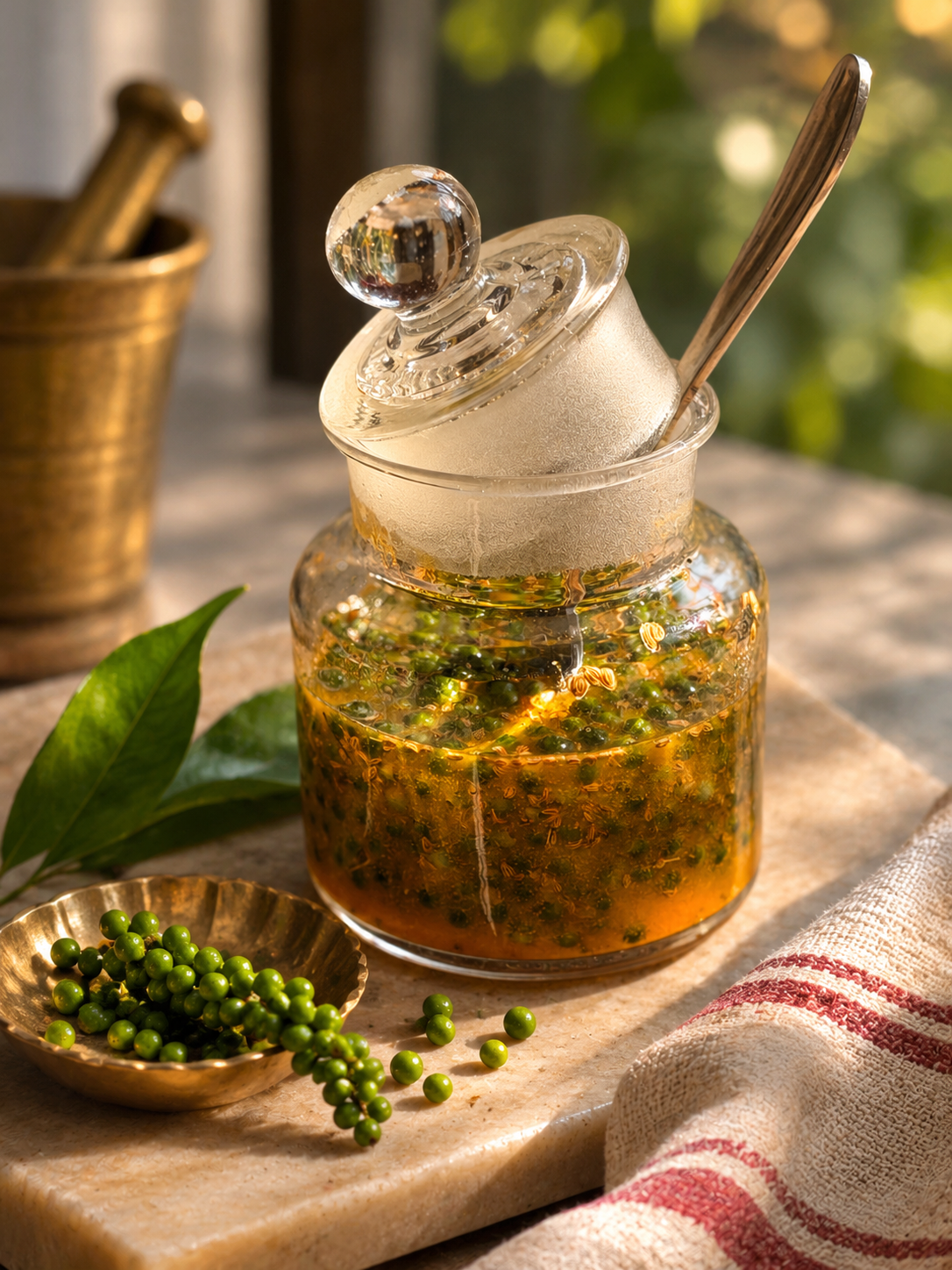
Lemon-Cured Green Peppercorns
A fresh refrigerator pickle, built on a family recipe of lemon and salt. Keep it refrigerated at all times.
Ingredients
– 100 g fresh green peppercorns, on the stem
– 4 freshly squeezed lemon juice
– 12 g pink salt
– ½ tsp turmeric
– ½ tsp coarsely crushed mustard seeds
– ¼ tsp ajwain (carom seeds)
– 1 small green chilli, slit (optional)
Method
1. Wash the peppercorns and dry them thoroughly. Discard any damaged berries.
2. Gently bruise a few berries in each cluster with the flat of a knife or your fingers. Leave the rest whole.
3. Toss the peppercorns with the salt and turmeric and leave for 30 minutes.
4. Add the lemon juice, mustard seeds, ajwain and the chilli, if using. Mix gently.
5. Transfer to a sterilised glass jar so the peppercorns are fully submerged. If needed, top up with more freshly squeezed lemon juice.
6. Refrigerate, and turn the jar gently once a day.
How the Jar Changes
Day 2: Fresh, sharp and crunchy, and quite spicy.
Day 5: More rounded, with a citrusy heat.
Week 1–2: Milder and calmer, faintly sweet, with the acid fully in and everything cohesive.
Notes
On refrigeration: It must stay in the fridge. This is a fresh refrigerator pickle and cannot be kept out. Use a clean utensil each time, and discard the jar if mould or fermentation develops.
On the mustard: Use whole seeds, coarsely crushed, never mustard powder. They add a gentle savoury note without overwhelming the pepper.
On the lemon: Use fresh juice and do not heat it. Fresh citrus keeps the flavour bright.
On the berries: Keep some intact. You want the pop when you bite into one.
On the colour: The peppercorns darken to black after a few days because of the acid. The flavour does not change.
Most of my extended family keeps a jar of this in the kitchen. In ours, it comes back with the cooler weather, the way the green bunches reappear at the market.

Nikhil Merchant
Hospitality Writer | Culinary & Bar Consultant | Restaurateur | Brand Evangelist