
x
N
G
Schweinefleisch mit Backpflaumen — A Family Recipe from a Hamburg Kitchen
There is a generosity in cooking someone your family’s recipe when they visit from across the world. Not taking them to a restaurant, not recommending a place, not making a reservation. Cooking for them from a long preserved memory. The way your generational blood made it.
That is what Jan did for me in Hamburg. And it is, I think, the highest form of hospitality I know.
Hamburg, The Beauty Of A Welcoming City
This was my first time in Germany. Which, given how much of the world I’ve moved through over twenty years of eating and writing about food, is a gap I should have closed a long time ago. But first times have their own particular quality — a heightened attention, an eagerness to absorb everything so finely.
Hamburg is a city tied to its harbour. It beckons you one canal, one story at a time. HafenCity, where Jan and Ruchi live, sits right on the waterfront — modern architecture beside maritime heritage, the Elbphilharmonie dominating the skyline, the Elbe flowing below. It is a neighbourhood that feels both very new and yet feels old world, which is exactly how the best cities feel.
I was there because Ruchi and Jan had been insisting I come for a long time. The opportunity arrived when I was flying through Paris and decided to use the last leg of the journey to spend a few days in Hamburg. Everything else on this trip was work. This leg was not. A true holiday — which, for me, means doing exactly what I always do, but without a deadline attached.
When I travel somewhere for the first time, I always look for a way into the local food. A culinary class, a market, a home kitchen if I’m lucky enough. In this case, I didn’t need to look. This experience came as a surprise: Jan and Ruchi were cooking dinner.
Ruchi, whom I’ve known for more than fifteen years — from the time they lived in Bombay — has a wine collection that she takes seriously. We went to her cellar first. Chose the bottles. Then Jan went to the kitchen, and I stood beside him and watched and recorded everything I could.
On German Food, and What the North Is All About
The combination of sweet and savoury is commonplace in northern Germany — plums served with meat, rhubarb with fish, broths flavoured with dried berries. It is a tradition which speaks flavor of home and yet changes an opinion about ‘European food’ in general. Several German cooking methods evolved from the need to soften tough cuts and preserve through long winters — techniques that became national specialities over centuries. Fruit, dried and concentrated, was preservation. It was sweetness when nothing else was sweet. It was the acid that made a cheap cut worth eating on a cold evening in January (Although the tenderloin is one of the best parts of pork, so I am positive this recipe has evolved over time).
The English palate tends to separate sweet from savoury as though they belong to different meals entirely. Northern Germany has never gone with this thought. And sitting in Jan’s kitchen, watching Backpflaumen — dried plums — go into a pan with white wine, cream, and chicken bouillon, I understood why.

The Evening, and the Dish
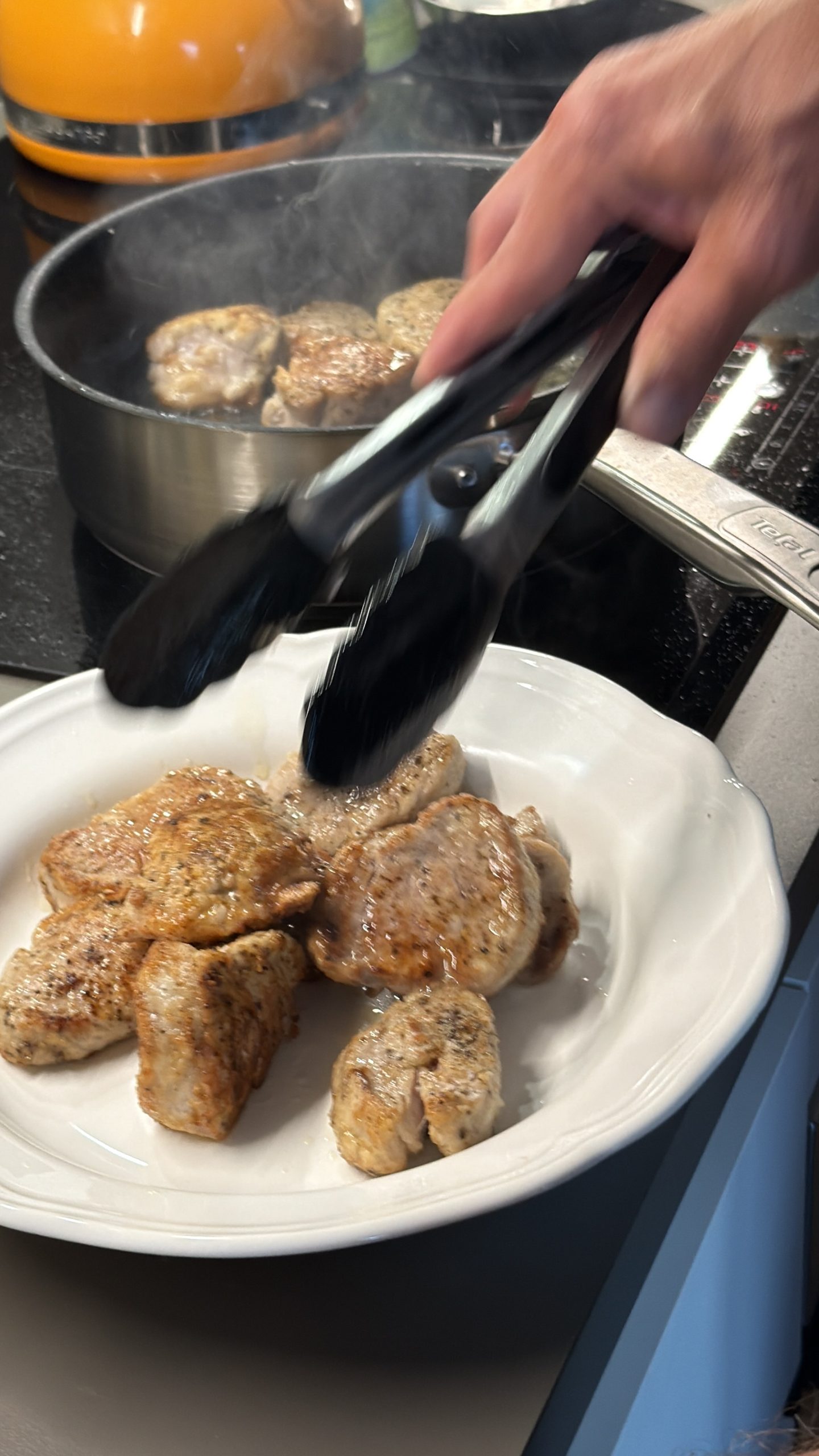
Jan cooked the way people cook when they know a recipe in their hands, not their head. No measuring, no checking. Pork tenderloin cut into large chunks, seasoned, dredged in flour, then shallow fried in dairy tallow — Talg — until deeply browned and crusted on the outside. The fat left in the pan became the base of the sauce.
White wine. Orange juice. Cream. Chicken bouillon. All of it reduced in the same pan, in the same fat, until dark and sticky and carrying the pork so perfectly on its shoulders. The Schweinefleisch went back in. Reduced further. Fifteen minutes of the sauce clinging and coating and becoming the finale in this dish (can mop with bread, can also make for the holidays).
The Backpflaumen — soaked for a while in white wine and then cooked a little — went in last. Deliberately whole, so they stay firm enough to cut into alongside the pork, which is both a textural decision and an aesthetic one. You want to find them and thank me when you eat it side by side.
Kroketten on the side — crispy outside, soft and almost molten within. Buttered peas with shallots.
Jan didn’t call this dish anything. It was just what his family makes. The best meals rarely have names.

Schweinefleisch mit Backpflaumen — Jan’s Family Recipe
Serves 4
Ingredients
For the pork:
- 800g pork tenderloin, cut into large chunks
- Salt and black pepper to season
- Plain flour, for dredging
- 50g dairy tallow or lard
For the sauce:
- 250g dried prunes (Backpflaumen), soaked overnight in 250ml white wine
- Reserved soaking wine from the prunes
- 1 cup orange juice
- 1½ cups chicken stock or bouillon
- 100ml cream
- Salt and black pepper to taste
- 1 tsp flour mixed with 1 tbsp water (slurry, if needed to thicken)
To serve:
- Kroketten (store-bought German croquettes, prepared per packet)
- Buttered peas with shallots
Method
- Soak the prunes the night before. Place the Backpflaumen in a bowl, cover with 250ml white wine, and leave overnight. Reserve the soaking wine for the sauce.
- Season and dredge the pork. Season the tenderloin chunks generously with salt and pepper. Dredge in plain flour, shaking off any excess.
- Fry in tallow. Heat the dairy tallow or lard in a wide, heavy pan over high heat. Shallow fry the pork in batches until deeply browned and crusted on all sides. The crust matters — don’t rush it. Remove the pork and set aside.
- Build the sauce in the same pan. Without cleaning the pan, add the reserved soaking wine, orange juice, chicken stock, and cream. Stir to lift everything the pork left behind. Bring to a simmer and reduce by approximately half.
- Return the pork to the sauce. Add the fried pork back in. Continue to reduce on a medium simmer for about 15 minutes, until the sauce is dark, sticky, and clinging. If it needs tightening, add the flour slurry a little at a time.
- Add the prunes last. Add the soaked Backpflaumen whole. Cook for a further 3–4 minutes — enough to warm them through and let them absorb the sauce without losing their shape.
- Serve immediately with Kroketten and buttered peas with shallots.
Notes
On the tallow: Dairy tallow is what Jan used and it matters — it fries at a high heat without burning and leaves a particular depth in the pan that neutral oil simply doesn’t. Lard works as a substitute.
On the prunes: Whole, always. The temptation to halve them is wrong. You want them intact, findable, firm enough to cut into with the pork.
On the sauce: If it feels thin at the fifteen-minute mark, the flour slurry does the job quietly. Add it gradually — a teaspoon at a time — and let it cook in fully before adding more. You want it sticky and clinging, not thick and gluey.
On the Kroketten: Jan used good German store-bought croquettes, and so should you. This is not the dish where homemade croquettes need to be bothered with making at home (I believe if something exists use it). Crispy outside, soft and molten within — that contrast is what the plate needs.

I’ve been thinking about this meal since I got back. The wine, the kitchen, the canal below the windows. There is a version of travel writing that is only about places and restaurants and things you can book. And then there is the other kind — the evening that comes as a surprise, cooked by a friend, from a recipe that belongs to someone’s father. That one stays considerably longer.
Nikhil Merchant
Hospitality Writer | Culinary & Bar Consultant | Restaurateur | Brand Evangelist