
x
N
G
Bangkok Raises the Bar
The Ritz-Carlton Bangkok and the Amaranth Suite — on what it looks like when a city decides to take itself seriously.
Bangkok has always been a city that gets under your skin on its own terms. The food alone could sustain a conversation for hours — the street stalls, the markets, the genius of a pad kra pao made at two in the morning by a vendor who has been making it the same way for thirty years. For a long time, that was the primary argument for being here. The chaos was the charm and of course accessibility was in focus.
Something has shifted!
Over the last decade, and with some acceleration lately, Bangkok has been building a different kind of case for itself. The Michelin Guide took notice some time ago. The World’s 50 Best has followed. The bars have come into their own in a way that would have surprised anyone who visited even five years back. And the hotels — the serious ones, the ones that attract a certain kind of traveller(s) rather than simply a volume of them — have started mushrooming.
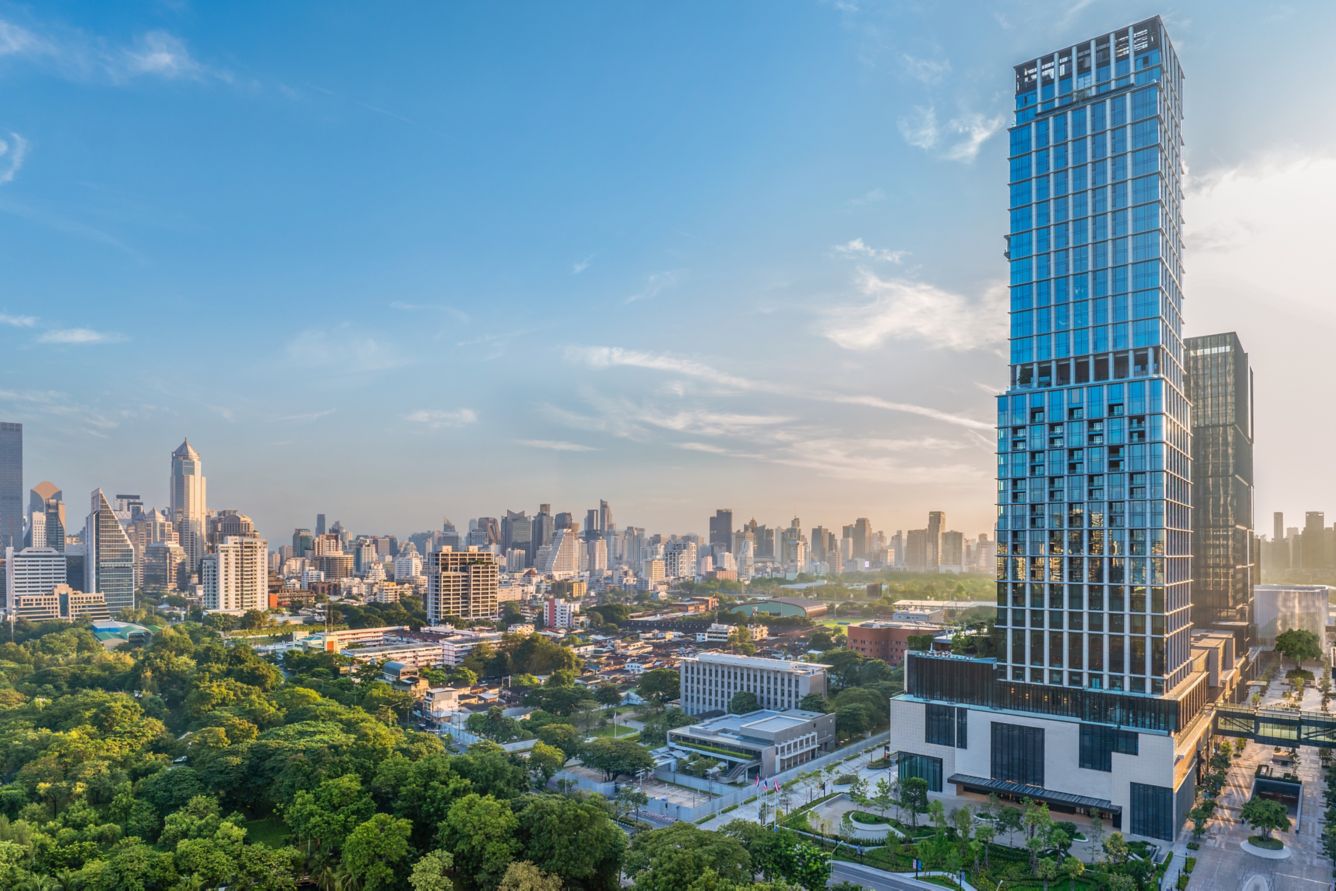
The Ritz-Carlton Bangkok opened in December 2024. It was the brand’s first full-service hotel in the Thai capital, which is itself a statement. The Ritz-Carlton is not a brand that moves quickly. When it chooses an address, it tends to be because that’s the need of the hour and an earning.
The Address
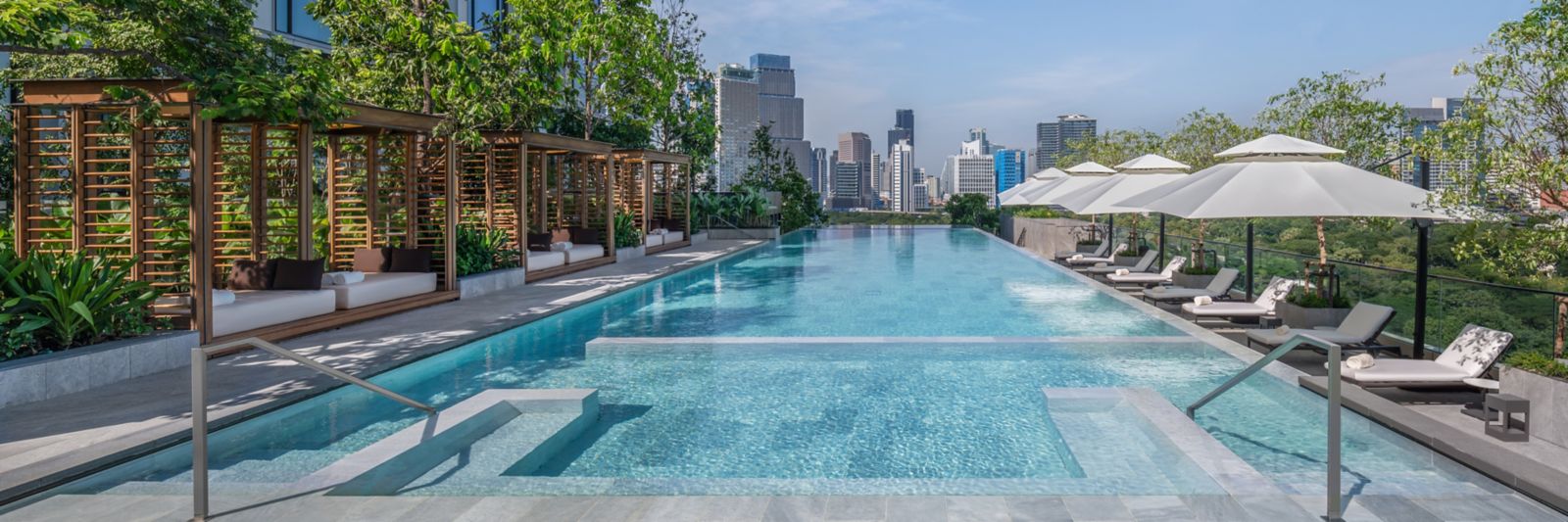
Wireless Road has history. In the 1800s, it was home to the enclave of Thai nobility — the grand residences that would become a blueprint for the hotel’s interior design philosophy. It later became the diplomatic quarter, lined with embassies, a crossroads where East met West and stayed. Thailand’s first radio telegraph station stood here. The road has been, for over a century, the place where Bangkok faced outward.
One Bangkok — the integrated lifestyle district where the hotel now sits — is the most recent chapter in that story. A 216-metre tower at the intersection of Wireless and Rama IV Roads, overlooking Lumpini Park. The architects were Chicago-based SOM in collaboration with Thailand’s A49. The design concept, guided by the spirit of the King Rama V era — a period of vibrant cultural exchange between Siamese tradition and Western influence — is called the Meeting of Two Civilizations. A neo-Renaissance arch references the Ananta Samakhom Throne Hall. Thai contemporary design meets global luxury in its own impeccable way.
Standing in the lobby, you feel the weight of that thought. Interior design studio PIA — Thailand’s premier — has created spaces that evoke a noble Thai residence: geometric marble floors, curated objets d’art in tall glass cabinets, a residential quality to the detailing that most luxury hotels attempt and few achieve.
The Amaranth Suite
My relationship with the Ritz-Carlton started in Pune, of all places — a nondescript city that was then quietly becoming something more, which in retrospect is exactly the kind of address the brand gravitates toward. Business districts in transition. Cities with something to prove. The suites there were enormous and the service was intuitive in the way that good hotel service always is — anticipatory rather than reactive, personalised without making any hoo-ha of it.
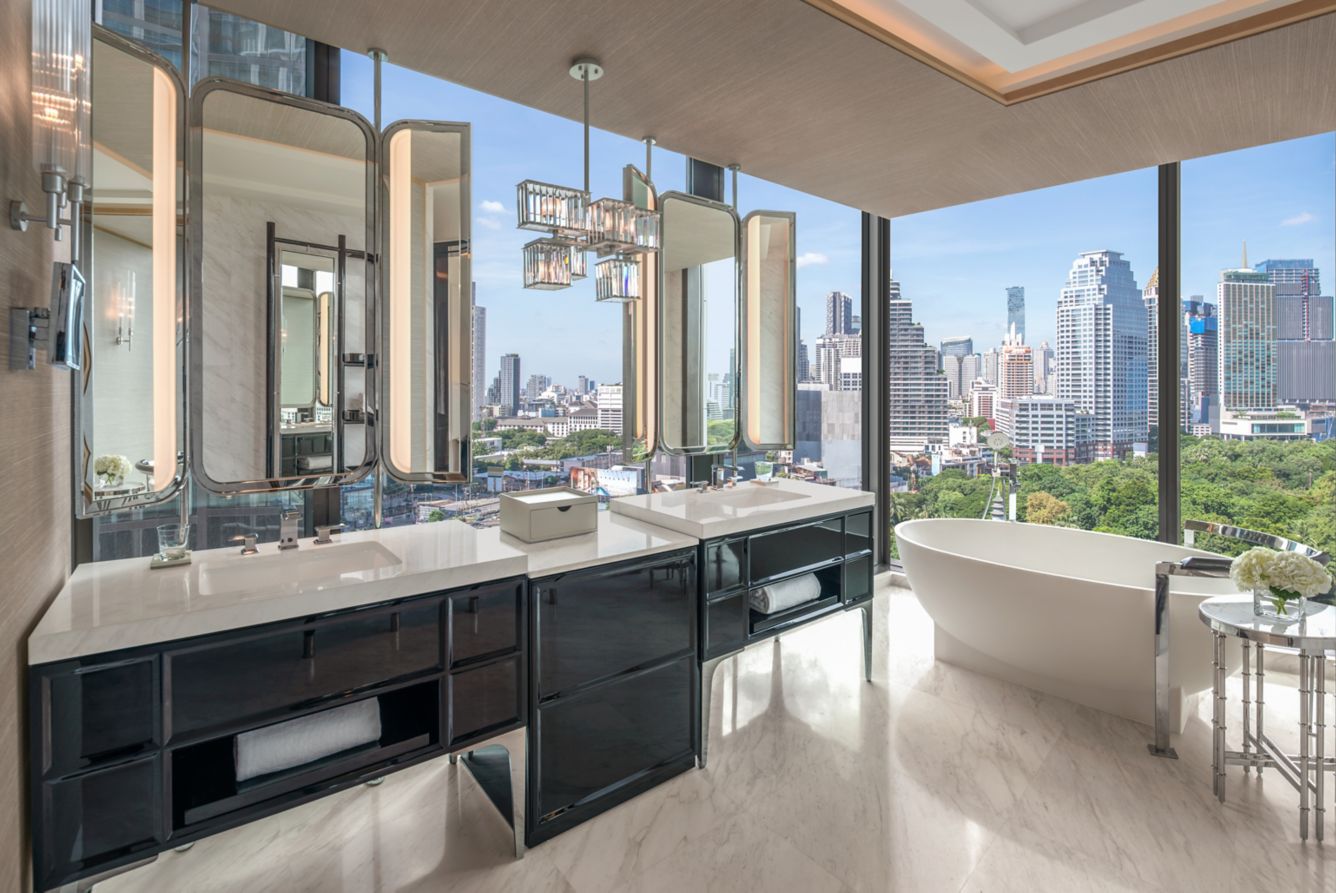
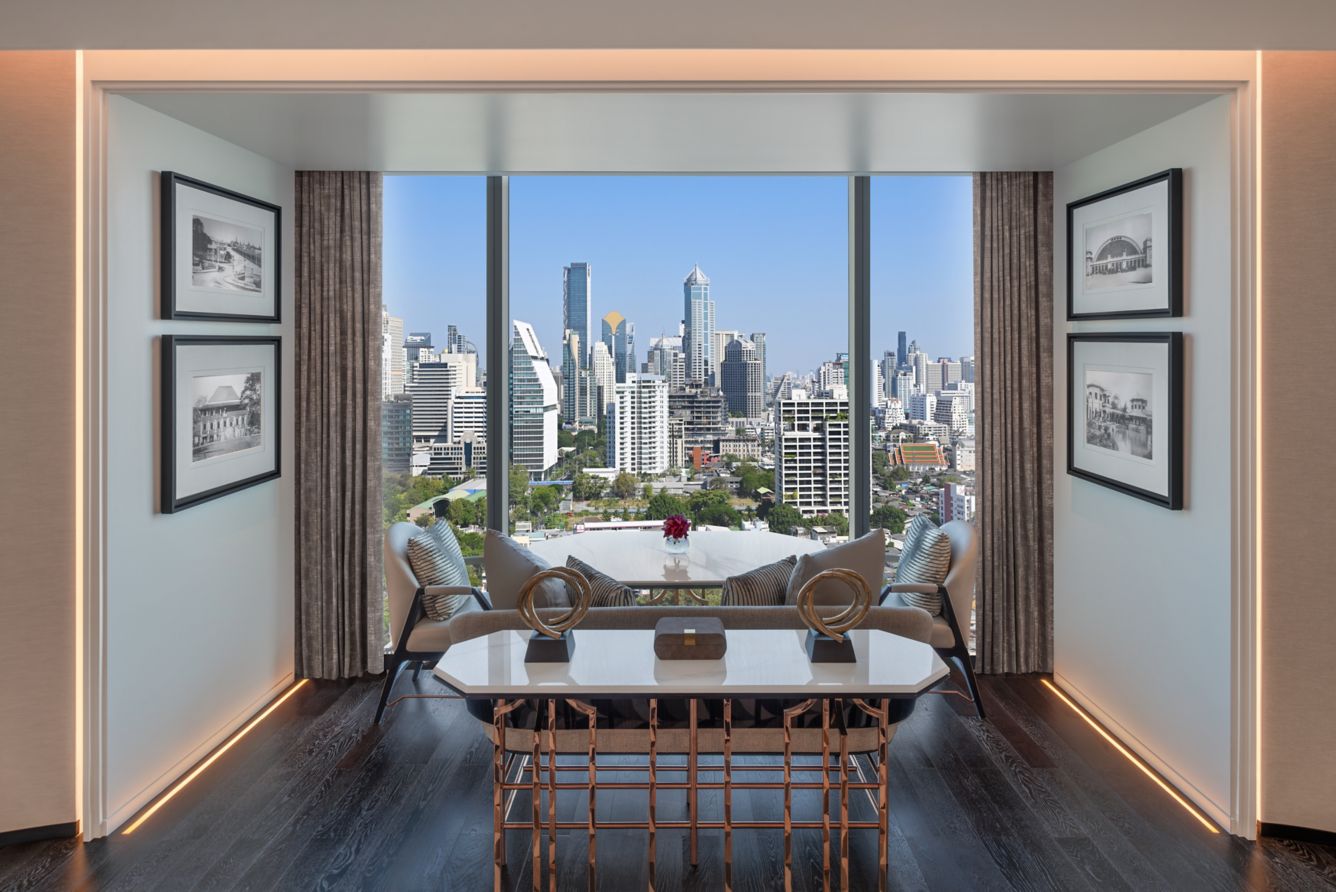
The Amaranth Suite in Bangkok is a continuation of that. Two balconies, the beautiful Lumpini Park below and of course The majestic Bangkok skyline, concrete, glass, height, expanse — framed through floor-to-ceiling windows that make the room feel like a viewing platform for the city’s ambition.
What took my breath away was not the room itself, though the room is exceptional. It was the relationship between what was inside and what was outside. The suite embraces the city rather than retreating from it. The bathtub — positioned to face the skyline at sundown tells you someone thought carefully about what a guest actually wants from a hotel at this level. You soak in the tub and Bangkok unfolds in front of you. Whether the hotel next door has the same view into your bathroom is a question I chose not to investigate too thoroughly. The electric curtains deserve a mention of their own. Opening them in the morning — from bed, the skyline flooding in with the light — is the single best hotel moment I had on this trip.
The check-in is seamless. No waiting in the lobby. They usher you straight up, documents handled within minutes, the room explained briefly and then left to you to discover. The staff — predominantly from Bangkok and its surrounds carry the quintessential Thai warmth that doesn’t feel trained so much as innate. They sense what you need before you’ve articulated it. For slightly longer stays, they remember. The intuition is the product they giving you in exchange.
The Club Lounge on the 23rd floor offers a more private space — dedicated concierge, daily food and beverage presentations, a view that rewards the upgrade.
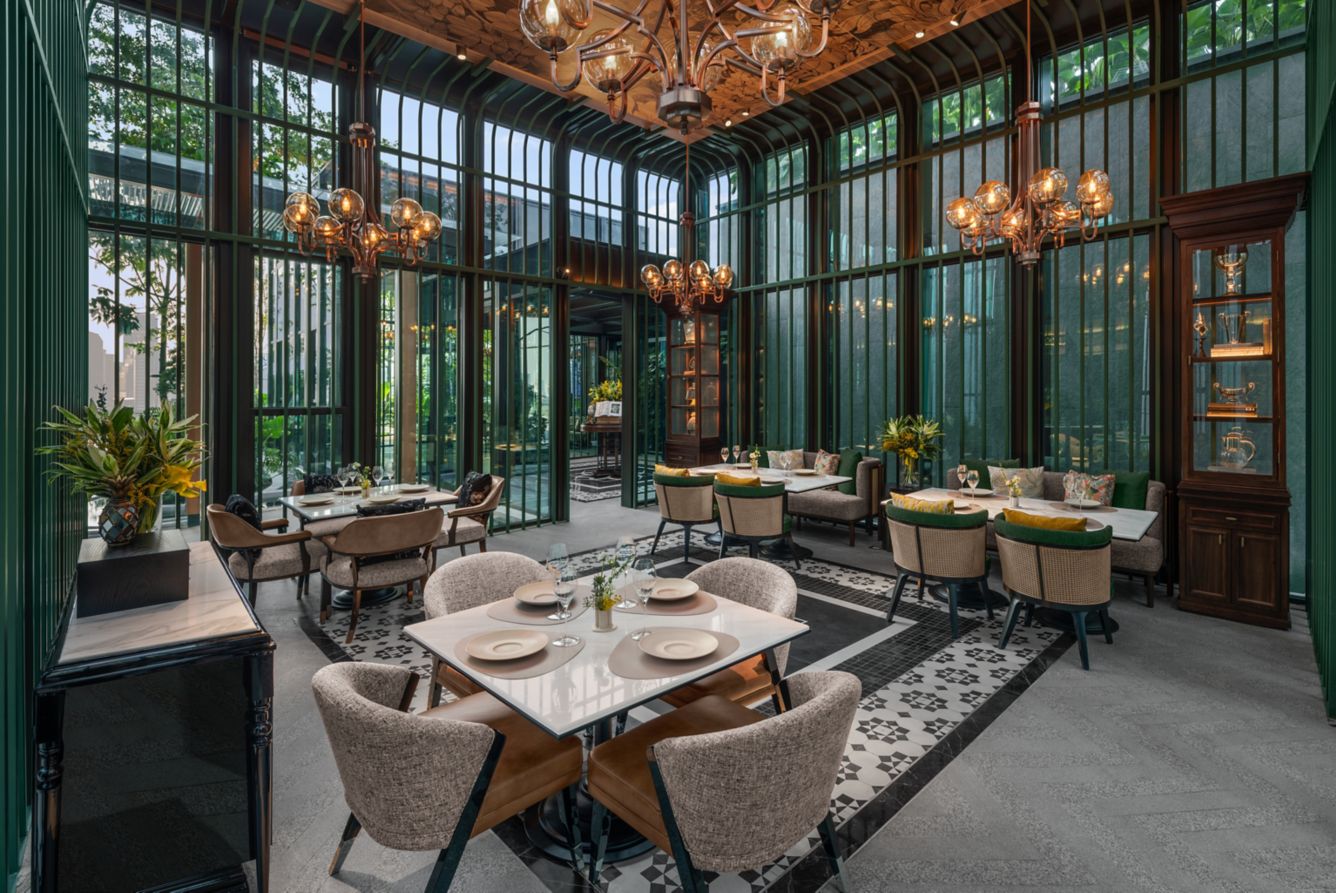
The Food — Duet, Caleō, Lily’s
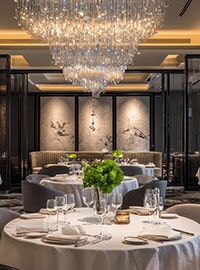
Duet by David Toutain is one of my most interesting discoveries in fine dining this year. And I mean discovery in the genuine sense — I didn’t know what to expect, and what I found rearranged some assumptions.
David Toutain holds two Michelin stars in Paris, where his eponymous restaurant has been doing something genuinely original with French gastronomy for over a decade. He trained alongside Alain Passard, Pierre Gagnaire and Marc Veyrat — a lineage that shows in the discipline and the delicacy of the cooking. Duet, his Bangkok outpost, opened in January 2025 on the seventh floor of the hotel — a glasshouse overlooking Lumpini Park (yes its pretty much a staple with this hotel), where the sun begins to set over the park’s green canopy as the candles come on and the evening begins.
The concept is the duality of food and nature — sustainable, vegetable-forward French gastronomy that treats the ingredient as the protagonist. Executive Chef Valentin Fouache runs the kitchen day to day alongside Toutain’s vision, and between them they have created a menu that is intellectually interesting without being self-conscious about it. The farm-to-table approach is genuine rather than gestural or theatrical The wine pairings were beautifully curated — the kind of choices that make food taste like something slightly different than it did before the wine arrived. A Sauternes at the right moment, A wine at the duet main course that earned its place rather than merely filling it and those beautiful growers champagnes.
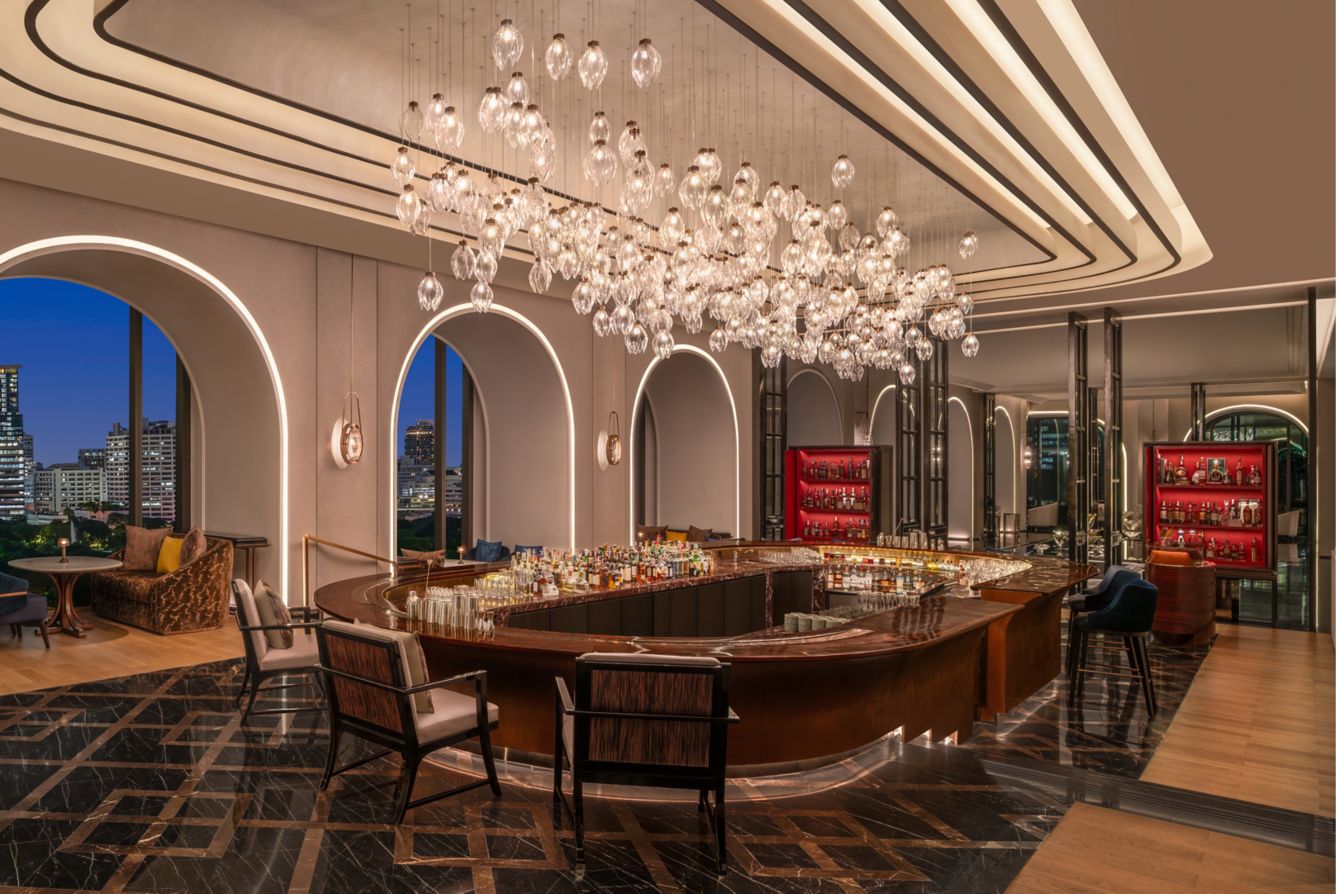
Caleō — the hotel’s bar, whose name derives from the Latin for ‘being in love’ — has talent behind the counter and a seriousness about cocktails that Bangkok’s bar scene now demands. The cold martini I had there was cold in exactly the way a martini should be cold. Several of the main bar staff have been there since the hotel opened in late 2024 — which for a new property is significant, and speaks to something in the culture of the place.
Lily’s handles breakfast with the ease of a restaurant that knows what it is and does it well. The Thai tea waffle — crunchy, precisely plated, the kind of dish that disappears faster than you intended — was the standout. The eggs Benedict were done properly. The Club Lounge offers a quieter, more intimate version of the morning for those who want it.
The Growers Champagne — something the hotel is clearly proud of and skilled at deploying — was stunning. Served at the right moment, at the right temperature, in the right glass. These are not small things.
The City It Belongs To
Bangkok has always attracted tourism. What has changed is the kind of tourism it is now equipped to receive. The Michelin Guide, the World’s 50 Best, the bars, the hotels — these are not simply amenities. They are signals. They tell you about the kind of traveller that the infrastructure for a certain kind of experience now exists here, and that they don’t have to choose between the extraordinary street food and the extraordinary suite. Both are available and yes both are worth having. It’s such a clear cut collaboration of great experiences under one roof (city).
The Ritz-Carlton Bangkok is the clearest expression of that signal I’ve encountered. It is very expensive, It is also, by any honest measure, worth it — not because of the thread count or the marble or the square footage, though the Amaranth Suite has all three in abundance. Because the hotel understands its city, and the city has understood what the hotel represents.
Bangkok raised the bar and The Ritz-Carlton decided that it needs to meet it.
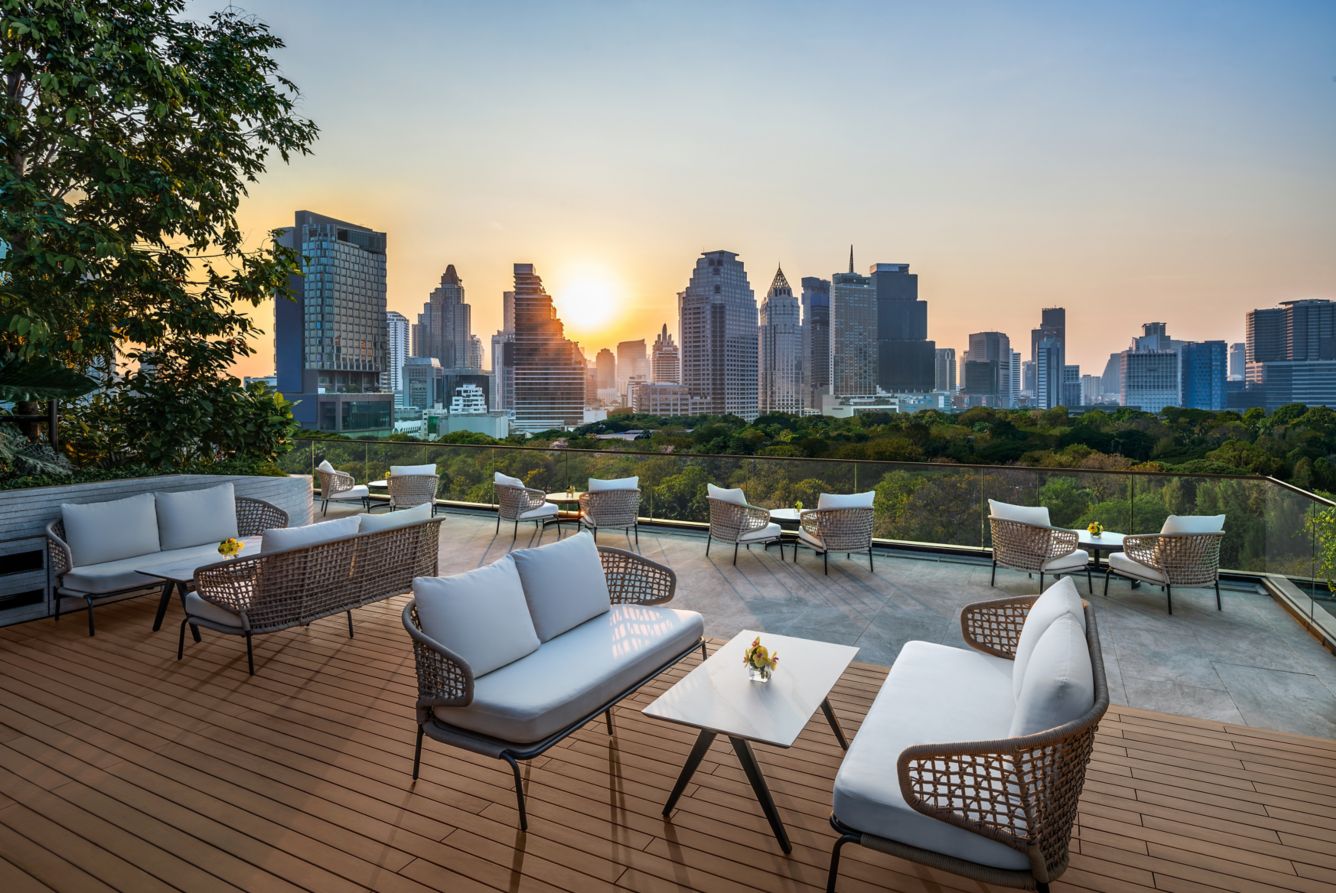
The Ritz-Carlton, Bangkok. Amaranth Suite. 189 Wireless Road, Lumpini, Pathumwan, Bangkok. @ritzcarltonbangkok
Duet by David Toutain: 7F, The Ritz-Carlton, Bangkok. Open daily 6pm–10pm. @duetbydavidtoutain
Caleō: The Ritz-Carlton, Bangkok. @ritzcarltonbangkok
All photographs, Ritz Carlton BKK
Nikhil Merchant
Hospitality Writer | Culinary & Bar Consultant | Restaurateur | Brand Evangelist