
x
N
G
The Chinese Meal That Made Me Question Everything I Thought I Knew
At Lakeview Palace in Wynn Palace Macau, Chef Kevin Zhu presents Jiangnan cuisine which rearranges your assumptions. Dish by dish.
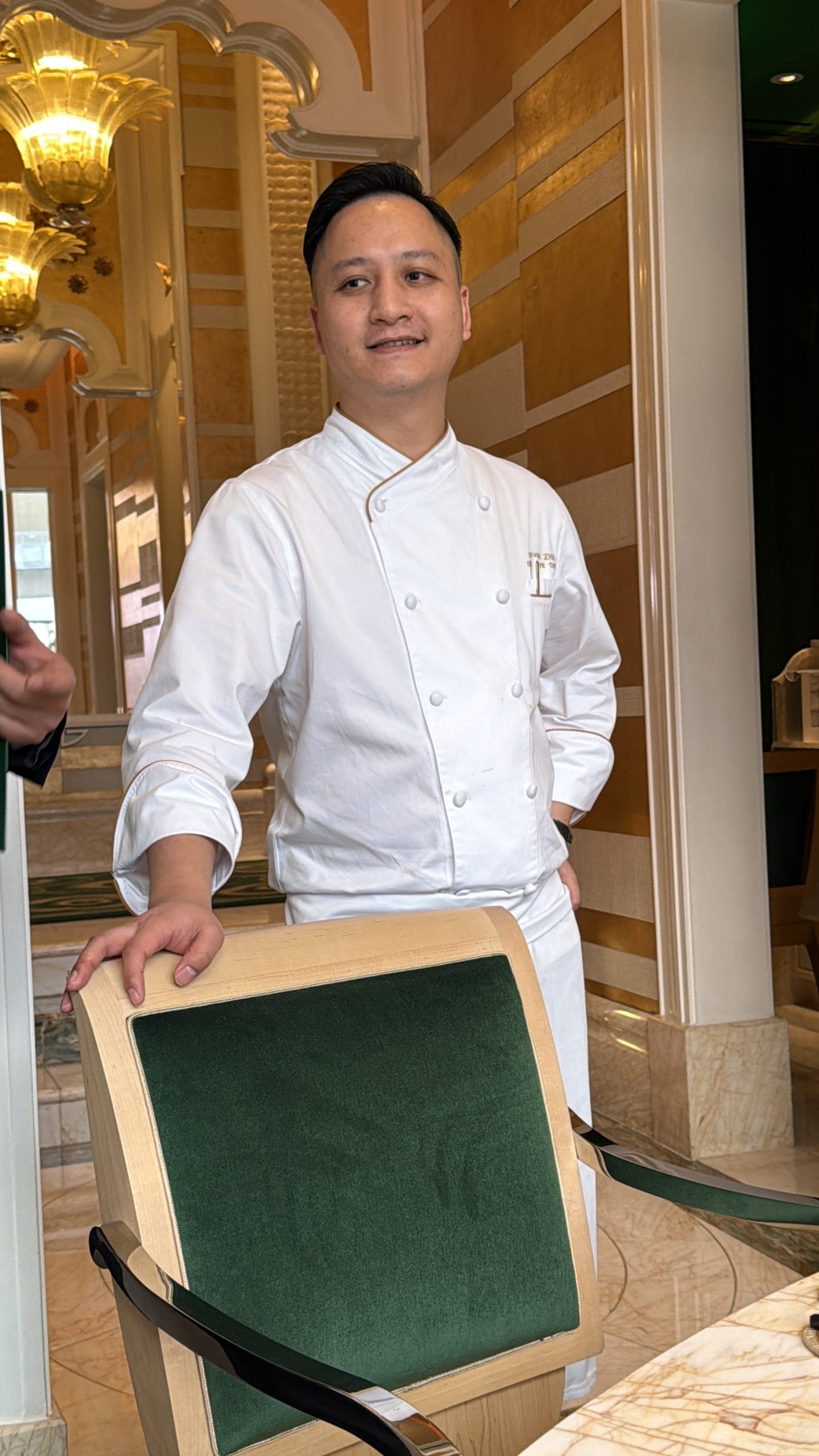
Chef Kevin Zhu
I have eaten a lot of Chinese food over the years. In homes, in hawker centers, in dim sum halls that seat five hundred people, in restaurants that have been traditional enough to be nostalgic for decades (and intend to keep doing it). I thought I had a reasonable working knowledge of the cuisine. Well, this meal made me reconsider that.
Not because it was the best meal I’ve ever eaten — though it was exceptional — but because it kept presenting me with things I wasn’t even aware of. There were ingredients I hadn’t encountered, along with techniques I hadn’t thought to look for. A cuisine whose signature is the depth and a sophistication that most of what I’d eaten had only hinted at.
The question I kept coming back to throughout the meal was a simple one: how much of a cuisine can you think you know and still have this much left to discover?
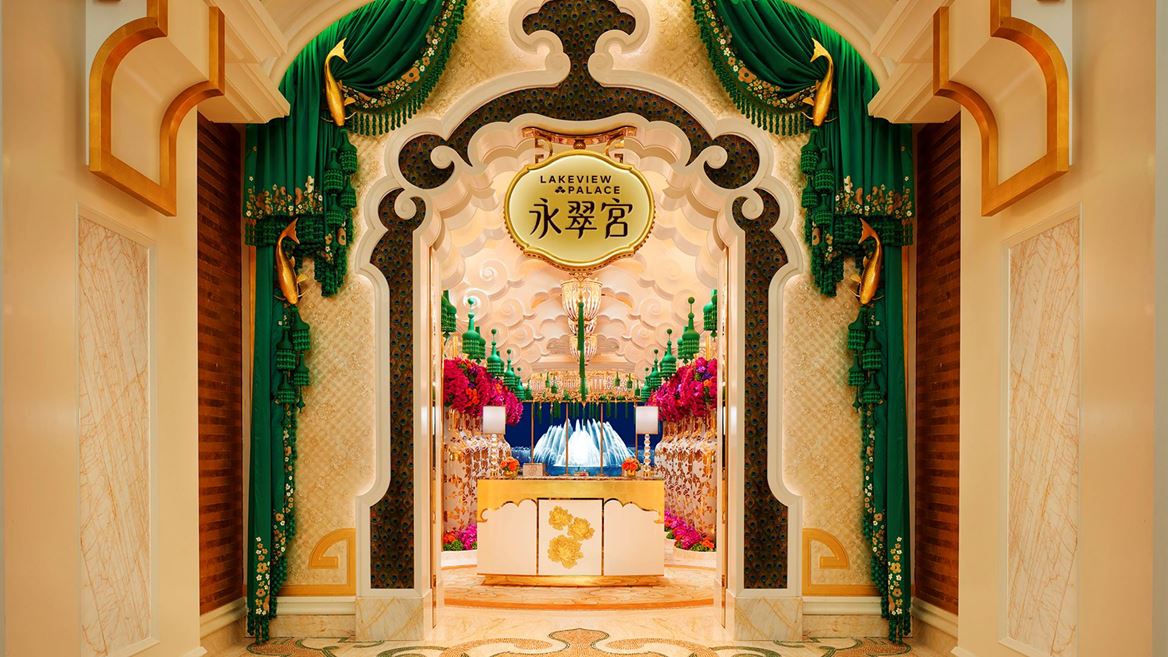
Lakeeview Palace, Wynn Palace, Macao
The Room
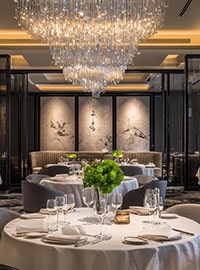
Lakeview Palace sits inside Wynn Palace — the property in Cotai that feels simultaneously grand and composed, which is harder than it sounds in Macau. The restaurant overlooks the Performance Lake, and the interior carries the aesthetic through — emerald and gold, auspicious cloud motifs worked into the details, natural light and the lake’s shifting surface through floor-to-ceiling windows. It’s a room that takes Jiangnan’s historic water town aesthetic and gives it a contemporary luxury frame without losing the reference.
Jiangnan — literally “south of the river” — refers to the region south of the Yangtze, encompassing Jiangsu, Zhejiang and Shanghai. It is considered one of the most sophisticated and refined culinary traditions in Chinese gastronomy. Seasonal ingredients, precise technique, a delicacy of flavour that makes Cantonese cooking look assertive by comparison. And yet most of what the world calls Chinese food has very little to do with it.
The Chef
Executive Chef Kevin Zhu is Guangdong-born, trained at the legendary Lei Garden in Guangzhou — widely considered the training ground for some of China’s finest chefs — and by 2017 was already Head Chef of Cantonese cuisine at the Michelin-starred Xin Rong Ji in Shanghai. He was the youngest Chinese Executive Chef in the history of Shangri-La Hotels before joining Wynn. His philosophy at Lakeview Palace is what he calls Huaiyang-Cantonese Confluence — the fresh, delicate flavours of Jiangsu and Zhejiang meeting the precision and depth of Cantonese technique.
In practice, it produces food that is welcome and surprising. Traditional in its references, thoroughly contemporary in its execution.
The Meal — Dish by Dish
The menu began with the Lakeview Palace Platter — a composed introduction to the kitchen’s range presented as eight small plates simultaneously. This is not an amuse-bouche. It is fair deductive argument with eight different preparations.

Poached chicken with scallion oil — the Jiangnan equivalent of a confidence test. Simple ingredients, everything depending on technique. The chicken was beautifully cooked whilst the scallion oil adding that subdued fragrance.
Nanjing salted brine goose — this was the first thing that genuinely worked me up. Salted brine goose is a Nanjing speciality with roots going back centuries — the goose cured slowly in a spiced brine, the result dense and flavourful. Yes its served up cold and sliced thin.

Charred chilli eggplant with Java century egg and aged vinegar — century egg is an acquired taste that I have acquired (I was pleasantly surprised I liked it after having so many apprehensions of people going either ways with this). The charred eggplant softened its intensity, the aged vinegar cut through both. Quite something to talk home about.

Marinated duck tongue jelly with yellow wine — duck tongue requires a particular commitment from the diner. There is very little on it. What there is has a texture and a flavour that is specific and irreplaceable. Set in jelly with the gentle warmth of yellow wine — Huadiao, the rice wine that runs through Jiangnan cooking the way sake runs through Japanese — it was extraordinary.
Shanghai style tea-smoked threadfin fish — tea-smoking is a technique that predates the modern obsession with smoking in fine dining by several centuries. The threadfin is a delicate fish; the smoke was the side hero, very subtle.
Chilled dried plum flavoured tomato — the palate cleanser of the eight, and a good one.
Chilled Chinese kale in homemade spicy sauce — clean, bright, the spice so well balanced

Purple cabbage salad with Sakura shrimp in sweet and sour sauce — the sweetness here was pulled back, the Sakura shrimp adding a delicacy that cut the cabbage’s earthiness.
The platter was paired with a Devo MV04 Brut — a Chinese sparkling wine. I want to come back to the wines.
Classic double-boiled Yangzhou clear broth pork meatball with matsutake mushroom — the Lion’s Head meatball is one of Jiangnan’s most iconic dishes. This version, double-boiled until the broth is clear and concentrated, was the most technically impressive thing on the table. The matsutake’s earthiness against the purity of the broth was a combination that was good on its own.
Caviar topping roasted duck rolls — These were symbolically sublime with the duck playing the role of a vehicle and the caviar its punctuation. The salt and the richness worked.

Steamed snow crab with lobster bisque Huadiao egg white, spinach sauce with silk-thread tofu — this was paired with a Chateau Nine Peaks Qi Chardonnay 2021. The snow crab was impeccable. The silk-thread tofu — tofu pulled into threads finer than most noodles — is a technique that takes years to master, I have no idea how they do it. Next time I am taking lessons! The Huadiao egg white added a valid richness.
Steamed geoduck with yellow chilli and preserved cucumber sauce — geoduck is the ingredient most likely to make a first-time diner think many times over. The giant clam’s siphon has a texture that is firm, almost crunchy, and a flavour that is intensely oceanic without being aggressive. The yellow chilli and preserved cucumber were the right counterpoint.
Jiangnan style sautéed crab roe — crab roe is one of those ingredients that Chinese culinary culture has elevated to an almost totemic status. Sautéed simply, it was the most direct and unmediated thing on the menu.
Steamed eel with Jinhua ham and aromatic Huadiao rice wine — Jinhua ham is China’s answer to Prosciutto di Parma — aged, intensely flavoured, deeply savoury. Against the softness of steamed eel and the fragrance of Huadiao wine, it created a combination that was classical Jiangnan in both ingredients and philosophy.

Crispy Wagyu beef with chef’s signature sauce and finger lime — paired with a Mountain Wave Reserve Malbec 2022. The finger lime — Australian, as it happens — provided acidity that cut the Wagyu’s richness with a precision that lemon juice cannot replicate. The Malbec pairing was the most Western-facing moment of the meal, and it worked. I can’t imagine having liked Wagyu more than this…
Jiangnan style stir-fried vegetable and Yangzhou fried rice with yellow eel, shrimp and vegetable — Yangzhou fried rice is one of those dishes with a reputation so large that restaurants rarely attempt it seriously. This version, with yellow eel and shrimp, was serious. It arrived at the end of the meal, pretty good on its own.

Double treasure sweet soup with watershield and snow fungus, Steamed glutinous rice cake with osmanthus — the dessert course was presented in the way Jiangnan desserts always are — not sweet for its own sake, but fragrant. Osmanthus is one of those floral flavours that takes time to appreciate; but this was uniquely flavorsome.
The Wine — The Other Discovery
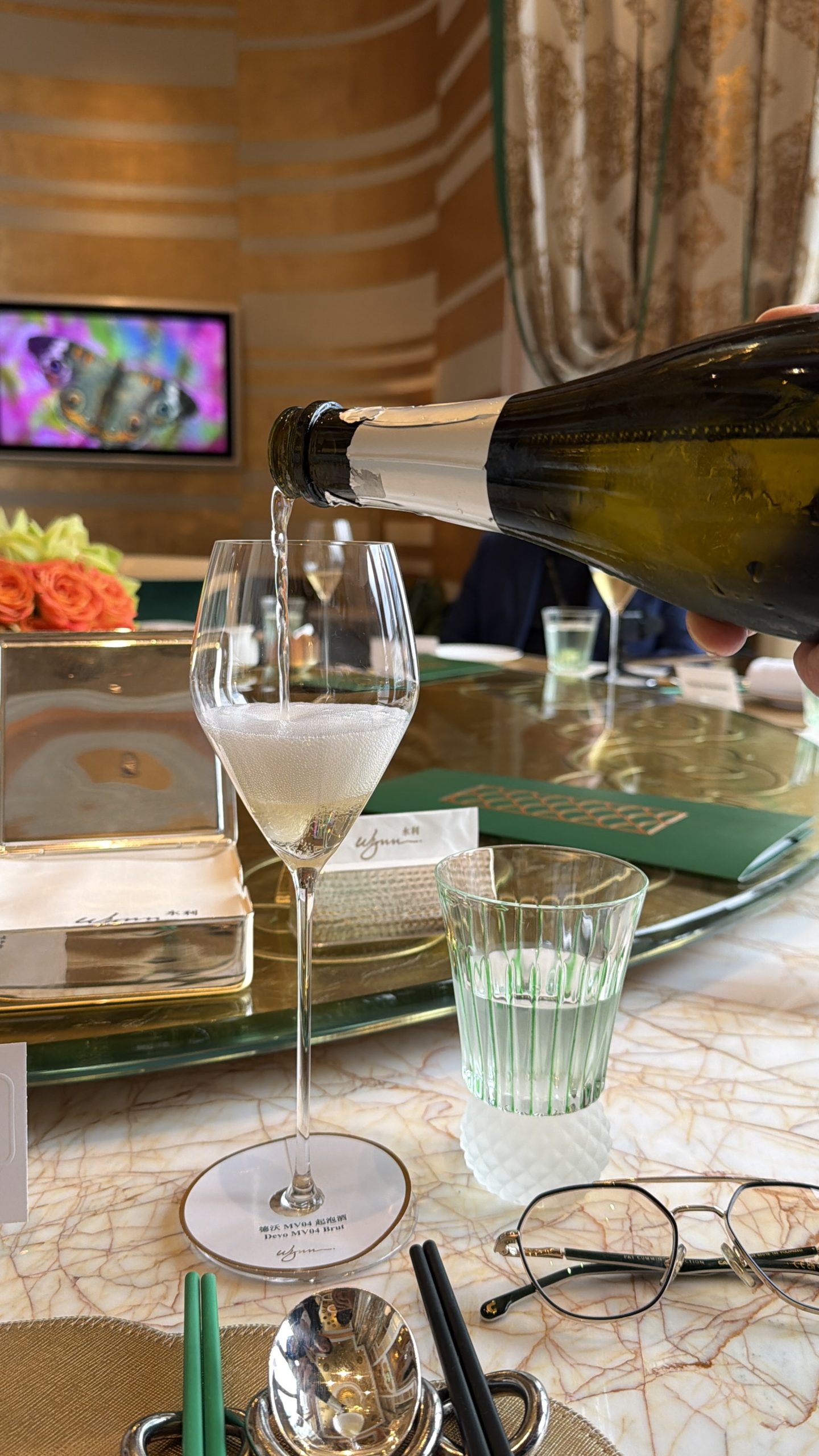
I should say something about the Chinese wines, because they were the unexpected revelation of the meal and I went in with essentially no expectations.
The Devo MV04 Brut that opened the meal was genuinely accomplished — clean, precise, and did its bit by perking up the appetite. The Chateau Nine Peaks Qi Chardonnay 2021 alongside the snow crab was the wine I kept thinking about afterward — a Chardonnay which did not overwhelm delicate seafood, which is a balance many better-known producers fail to achieve. And the Mountain Wave Reserve Malbec 2022 — a Chinese Malbec — was structured in a way that made me think a lot about Chinese viticulture in about two sips.

I’m aware that “Chinese wine is actually good” is a sentence that requires some convincing for most readers. Consider yourself warned that the convincing may be easier than you expect.
The Thought You Leave With
The most interesting thing about this meal was not any single dish. It was the cumulative realisation that the Chinese culinary tradition is so vast, so internally diverse, so layered in its regional distinctions and historical depth, that a lifetime of eating it could still leave enormous territory undiscovered.
Jiangnan cuisine specifically — with its emphasis on seasonal ingredients, its classical techniques, its restraint and its precision — represents a side of Chinese gastronomy that the world’s understanding of “Chinese food” has barely begun to account for. Lakeview Palace, under Chef Kevin Zhu, is one of the places where that gap is being quietly, rigorously, deliciously addressed.
I left with a longer ‘this dish is what I ate’ list than I imagined I would. That, for me, is the mark of a serious meal.
Lakeview Palace is located at Wynn Palace, Cotai, Macau. Executive Chef Kevin Zhu. Reservations recommended.
Nikhil Merchant
Hospitality Writer | Culinary & Bar Consultant | Restaurateur | Brand Evangelist