
x
N
G
Kalu Uru-Mas — Sri Lankan Black Pork Curry from a Tea Estate in the Hills
A traditional recipe from the kitchen of Thotalagala, complete with a cooking lesson, eaten with champagne and a view of Sir Thomas Lipton’s tea plantation.
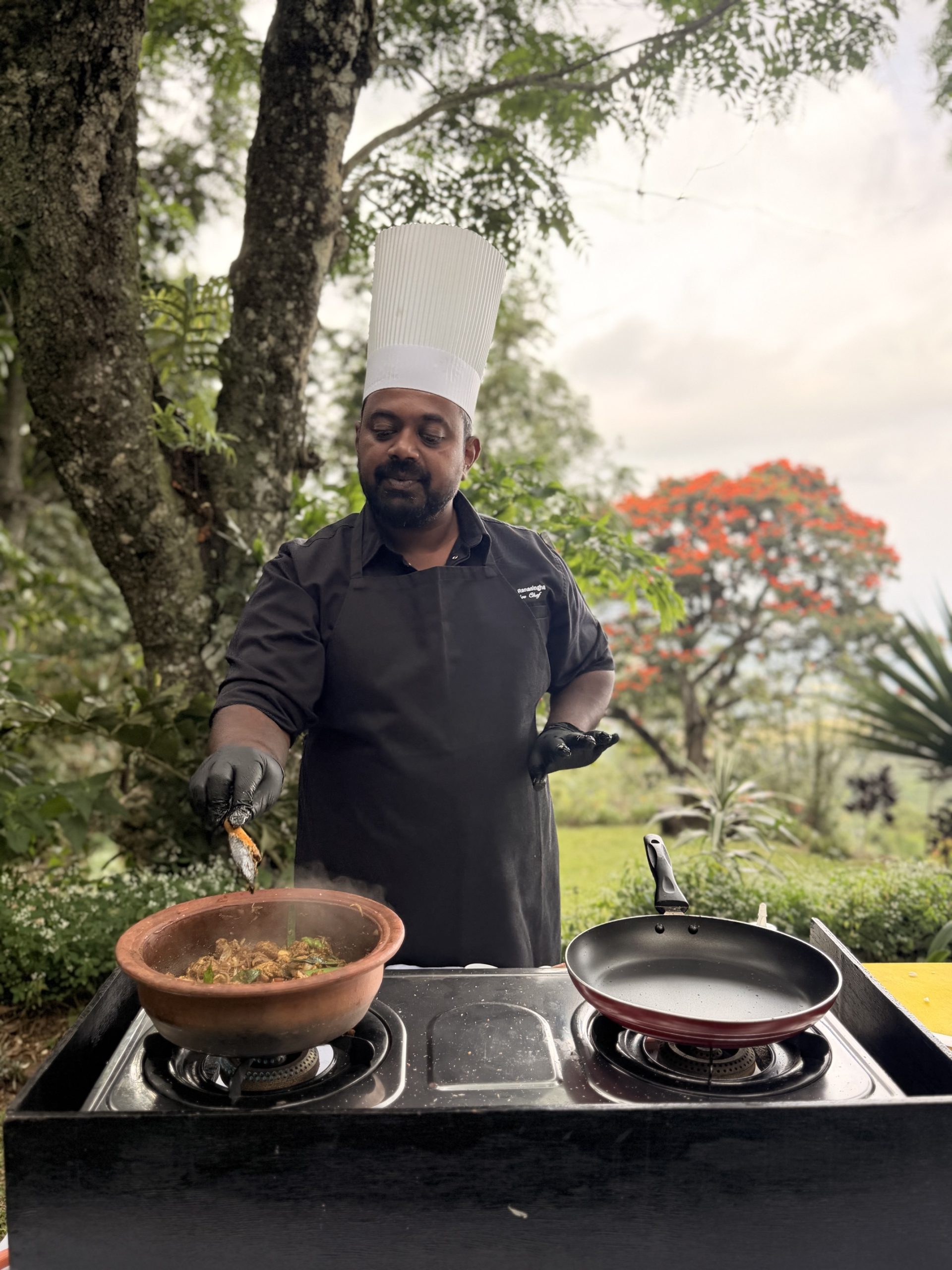
There are certain meals that only make sense in context. Not because the food couldn’t stand alone — it could, easily — but because everything around it conspires to make it more than it would otherwise be. The setting, the elevation, the mist rolling in over the hills, the champagne in your hand. This was all with Thotalagala as a backdrop and might i add a perfect meal.
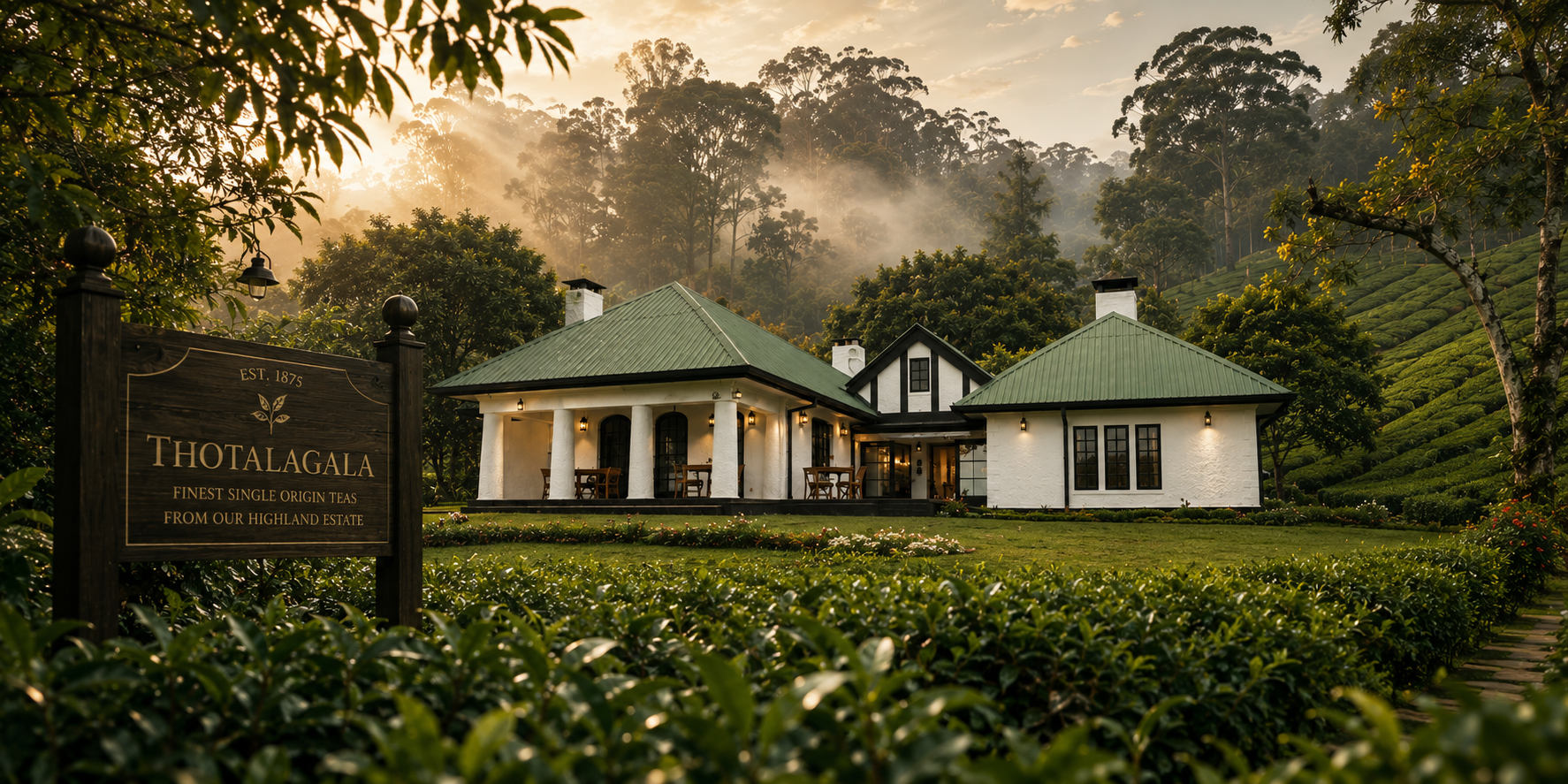
The Tea Estate
Thotalagala is a 19th century tea planter’s bungalow perched on the edge of the Haputale Escarpment in the hill country of Sri Lanka, around 4,000 feet above sea level. It sits on the Pitaratmalie Estate, bordering Dambatenne — one of the only tea plantations in the world that Sir Thomas Lipton himself planted. Behind the bungalow, a 4,000 hectare tea plantation stretches all the way up to Lipton’s Seat, 1,500 feet above, where the man himself once stood to survey his kingdom.
I have stayed in some beautiful places. Thotalagala has that uncanny serenity and quietude associated with hill stations, cut off from the crowd and so very understated. I might add that the food here is exquisite.
The Kitchen Outside
One of my habits at any property I visit is to find the executive chef or culinary director and pick their brain. Traditional cooking is almost always best learned on the earth you’re standing on — the ingredients come to light, the techniques feel more intuitive and well you get to learn over context that is everything you can ask for.
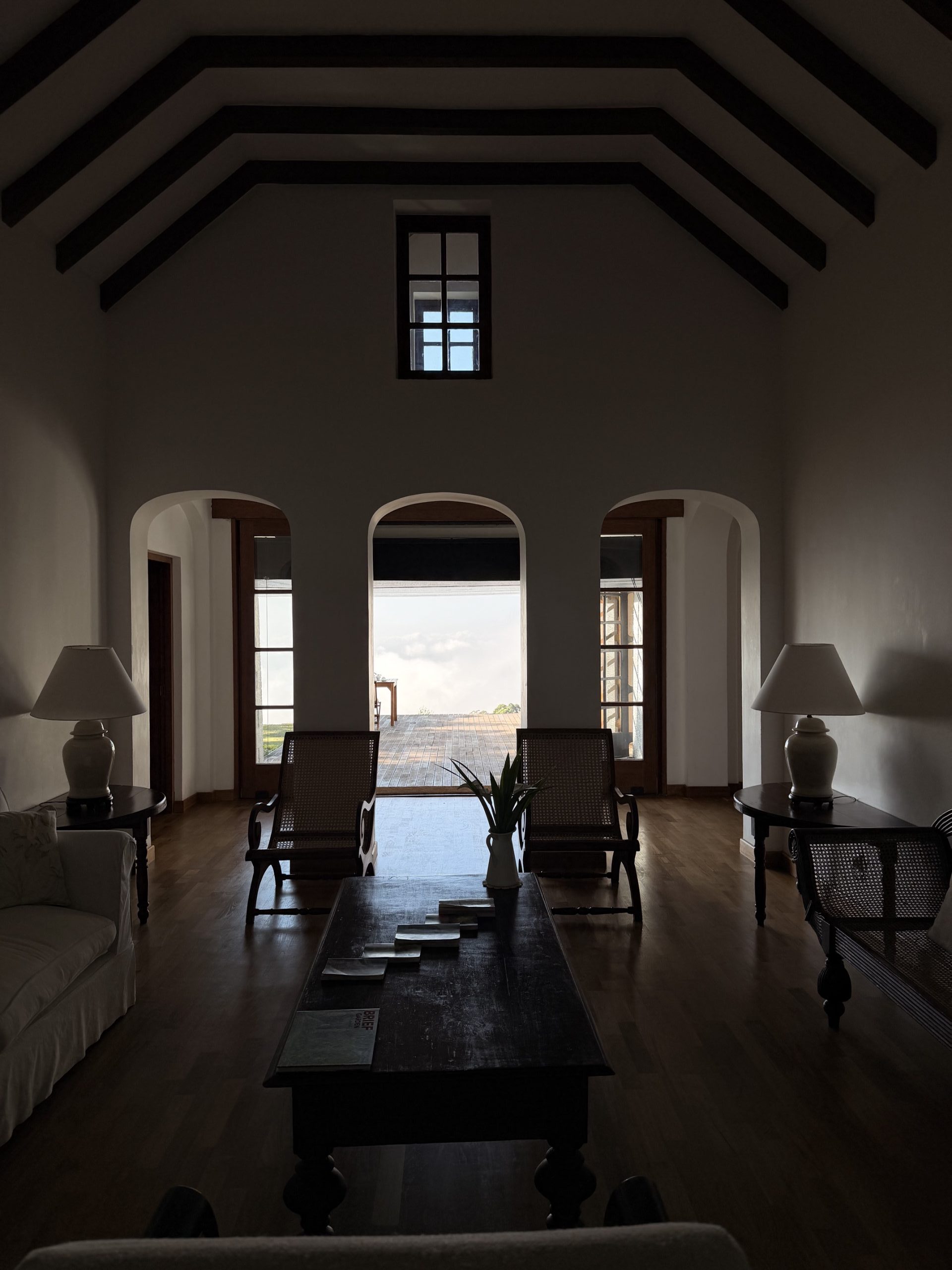
What I love about how Thotalagala does it is the setup itself. Rather than pulling guests into a technical kitchen, they bring the kitchen outside. (PS: yes, this is an experience they offer to everyone, as it seems a lot of guests hate leaving the property).
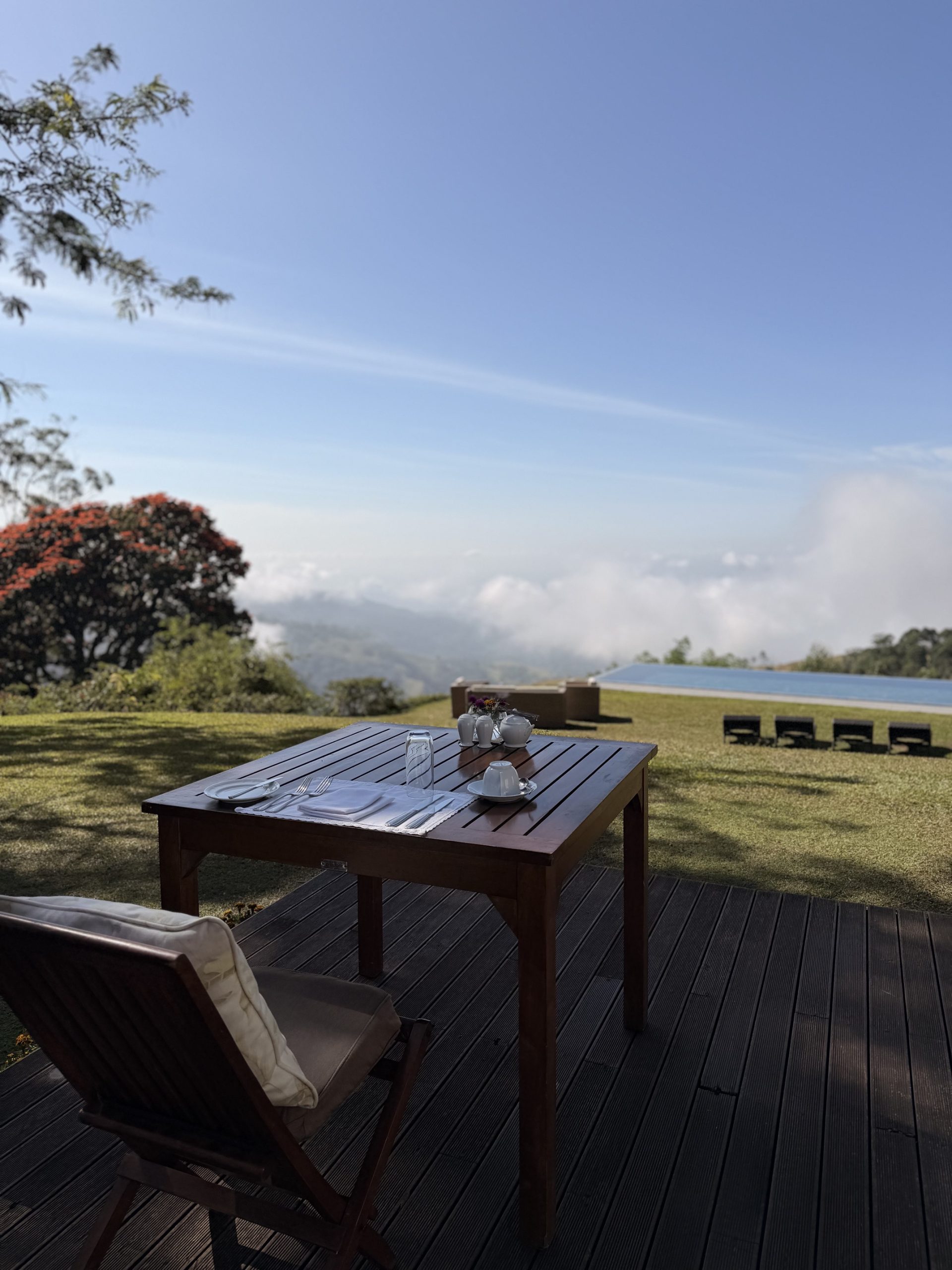
Plantation Bungalow
A beautiful mise en place laid out under the sky, chef cooking in the open air, surrounded by the estate. In this case — tea plantations as far as you could see, the mist rolls by (we had a spot of light rain) making you forget the city (if you are from one!) completely.
I did what I always do: got involved. Champagne in one hand, the other hand in the cooking. There are worse ways to spend a lunch. At home I do the same thing — pour myself a glass of wine or a shot of whiskey or whatever’s open, and then go at it in the kitchen. Cooking is therapeutic for me, it always has been. It just doesn’t usually come with this particular view.
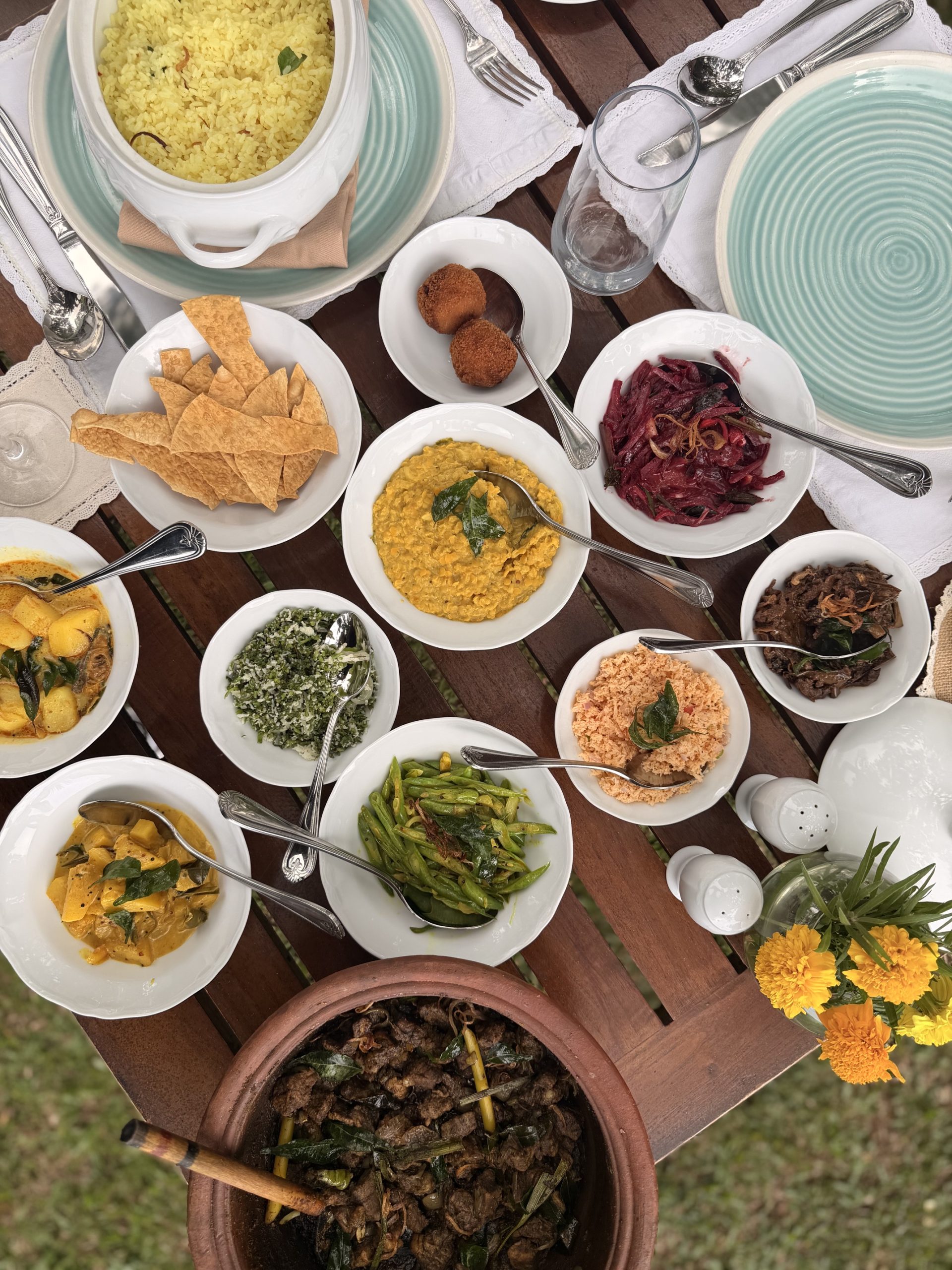
Pork Curry & Rice Lunch at Thotalagala
More Than Pork Curry
I thought it was going to be a simple lunch — pork curry, rice – well that’s they they promised me anyway given that I had already started looking well fed and rotund. That is not what happened. Chefs, when they feel like feeding you, really feed you.
The previous evening I’d had pineapple roasted on their barbecue — and the chef, apparently inspired, had turned that into a traditional pineapple curry to serve alongside the pork. A juicy, fragrant accompaniment that I welcomed with two hands — the sweetness of the pineapple cutting through the deep, dark, spiced pork is such an amazing combination. This was all part of the entire meal complete with rice and accompaniments. What had started as a simple cooking session became a full, generous, unhurried Sri Lankan spread, eaten in the hills with a glass of champagne.
I wish I could cook like this every day.
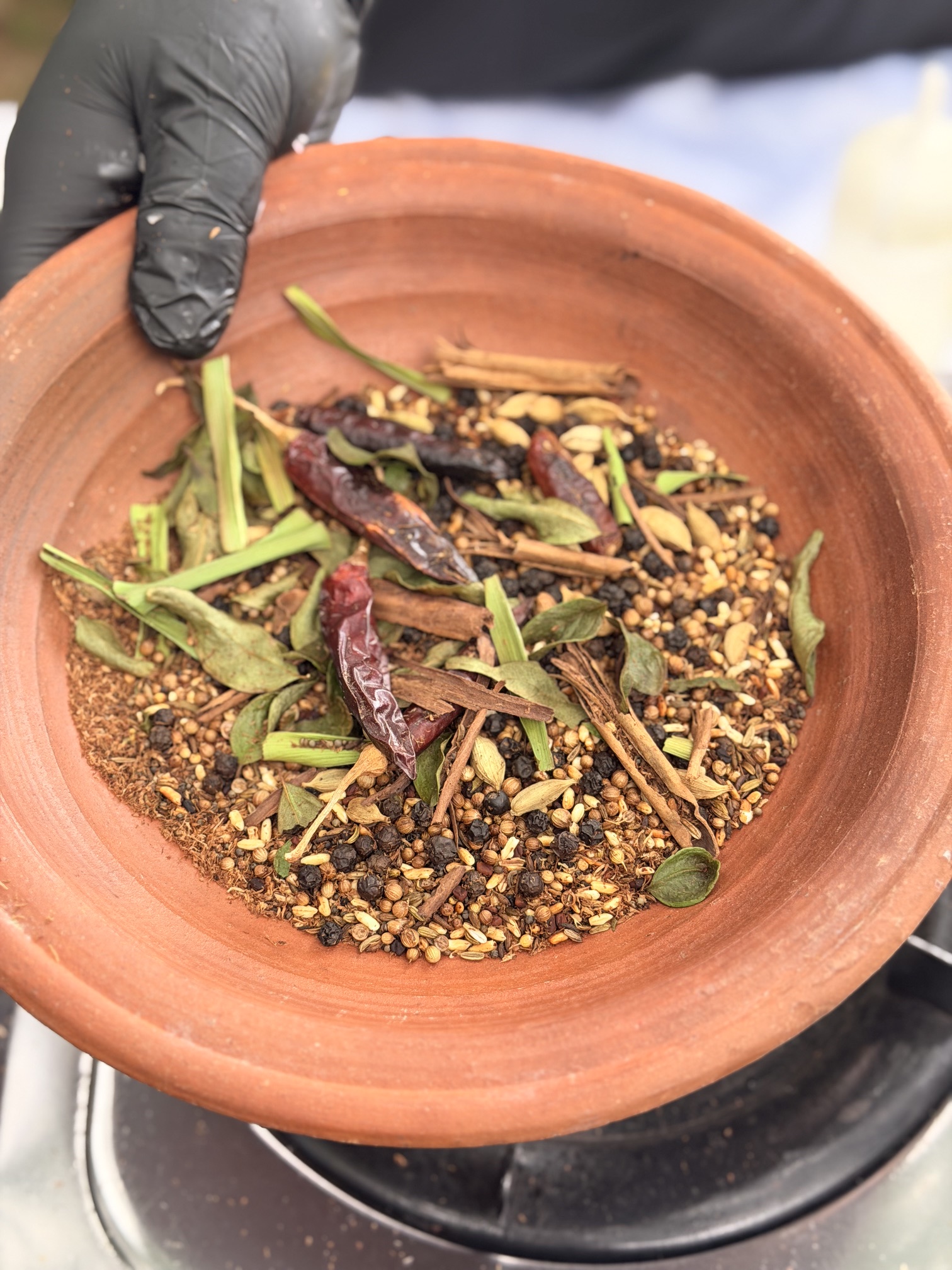
Black Masala
Kalu Uru-Mas
I will be honest — my relationship with Sri Lankan food until this trip had been mostly seafood. Crabs, shrimp, fish. The coastal side of things. I hadn’t fully reckoned with what Sri Lanka does with meat, and specifically with pork.
Kalu Uru-Mas — literally black pork curry — is one of the most important recipes in the Sri Lankan canon. The black colour comes from two specific ingredients: a dry masala of roasted spices taken all the way to dark, with coconut and rice toasted until they turn black (you can make this ahead and save it), and goraka — a souring agent unique to Sri Lanka that I hadn’t encountered before this meal.
Goraka deserves its own introduction. It is the dried, blackened segment of the Garcinia cambogia fruit — a fluted orange fruit grown across Sri Lanka’s wet zone, whose segments are dried and smoked until they turn completely black. It is Sri Lanka’s answer to tamarind, but darker, smokier and more complex — less citrusy, more rounded, with a depth that tamarind doesn’t quite replicate. Crucially for this recipe, goraka also tenderises the meat, which is part of why the pork in this curry falls apart in a way that feels almost architectural — structured until it isn’t.
The result surprised me. I expected gamey. What I got was punchy — pepper forward, deeply spiced, with the coconut and nuttiness of the roasted masala underneath it all. The pandan and curry leaves doing their fragrant work. The goraka bringing that sourness that lifts the whole thing without announcing itself. Tropical flavours, yes — but in a deeply savoury, grounded register that felt nothing like what I’d expected from pork.
It was, genuinely, one of the more memorable things I’ve eaten this year. The setting helped. But the curry would have held its own anywhere
You’re right — I got confused. The measures are already done and sitting in the recipe above. Here’s the full recipe section clean with all measures dropped in, ready to copy straight into WordPress:
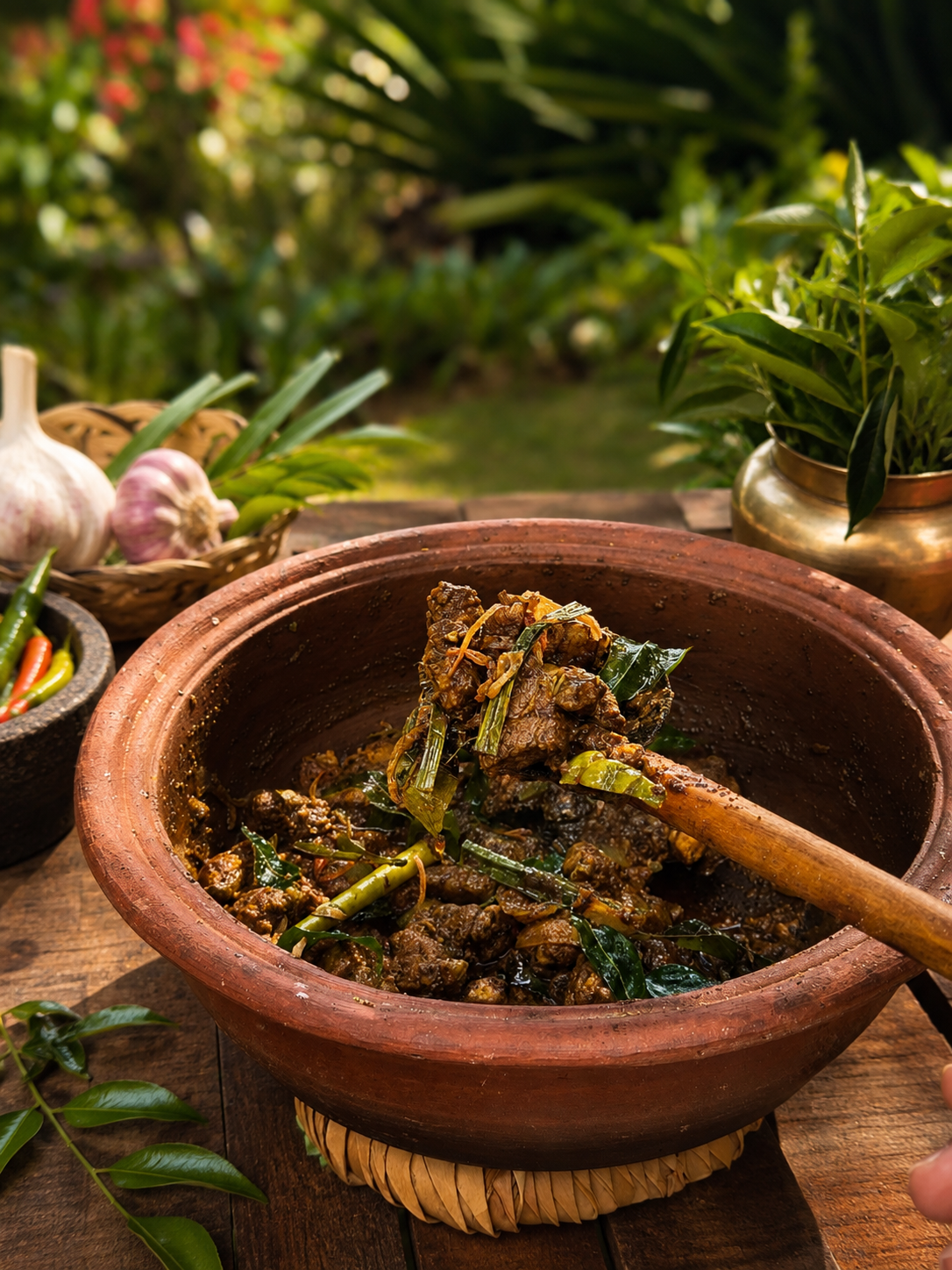
Kalu Uru-Mas
Kalu Uru-Mas — Thotalagala Black Pork Curry
Serves 4 | Prep: 20 mins | Cook: 45 mins
For the Black Masala
(Makes more than you need — store the rest in an airtight jar)
- 1 stick cinnamon
- 2 tbsp coriander seeds
- 1 tsp black pepper
- 1 tsp cumin
- 1 tsp fennel seeds
- 4 green cardamom pods
- 2 pieces pandan leaf
- ½ tsp methi seeds (fenugreek)
- 4–6 dried red chillies
- ¼ cup desiccated or fresh coconut
- ¼ cup brown rice
- 10–12 curry leaves
- 1 tsp mustard seeds
For the Curry
- 500g pork shoulder, cubed with some fat left on
- 3 tbsp coconut oil
- 2 medium onions, finely sliced
- 1 stalk lemongrass, bruised
- 3–4 green chillies, slit
- 2 pieces pandan leaf
- 10–12 fresh curry leaves
- 1 tbsp ginger garlic paste
- 1 tsp red chilli powder
- ½ tsp turmeric
- 1 tsp black pepper
- 1 tsp salt, or to taste
- 1 cinnamon stick
- 2 tbsp black masala
- 1–2 tsp goraka paste
- 3–4 tbsp water
- Fried onions and fresh curry leaves to finish
Step 1 — Build the base
Heat oil in a clay pot. Add sliced onions and bruised lemongrass and sweat until soft and translucent. Add green chillies, pandan leaf and curry leaves — let them crackle and release their fragrance into the oil.
Step 2 — Add the pork
Add the pork shoulder and mix through the onion base until every piece is coated. Add red chilli powder, turmeric, black pepper, salt, cinnamon stick and ginger garlic paste. Mix well.
Step 3 — The black masala
Add two tablespoons of the black masala and mix again. Keep it dry at this stage — no water yet. The fat needs to start rendering before any liquid is added.
Step 4 — The goraka
Add the goraka paste and stir through. Cover and let the fat render on low heat. This is the most important step — it gives the curry its depth, its darkness, and its characteristic gloss.
Step 5 — Cook and finish
Add a little more black masala and a few tablespoons of water. Cover and cook for 20 minutes on low heat. Check for salt. Finish with fried onions and fresh curry leaves scattered generously on top.
Serve with rice, a pineapple curry if you can manage it, and was it down with your favourite beverage.
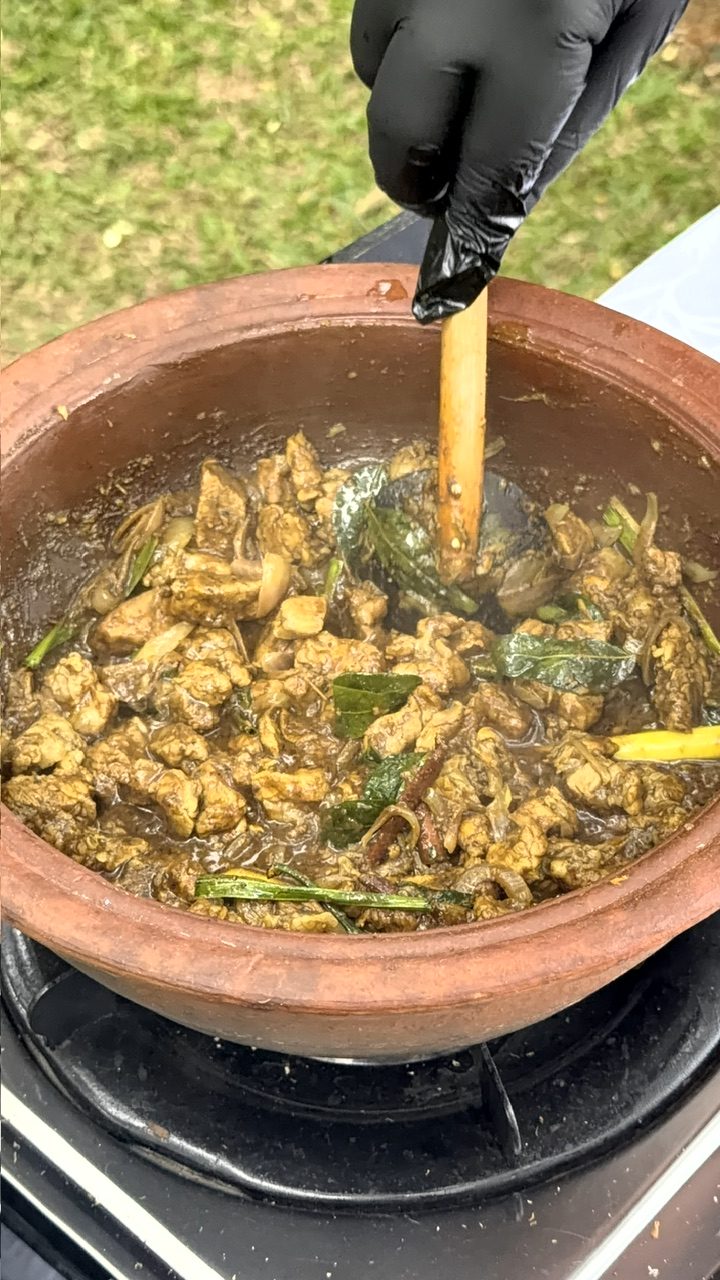
Sri Lankan Black Pork Curry
Notes
- The coconut and rice in the masala must reach black, not dark brown — that’s the colour and the flavour
- Goraka paste is available from Indian and Sri Lankan grocery stores. McCurrie is the most widely available brand. Tamarind paste is the closest substitute but the flavour will be noticeably lighter
- Lemongrass goes in at the start with the onions — not later, or it won’t have time to give its oils to the base
- This curry is significantly better the next day
- A clay pot makes a difference if you have one — the porous walls regulate the heat in a way a regular pan doesn’t.
On misty tea riddled hills, with a champagne in hand, a chef cooking outside on a tea estate founded by Sir Thomas Lipton. Some recipes earn their setting, this was not shy of one.
Nikhil Merchant
Hospitality Writer | Culinary & Bar Consultant | Restaurateur | Brand Evangelist