
x
N
G

Bhel Goes to Finishing School
A spiced kurmura masala that upgrades your bhel, doubles as a chakhna, and makes a very strong case for itself at three in the afternoon.
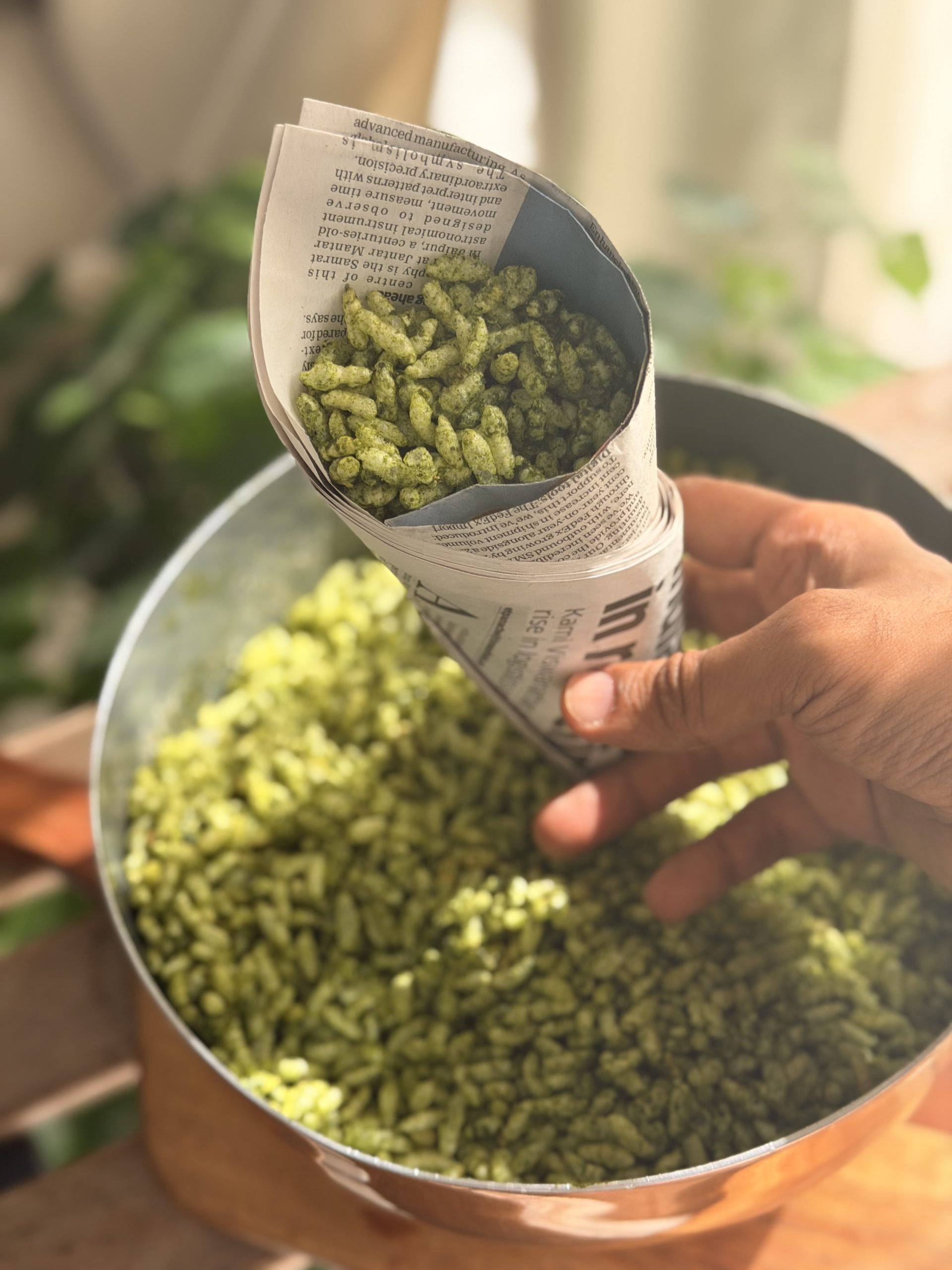
There are very few things in this world that achieve what chaat does in a single bite. I say this as someone who has eaten well — sometimes extraordinarily well — across some of the best restaurants on the planet. And yet, when it comes down to pure flavour complexity, chaat holds its own against all of it. Sweet, spicy, sour, savoury, umami, punchy textures, cooling relief — all in one mouthful. Perhaps I am biased because I am Indian. But I genuinely do not think I have encountered that kind of layered intensity anywhere else. It is, without question, one of the most underrated culinary achievements of mankind.
The Vendor Outside My Window
India’s street food diaspora is staggering in its breadth and regional specificity, and growing up in Bombay meant being spoiled rotten by it. My particular addiction was sev puri. There was a vendor who used to park himself directly outside my building — faithful, reliable, almost architectural in his consistency. Hot afternoons, monsoon afternoons, festival days, school days, the tail end of the month when everyone was broke and craving something — he was there for at least six to eight months of the year without fail.
As a younger version of myself, I ate two packets of sev puri every single day. Not occasionally. Every day (and fun fact: I never shared, I used to get mad if someone even ate one and made the number an odd 11)
He sold bhel too, of course. Most vendors did. But for me, bhel was never really a street food. Bhel was a home thing — made from scratch, kept in the pantry, assembled when the craving struck. It belonged to our kitchen, not to the street cart.
The Architecture of a Proper Home Bhel
The construction is not complicated, but it does require several ingredients — most of which, fortunately, store well. Crunchy rice puffs tossed in ghee and turmeric. Sev, always freshly made and kept in containers. Crisp puris. Three chutneys: a fiery red garlic chilli, a herbaceous green coriander chutney, and the essential date and tamarind sweet chutney that ties everything together. Finely diced onions and potatoes. Raw mango when it is in season — we have a tree, so that is handled. A scattering of fresh coriander. A squeeze of lime and a pinch of black salt.
And it is all eaten immediately, right when it is mixed — many times with just your hands, standing in the kitchen, not bothering with a bowl.
Across India, bhel takes many magnificent forms. The jhalmuri of West Bengal brings mustard oil and peanuts into the equation — sharp, punchy, entirely its own thing. Karnataka has churumuri, the South Indian cousin that keeps things leaner and more elemental. Indore has its own puffed rice bhel, Jammu does a sukha version with dry chutney powder instead of wet chutneys, and then there is dahi bhel — the cooling, yogurt-laden variation that somehow makes the whole thing feel virtuous. Every region has claimed it, bent it to its own palate, and made it theirs. The Bombay version, made the way we made it at home, has always been the one I return to.
The Upgrade
I am always looking — not for shortcuts exactly, but for something that genuinely elevates a humble dish. I came across an interesting recipe for a spiced rice puff and set out to make it. At first it felt like it might be slightly one-dimensional. But as the ingredients came together, something shifted.
Fresh mint. The deep umami of coriander. The bitter, sharp edge of curry leaf. The hit of green chilli. And then a dry masala — jeera, amchur, chaat masala, black salt, powdered sugar, citric acid — that brought everything into focus. What started as a simple experiment turned into something genuinely phenomenal. A wet masala and a dry masala working together, coating every single piece of kurmura until the whole thing becomes something new.
The result surprised me. It works as a bhel base, replacing several ingredients I would otherwise need — including the green chutney, whose job this masala quietly takes over. It works as a standalone chakhna, mixed with whatever is lying around the house. Add some fried peanuts and sev and it becomes the kind of thing you eat standing at the kitchen counter, telling yourself you’ll stop after one handful. Toss in some sprouts and it becomes a healthy snack you can feel good about. But honestly, it is best eaten fresh, bubbling with flavour, scooped up in a cone of kurmura on a slow afternoon.
Bhel, but turned all the way up.
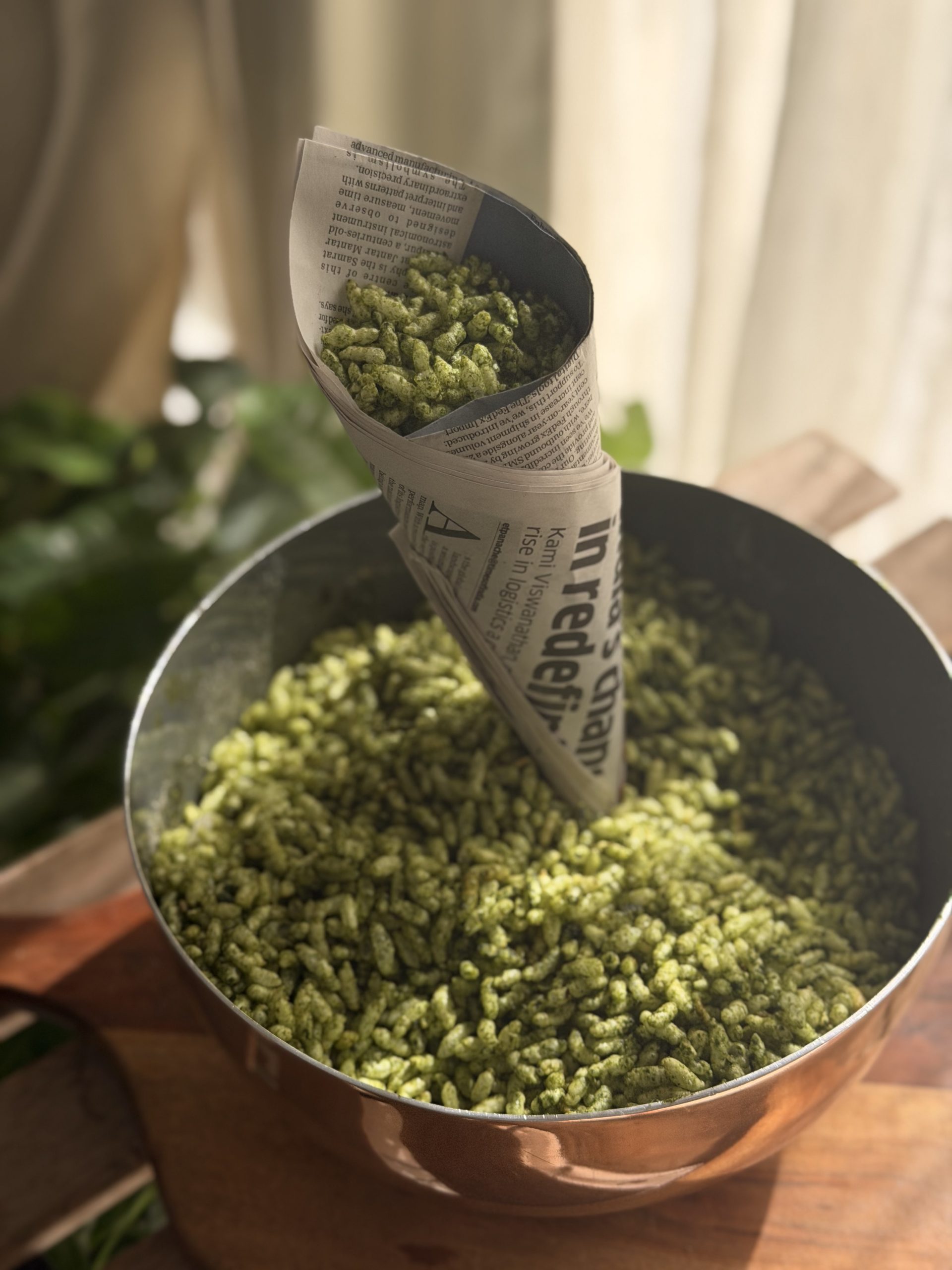
Bhel Masala Kurmura
Elevated Kurmura Masala Bhel
Serves 4 generously, or makes a large batch for storage | Prep: 15 mins | Cook: 20 mins
Ingredients
For the Kurmura 200g kurmura, dry roasted without oil until crunchy
Wet Masala
- 2 cups fresh mint leaves, destemmed and fried
- 2 cups fresh coriander leaves, destemmed and fried
- 8–10 green chillies, fried (adjust this as per your taste)
- 1 cup fresh curry leaves, fried
Fry all ingredients until completely dry — no moisture should remain. Blend into a smooth paste without water, the oil its fried in will emulsify while blending.
Dry Masala
- 1 tbsp jeera powder
- 1 tbsp amchur (mango) powder
- 1 tbsp chaat masala
- 2–3 tsp black salt (adjust)
- 1-2 tbsp powdered sugar
- ½ tsp citric acid
- Salt to taste
Blend into a fine dry powder.
Method
Dry roast the kurmura in a pan without oil until it is completely crunchy. Set aside.
Fry the mint, coriander, curry leaves and green chillies separately until all moisture has evaporated — this is what gives the wet masala its intensity and shelf life. Blend into a smooth paste.
Combine all dry masala ingredients and blend into a fine powder.
Add the wet masala to the kurmura and toss well until every piece is evenly coated and vibrantly green. Then add the dry masala and toss again to coat.
Finish with fried peanuts and sev if eating as a chakhna. For bhel, assemble as you normally would — this masala replaces your green chutney and does considerably more work.
Eat immediately while fresh. The kurmura stays well for about 15 days in an air-tight container – this got consumed in two weeks, but I feel it will stay for atleast 20-30 days.
Notes
- The wet masala must be completely dry before blending — any residual moisture affects both the coating and the shelf life
- Make the dry masala in bulk and store in an airtight jar — it keeps for weeks and works on more than just kurmura
- If eating as bhel, you may find you need less green chutney than usual — this masala covers that ground
- Raw mango, finely diced, is an excellent addition when in season
- Sprouts mixed through make this a surprisingly respectable healthy snack
This is bhel, but with something to say. Make it in bulk, eat it fast, and keep the dry masala in your pantry for when the craving hits without warning — which it will.

Nikhil Merchant
Hospitality Writer | Culinary & Bar Consultant | Restaurateur | Brand Evangelist