
x
N
G

The Juste un Clou and the Man Who Understood It
The Inheritance of Taste
I come from a family where jewellery was never about resale value.
In a culture where gold is often treated as liquid asset, this distinction matters immensely — something to be weighed, converted, liquidated at the right moment. The people who raised me had a different relationship with the pieces they wore and the pieces they left behind. Jewellery, in my family, was considered wealth. Not materialistic wealth. It was more often than not the other kind, one which carries a timeless elegance that no valuation can quite capture.
The first pieces I ever owned were diamond buttons. Achkan buttons, to be precise — made for Indian wear, especially during festive times. My grandmother had them made in the same design for her husband, then for her son, then for her grandchildren — which meant me and my brother. Three generations, which could have easily passed on one to the other, but somehow this was a simple case of hierarchy of love.
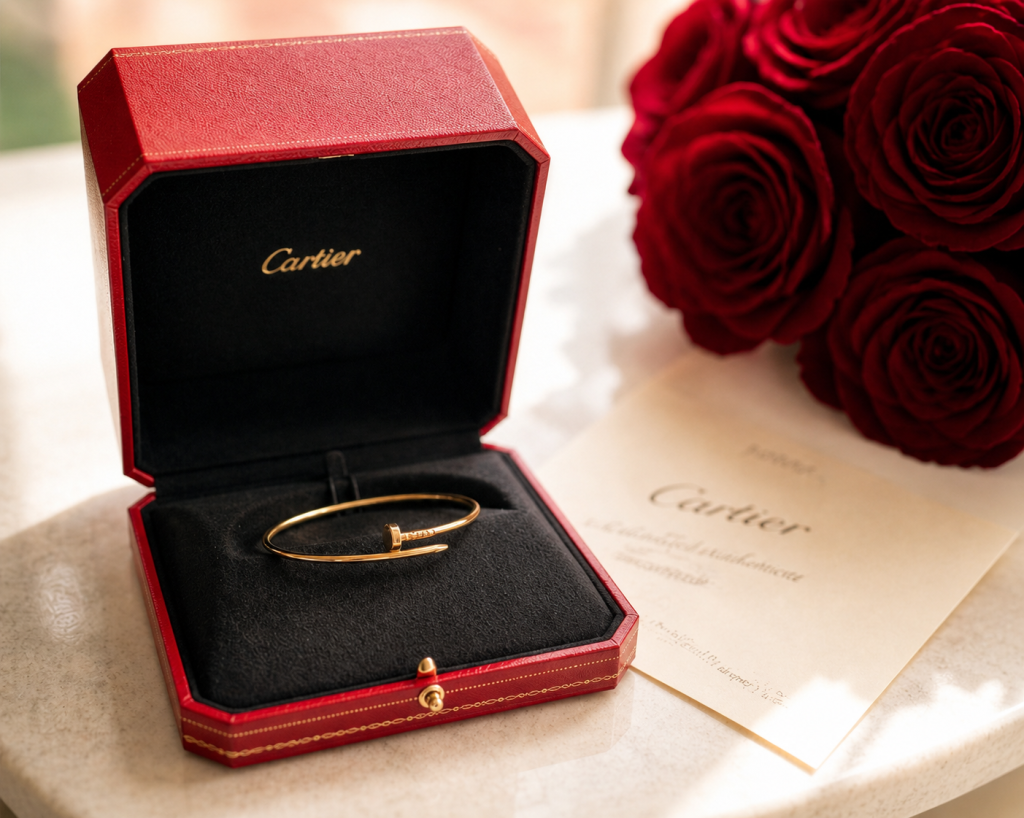
That sensibility ‘jewellery as legacy rather than liquidity’ is the lens through which I’ve come to understand every piece I’ve ever been drawn to. And it is, I realise now, exactly why the Cartier Juste un Clou found its way to my wrist.
The Heirloom Argument
There is a conversation which has, over time, being happening in the way men relate to jewellery — and it is more culturally layered than most people acknowledge.
In India, men and jewellery have always had a relationship. The grandfather’s gold kada. The religious thread worn since childhood. The signet ring passed down from a father who received it from his. These were not fashion choices. They were statements of continuity, perhaps legacy — objects that carried the weight of where a family came from and what it stood for.
What is shifting now is the intentionality around it. My generation of men is beginning to approach jewellery the way our grandmothers did, it has more to do with a discernment of sorts with the understanding that what you put on your body should mean something beyond the moment you bought it. It should be worth passing forward when the time comes. That is a different kind of thinking to what most men my age were taught about what belongs on a wrist or a finger, and it is the thinking that led me, eventually, to the Cartier Juste un Clou.
I am proactively building that legacy. The pieces I own today are chosen with the next generation in mind — not as an asset to be liquidated but as objects that will carry my story forward the way my grandmother’s diamond buttons carried hers. The Juste un Clou is one of those pieces. And the reason I chose it begins, as most good stories do, with the story of how it came to exist.
Aldo Cipullo and The Nail
Cartier is not a new discovery for me. For my 40th birthday, my two wonderful cousin sisters in Los Angeles surprised me with the Trinity bracelet — a piece I’ll write about properly someday, because it needs a place of its own. That gift opened something. Within a short while of wearing it and understanding what it meant to have a Cartier piece on my wrist, I went looking for a second one.
I found the Juste un Clou. And the reason I chose it over everything else in the catalogue was its story.
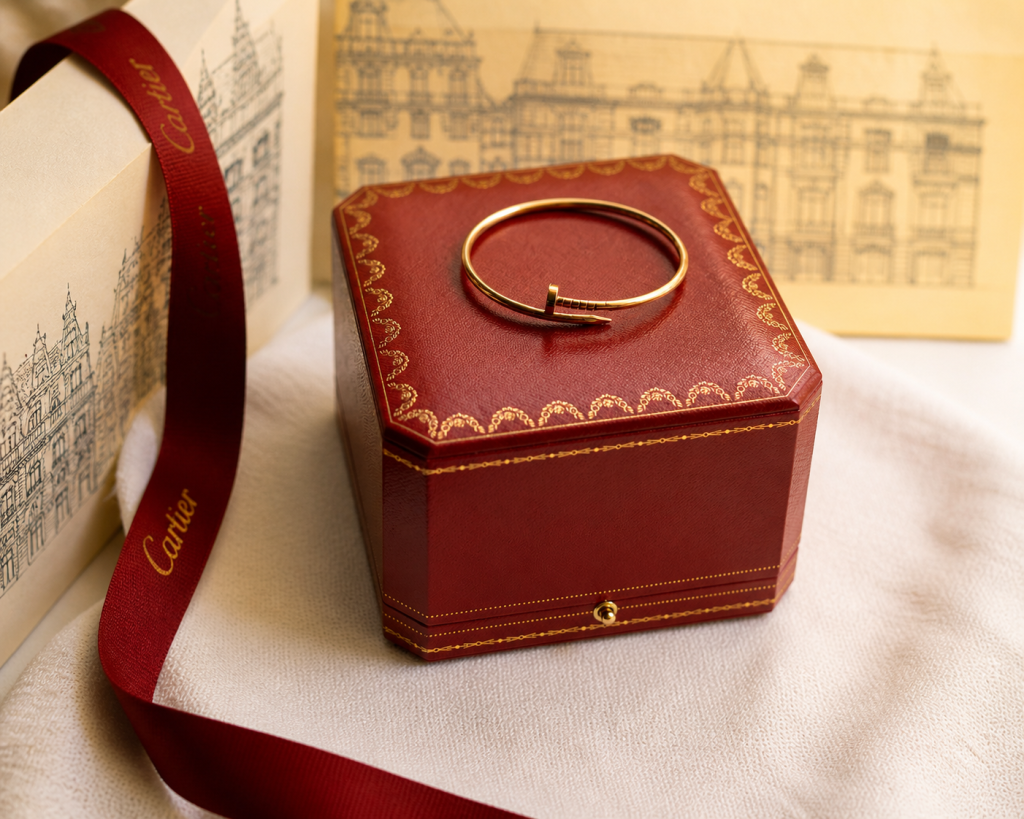
The Juste un Clou was created in 1971 by Aldo Cipullo — the same designer who gave Cartier the Love bracelet two years earlier. Cipullo was Italian, New York-trained, and had a particular gift for finding luxury in the industrial and the ordinary. He designed the Juste un Clou to reflect New York’s wild and independent spirit during the 1970s — a city that was loud, chaotic, and completely sure of itself. He took a nail. A hardware store nail. Bent it in gold and put it on the wrist. Called it Juste un Clou — just a nail. And meant every word of it.
The design disappeared from Cartier’s lineup for decades before being brought back in 2012, when it immediately resonated with a new generation looking for bold, unconventional luxury. That return is telling. The world caught up with what Cipullo already knew in 1971 — that the most subversive luxury is the kind that is seen only when really looked at.
The Object Itself
I chose the simplest version. No diamonds, no pavé, no embellishment beyond the nail itself in gold. That decision was a given — I wanted it on my wrist for myself, not for anyone else. The most personal pieces are the ones that choose not to stand out.
What strikes you first when you hold it is how resolved it is as an object. There is nothing to adjust, and moreover nothing that could be removed or added without ruining it entirely. It is complete. A nail, bent to follow the curve of a wrist, with nail heads at each end that sit flush against the skin. Cipullo himself said his jewellery should be functional and touchable, sleek and warm — and this is exactly that. It can be worn 24 hours a day without any problems regardless of change of clothes. I can confirm this from experience. It goes everywhere I go.
What I didn’t expect was how it would make me feel wearing it. There is a quality to this bracelet — and I am aware of how this sounds — that genuinely enhances how I carry myself. It’s understated to the point of invisibility. Precisely because it doesn’t. I feel it more than I think about it, which I suspect is Cipullo’s greatest achievement with this design.
The moment I keep returning to: driving, my arm resting on the steering wheel, the bracelet catching the light of the afternoon sun. That glint, that private reminder of how far I’ve come in terms of the choices I’m making, the things I’m investing in. That moment, repeated enough times, becomes its own kind of ritual.
The Genderless Conversation
Here is what the Cartier Juste un Clou men who wear it understand — and what most people observing it from the outside don’t.
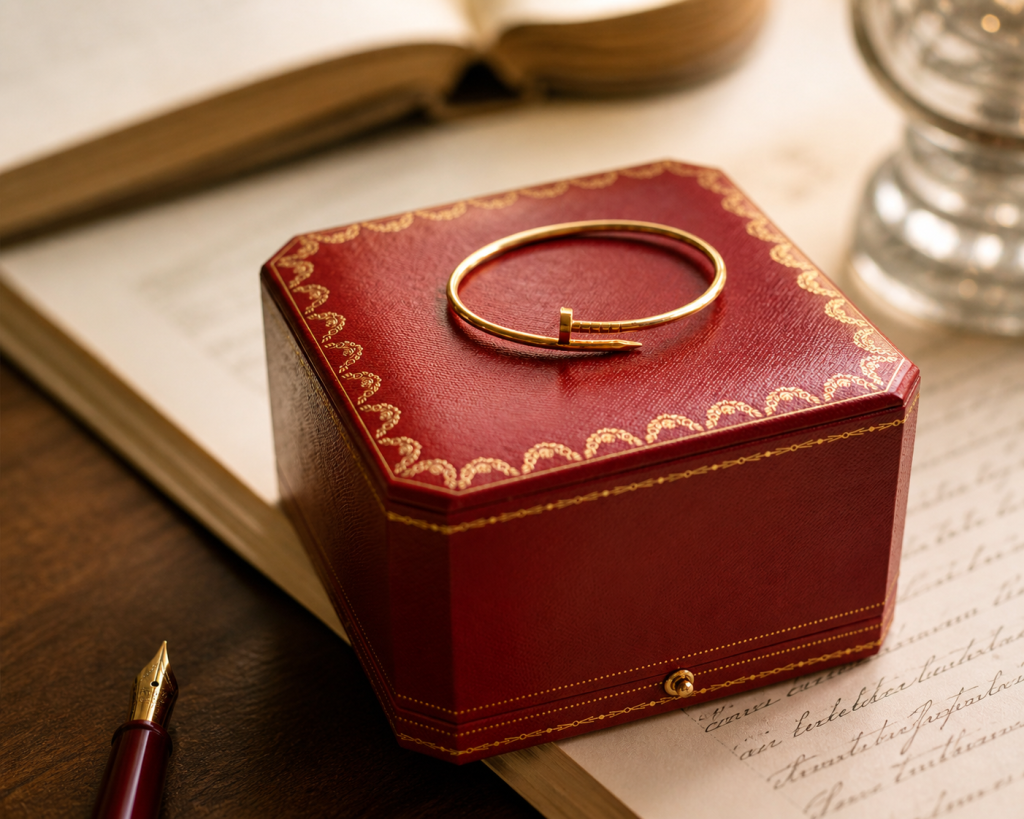
The piece was never designed with a gender in mind. Cipullo made it for anyone who wore things as a choice. The fact that it migrated into being perceived as primarily a women’s bracelet is a function of how luxury marketing evolved over the decades — not a reflection of what the piece actually is. Cartier has acknowledged this openly, and the genderless positioning of the Juste un Clou now attracts a young, international clientele that understands exactly what it’s buying into.
What is happening now — quietly, in the wardrobes of men who think carefully about what they put on — is a correction. The most interesting thing in luxury dressing right now is not a new drop or a collaboration. It is men choosing pieces without gender labels, worn without explanation, that carry genuine history and genuine craft. The Juste un Clou was fifty years ahead of that conversation.
What draws me to it is how it rarely gets noticed immediately, and when it does, it starts a conversation rather than ending one. It is widely recognised among those who know their Cartier, and completely invisible to those who don’t — and that gap is something I actively look for across everything I choose to wear. The Cartier Juste un Clou men who get this tend to wear it the same way. Subconsciously mute, without needing anyone else to validate the choice.
How To Wear It — My Take
Every day. That is my honest answer.
It works with everything I own, be it a white shirt, open collar or a well-cut suit — same. Weekend clothes, a drive, a dinner thats casual or formal — the Juste un Clou requires no occasion because it creates its own.
My one strong recommendation: wear it alone on that wrist, at least initially. Let it have the space it commands. Once you understand how it sits and moves and catches light on your specific wrist, you’ll know instinctively whether anything else belongs alongside it. I eventually added a simple bead bracelet on the same wrist — but that came much later, and needs a bit of confrontational adjustment.
The Investment Case
For those who think about these things — and if you’ve read this far, you probably do — the numbers are worth knowing.
Between 2024 and 2025 the Juste un Clou collection recorded price increases of between 2 and 3% overall, continuing a pattern of steady, controlled appreciation that Cartier applies deliberately to its iconic lines. This regular progression confirms the safe haven status of the Juste un Clou, whose contemporary design attracts an international clientele and supports year-on-year valuations.
This is not a piece that spikes and crashes. It is a piece that consistently becomes worth more — in monetary terms as well as every other kind. Which is, I would argue, exactly the kind of investment worth making.
Buy the simplest version you can afford. Wear it every day. Pass it on.
A Final Word
My grandmother made diamond buttons in the same design for three generations of men in our family. She didn’t explain why. She didn’t need to. The act of making them, the continuity of the design, the fact that we all wore the same thing on the same kind of evening — that was the statement.
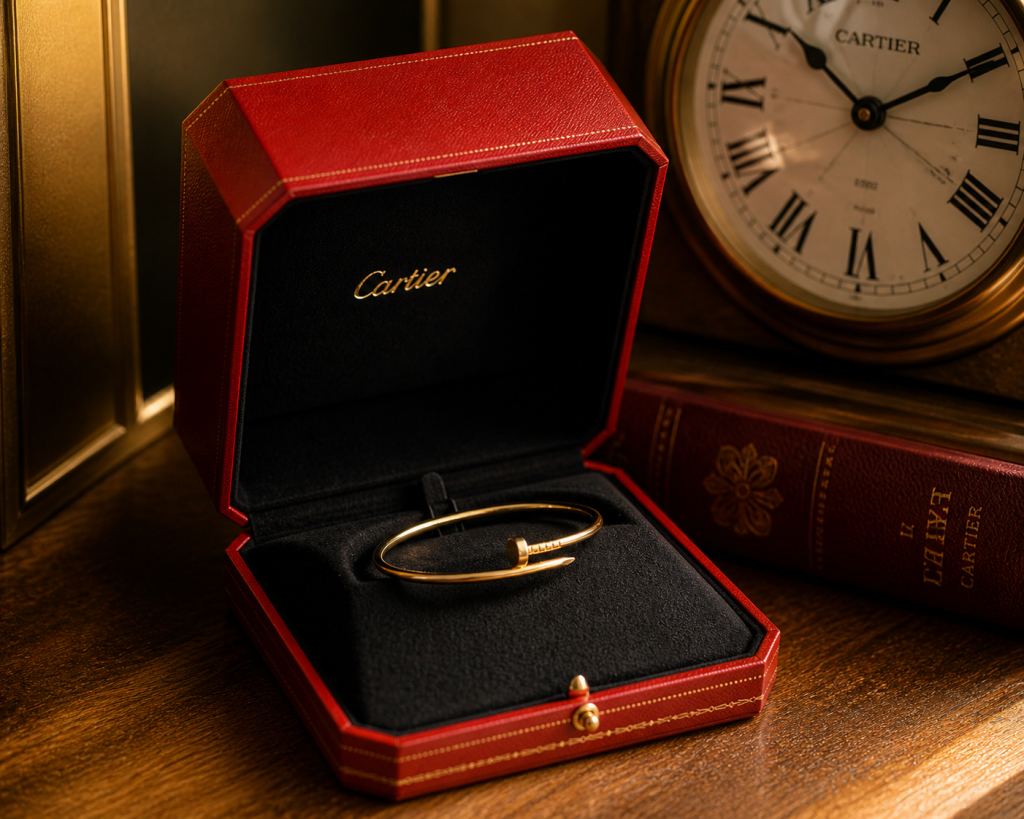
I think about that when I look at the Juste un Clou on my wrist. I am doing the same thing she did, in my own way, with my own choices. Building something forward. Adding to what was left for me. Creating the next layer of a story that started long before I arrived and will continue long after.
Wear things that mean something. Invest in what you can pass on. The rest takes care of itself.
The Cartier Juste un Clou is available at Cartier boutiques in India and internationally. Prices vary by metal and configuration — the classic yellow gold bracelet is the most timeless starting point. This is not a sponsored post. All opinions and experiences are my own.

Nikhil Merchant
Hospitality Writer | Culinary & Bar Consultant | Restaurateur | Brand Evangelist