
x
N
G
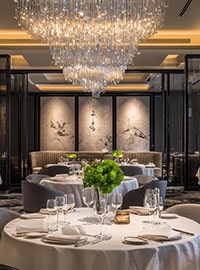
Dum Pukht, ITC Maratha (Mumbai)
Royalty – a word synonymous withIndia. We have grown up reading rich tales of folklore which were inundated with Kings and Queens who lived in much pomp and splendor. A fantasy imbibed in each of us in our childhood and which somehow worked to our benefit in our growing years as we strived to reach a stage with an abundance of luxury and the good life.
Not many of us are lucky as the ones who dared to dream of such affluence, but it can definitely bottle down to one meal at a place exuding such a Royal aura and that will make you feel no less a king who is served up his daily dinner.
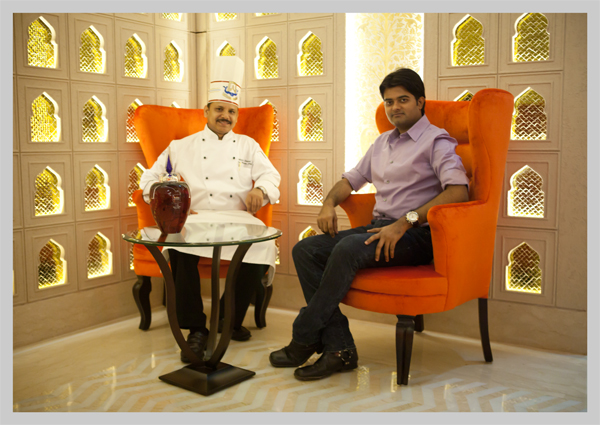
When I first visited Dum Pukht, a chain of restaurants closely cocooned by the ITC Hotels Group, I was enamored by their casual yet dignified elegance. They revamped recently and I went back, in my stance, as an avid food enthusiast to experience the cuisine through the eyes of their creator – Chef Mohammed Shareef, ITC Hotels much talented Senior Master Chef who wields his knife in the kitchen as Royalty would once do with their swords on the battlefield.
Chef Shareef was patient enough to answer each and every intrusive question I threw at him, he was initially hesitant in giving out too much information lest I was after the secrets of his kitchen, but was rest assured when I eased a passion for information regarding the famed Awadh Cuisine, the food of the Nawabs and proudly predestined to be the Grand Cuisine of India.
Chef Shareef took me on a journey through which he has traveled himself in the course of his cooking career. A one of a kind Chef who laid more emphasis on the fact that the recipes he creates and dishes out are born out of the kitchens of his descendants which brings about traditionalism at its very best. He explains that Awadh Cuisine is a very meticulous process. Slow cooking being its core essence, the Dum style of cooking, infamous with the Indian Royalty, breaches the very code of everyday common cooking. It is now renowned around Indian cities and quite associated with the Royal states ofHyderabad, Kashmir & Bhopal amongst others.
The restaurant Dum Pukht in Mumbai which I visited and the other sister establishments are all under Chef Shareef and his Team’s control. He explains that each and every dish is cooked with a special “predominant” spice or spices which are present in taste and perfume but do not overwhelm the final dish. This style of cooking that is ‘Dum’ or slow cooking in an enclosed well sealed vessel over natural fire on a very low flame, is particularly adapt at retaining the flavors, textures and aromas of the dish in question be it Pulses, Rice, Meat or Vegetables. Since the process involves cooking ingredients for a dish in traditional pots called Handi’s (made of metal or mud) and sometimes finished on open coal or wood fires, it automatically retains the juices of the meat and vegetables thus marrying them flawlessly with the other ingredients such as the spices or condiments according to the nature of the dish.
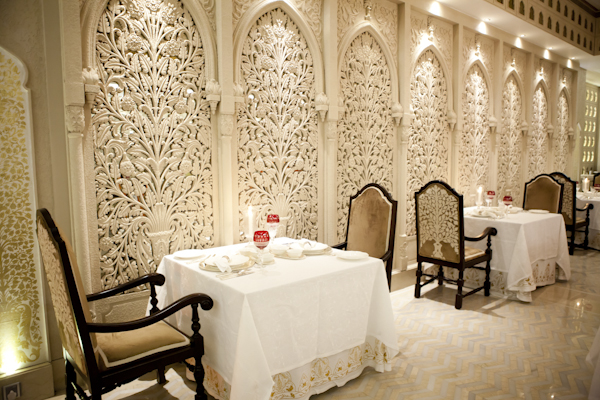
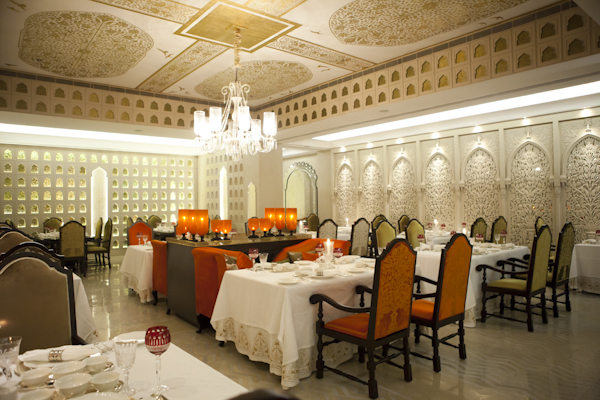
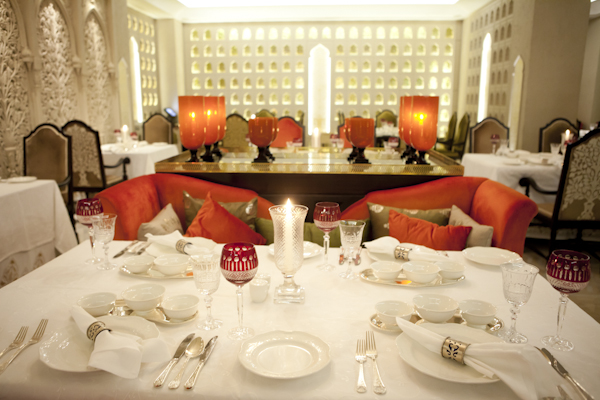
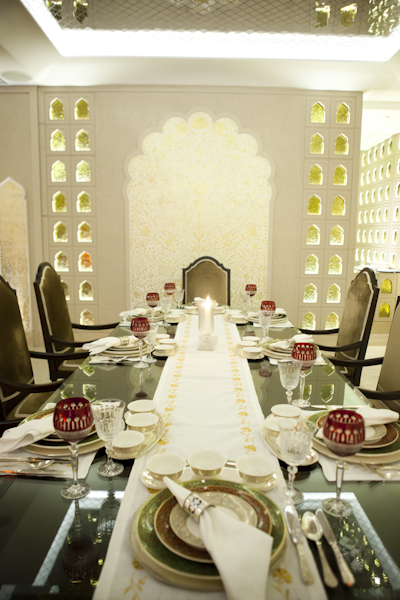
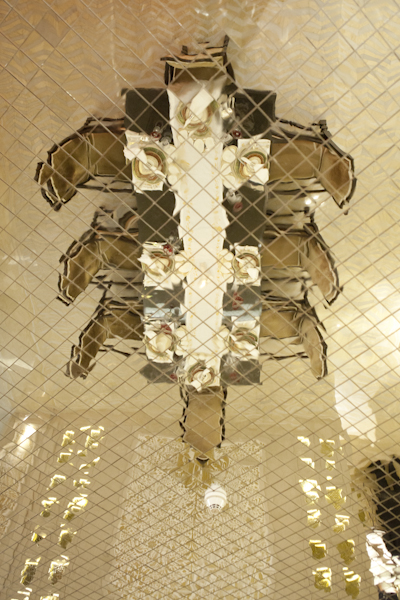
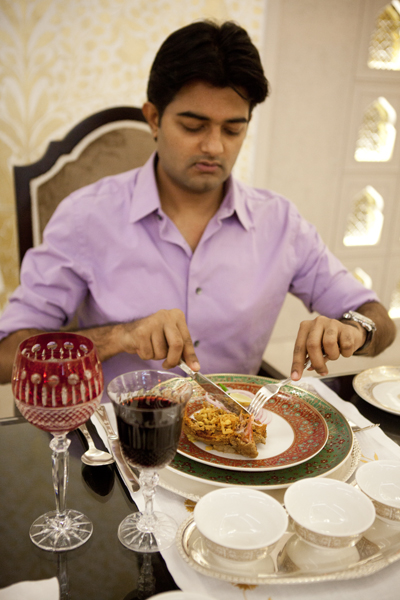
The restaurant itself was refurbished to mirror the opulence of Royalty, with dense bright wood work all along the walls to match the intricate Persian influences right down till the olive greens and bright burnt orange customized upholstery to recreate the warmth of burning embers. The walls reflect the ambiance of the gold flaked ceilings while the flooring resembles flowing water. This restaurant had won the Miele Guide Awards for best restaurant in the year 2011-2012. They have a special Nawabs table which is an exclusive table for ten and has a predefined menu or even a customizable one. The ceiling above this table is particularly interesting as it resembles flowing water when you glance at it, but its made of strategically placed diamante shaped mirrors.
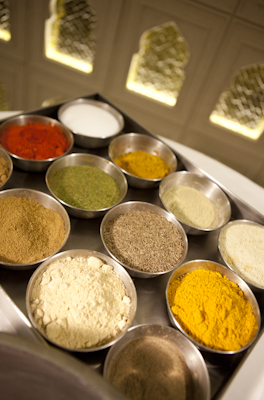
Though I have had a couple of dishes off the menu in the past, Chef Shareef and I decided to dish out some of his favorites and mine too while he gave me a blow by blow account on the process of some of Dum Pukht’s famous dishes. He brings out his hand pounded and traditionally mixed house-blend of masala’s and runs me through each and every one of them, explaining the intricacies of their flavors. Intense as they are fresh, they do sure pack a punch to flavor those meats, vegetables and curries with just pinch.
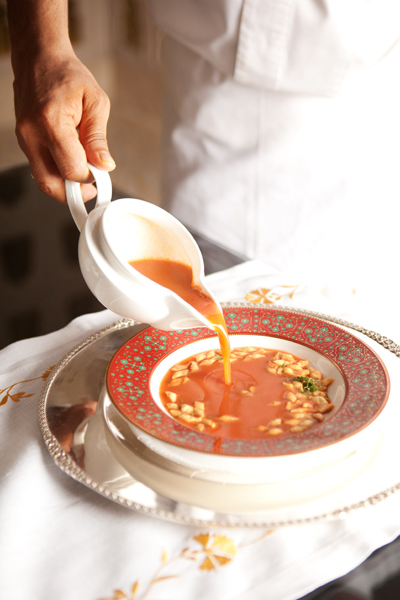
We started off with a flourish of a hearty Shorba. Originally a curry but since it has the consistency of soup it is served as the first course of an Awadh Meal. Chef Shareef poured the deliciously thick but lightly flavored Timater Shorba which has been cooked overnight on a slow fire from a carafe (traditionally served this way) into a low bottomed bowl. This Shorba is a bright red hued liquid, flavored lightly with cumin and coriander of which the pieces are negligent as he explains that they have been added only to give flavor and not texture.
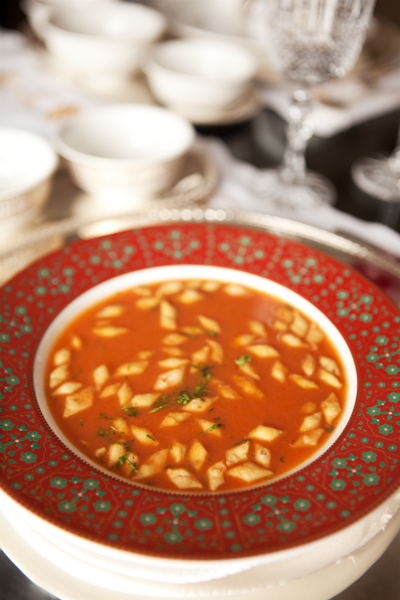
Finished off with crunchy wheat crisps, this is a tangy start to this meal. In my previous visit’s I had the opportunity to taste Chef Shareef’s signature Shorba Purbahar which is another rich soup but made of lentils and lightly flavored with ginger and coriander and a hint of fiery chilies, the addition of crunchy alfa-alfa sprouts to this soup while its being poured into your bowl is a definite hit.
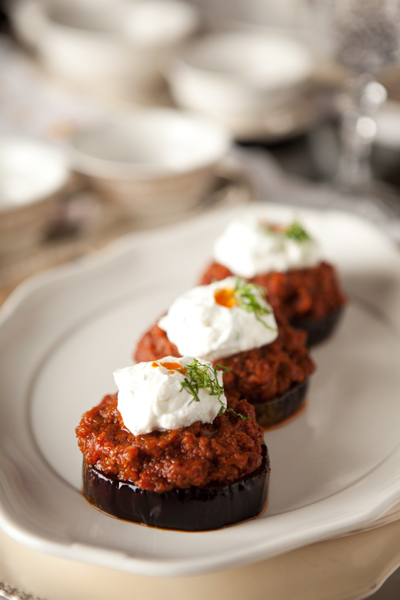
I insist that he get out a main dish which is a revered creation of his called the Dum Pukht Badin Jaan, this is actually a main but I preferred chowing down on it unobstructed by any other condiments or accompaniments. This dish is a rich preparation of thick marinated Brinjal slices, which are flash-fried and topped with a chunky tomato concasse; they are then finished off on a Dum and topped with dollops of smooth yoghurt whipped with cream and flavored lightly with garlic. Incidentally this is one of their vegetarian inclusions in the menu amongst other signature vegetarian dishes which are thoughtful additions for the discerning vegetarian diner, especially a special vegetable called Gucchi. Chef Shareef explains that vegetarian Awadh cuisine has recently materialized, originally it was all about the meat but the same process and technique can be applied to bring about flavors similar to the cuisine with ingredients and vegetables which were used in original Awadh Cuisine.
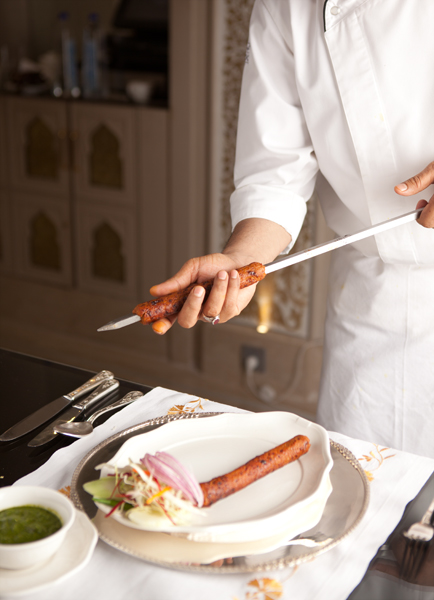
We go back to Kebab’s on the insistence of Chef Shareef, who demonstrates how the famed Dum Pukht Kakori is made. Minced lamb with no alternate meat to mar the flavor is flavored with his house-blend masala redolent of saffron, cloves and cardamom; he wraps each handful of meat onto thick metal skewers, douses them in pure ghee and cooks in a charcoal tandoor. They are carefully removed from the skewers while still hot (with his bare hands) and plated.
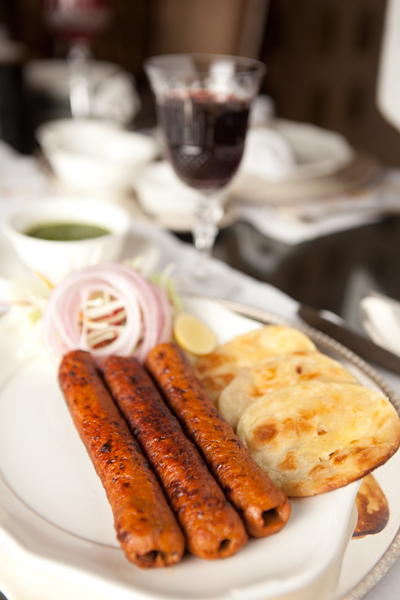
Chef then proceeds to give it a brush of pure ghee and serves it hot with a traditional sweet Indian bread called Shirmal. This kebab is a specialty as it looks crisp but the moment you touch your fork to it, it comes off in one scoop and spreads luxuriously as you place it on the Shirmal.
We are back to the mains when Chef Shareef brings out a hunk of pre-soaked marinated lamb leg of approximately 800gms in rum called Raan-E-Dum Pukht.
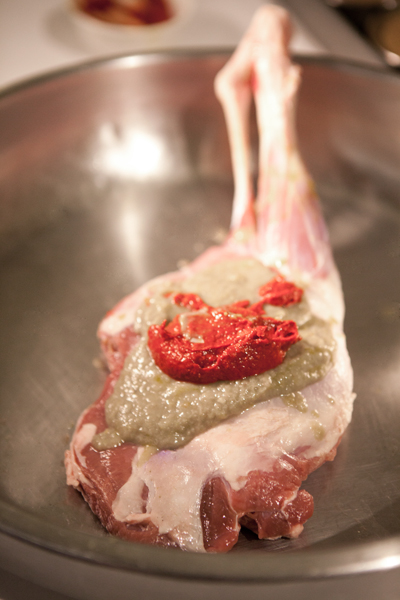
Chef proceeds to cut one side of the meat and rubs it generously with ginger garlic, red chili paste and salt and marinates the meat for about 1 hour. He mixes up a filling of Lacche (slivered) Onions, Cheese, Mint and a special Garlic pickle which is a secret house mix with other spices pinched in for good measure.
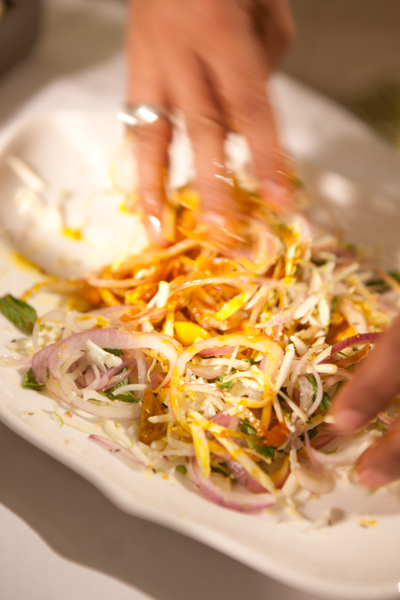
He proceeds to fill the re-marinated leg with the filling, sews up the opening with a thick thread and takes it back to the kitchen to finish off the cooking process on a Dum (sealed with a flour seal) which takes close to two hours for the meat to tenderize. The filling spreads to each and every nook and corner of the hollowed out meat.
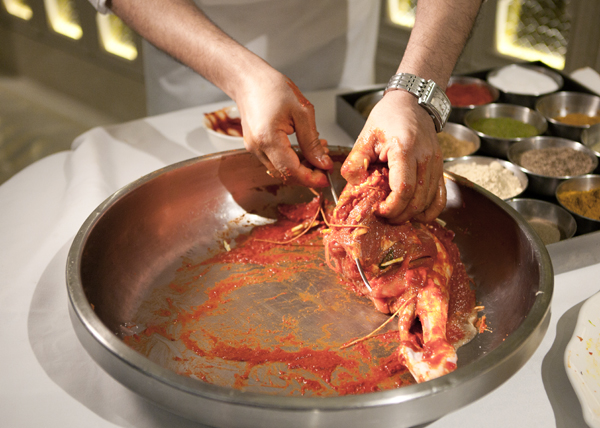
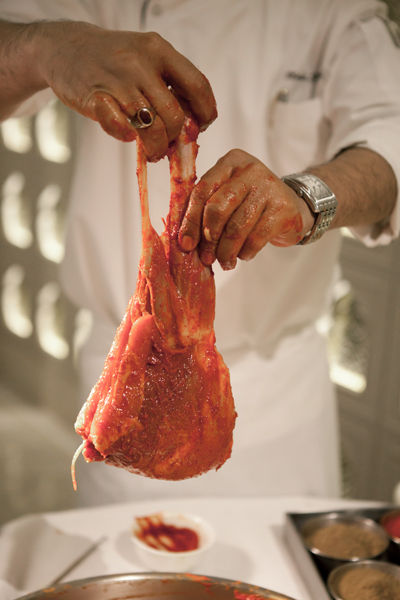
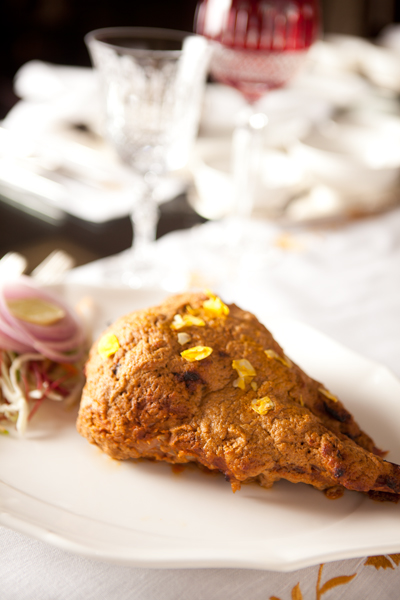
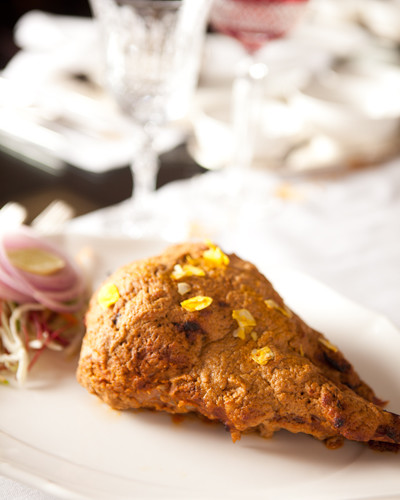
Once the meat is cooked, the juices are collected, mixed with rich powdered dry fruits and coconut, plastered onto the tender cooked meat and finished off in the tandoor oven. It is finally served fresh from the kitchens onto my plate with a smattering of flaky saffron scented almonds.
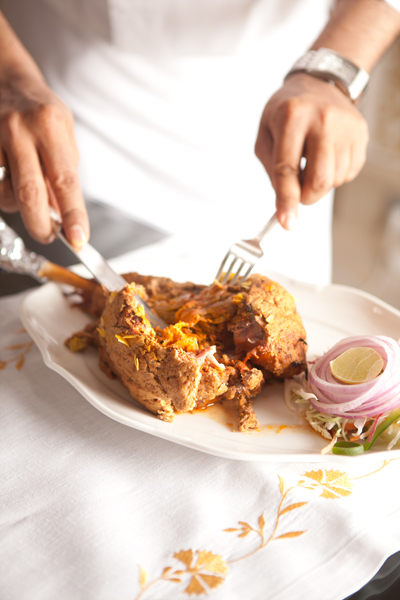
As I cut into this meat, it just falls of the bone and is nothing like the hunk of tough meat it was just a couple of hours ago.
Another form of Dum cooking is called Nehari, traditionally, dishes would be cooked overnight in earthenware pots that are buried in the ground with lit coals sitting on the seals, the dish would cook by the heat generated and trapped in the ground by the coals and the wafting smokiness of the coal would penetrate the earthenware thus enhancing the dish and creating a succulent mélange of flavors while cooking and maturing the dish. This technique is recreated in many dishes on the menu at Dum Pukht.
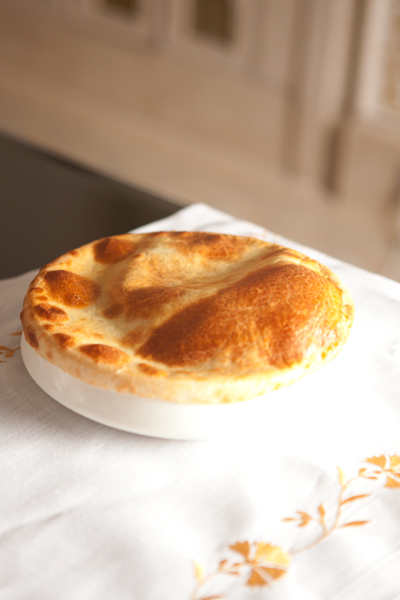
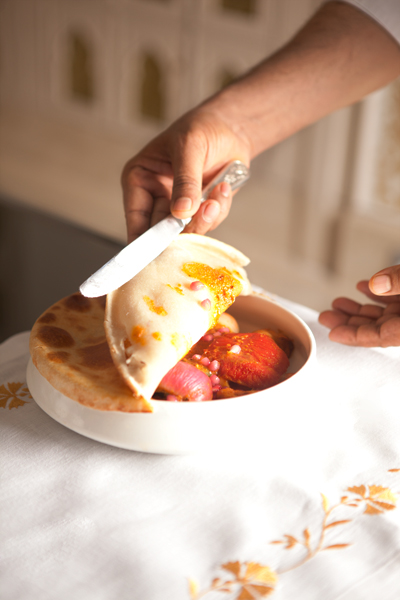
A refined version of Nehari cooking was observed in the next main, called Murgh Khushk Purdah, this dish comprises of succulent pieces of chicken (chunks stripped off whole off the bone) cured in a marinade scented with star anise popped in the Dum with chunks of assorted veggies, onions being a key ingredient and which give it that sweet caramelized flavor and sprinkled with fragrant mace. The dish is sealed with a purdah or a puff pastry cover and cooked in the Dum. The resulting dish is a mind boggling array of tangy, sweet and spiced induced flavors married with the meat.
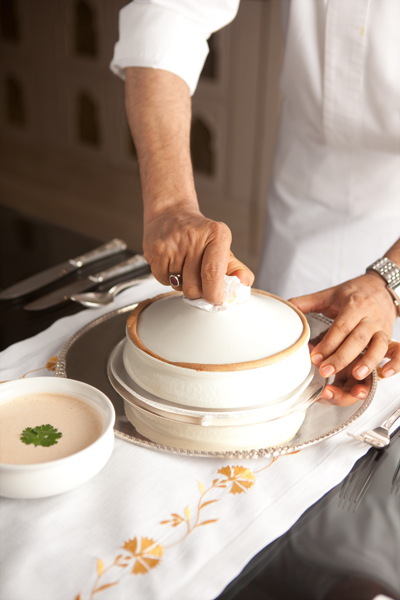
We skipped straight to the Biranj or rice preparations. The course which is cued right before dessert and served with an array of pulse preparations or thick spiced yoghurt. Chef’s favorite dish the Dum Pukht Biryani – a timeless classic was hand layered and cooked in the Dum.
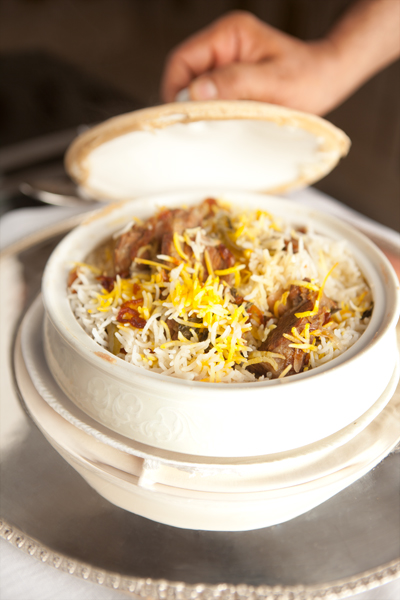
Chef Shareef brought it out true Nawab Serving style with the pot put straight from the Dum onto a small tea-light but with coal so it was still piping hot. As he broke the seal and unveiled the dish, the steam rising was fragrant enough to create sensations on your nose you could ever imagine.
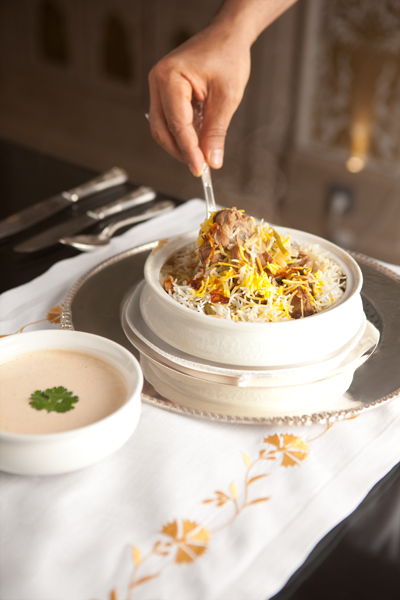
The unmistakable fragrance of ittar and kewra enveloped the khus-khus smothered saffron and white hued rice, the mild flavored lamb resting between soft grains of rice is a perfect combination and fragrant with nutmeg, cardamom and mace.
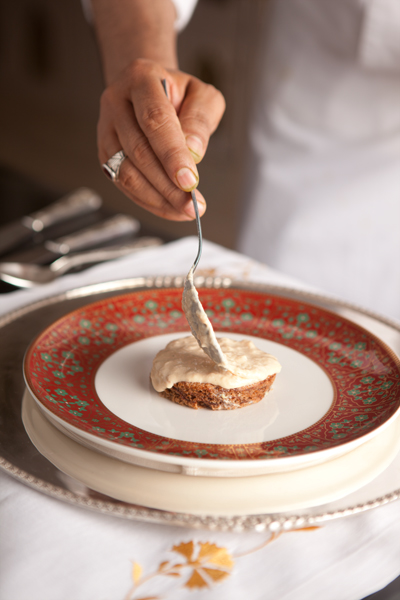
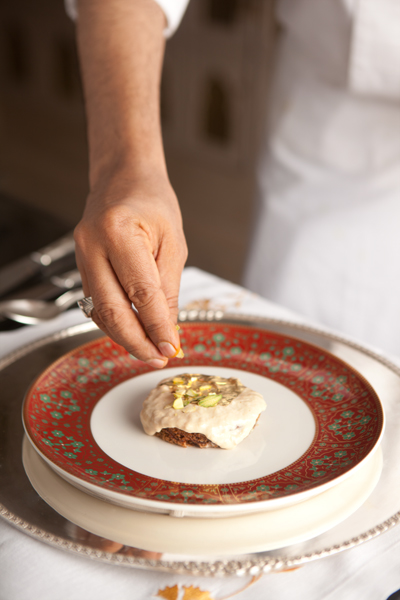
Of course, no Indian meal is complete without sweets and what better preparation than the Royal Shahi Tukda. Chef Shareef assembled this delectable dessert right on the table.
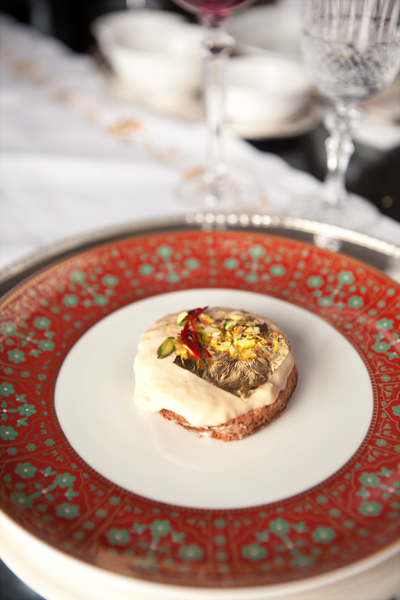
The homemade bread is soaked in a special sweet liquid, plated and spooned over first with reduced sweetened milk Rabri, topped with a gold leaf, pistachios and a generous pinch of saffron. Each bite resonates of richness and finishes off the meal perfectly.
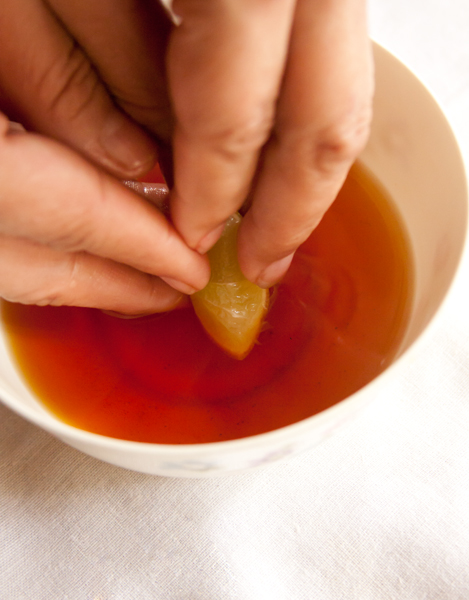
The surprise of the meal was the royal hand wash which we Indians are blessed with. The finger bowl was not your regular hot water with a lemon wedge, but a concoction of lemon scented tea with a wedge of lemon in which your hands are completely devoid of any masala smells or ghee stickiness. A true Nawabi experience and one which is resplendent with royal luxury.
Nonchalant Gourmand was accompanied by team mate – ace photographer Nikita Modi. Nikita is a freelance photographer who has her interest in food photography grounded for such exciting opportunities but also dabbles in exclusive Advertising and Fine Art Photography. She has completed her Masters in photography from Speos,Paris,France. You can see her works at:
Website – www.nikitamodi.com
Blog – http://blog.nikitamodi.com
All copyrights of the photographs are exclusive Nikita Modi Photography©
Nikhil Merchant
Hospitality Writer | Culinary & Bar Consultant | Restaurateur | Brand Evangelist