
x
N
G
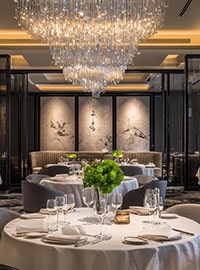
The Gateway Resort, Pushkar bypass Ajmer, Rajasthan
My attachment to Rajasthan comes from several viewpoints in my life, culture and religion. We are kutchi bhatias, while I am the fourth generation to have been brought up in Mumbai and made it home, my ancestors can be traced back to the Rajputs (who came from Rajasthan) and our holy city of Nathadwara which is a place of worship of our God –Shreenathji. I am nowhere close to being blue blooded but I have always been fascinated with historic references to the Royal families of India. A karmic connection of sorts which inspires how I live culturally, religiously and materialistically…
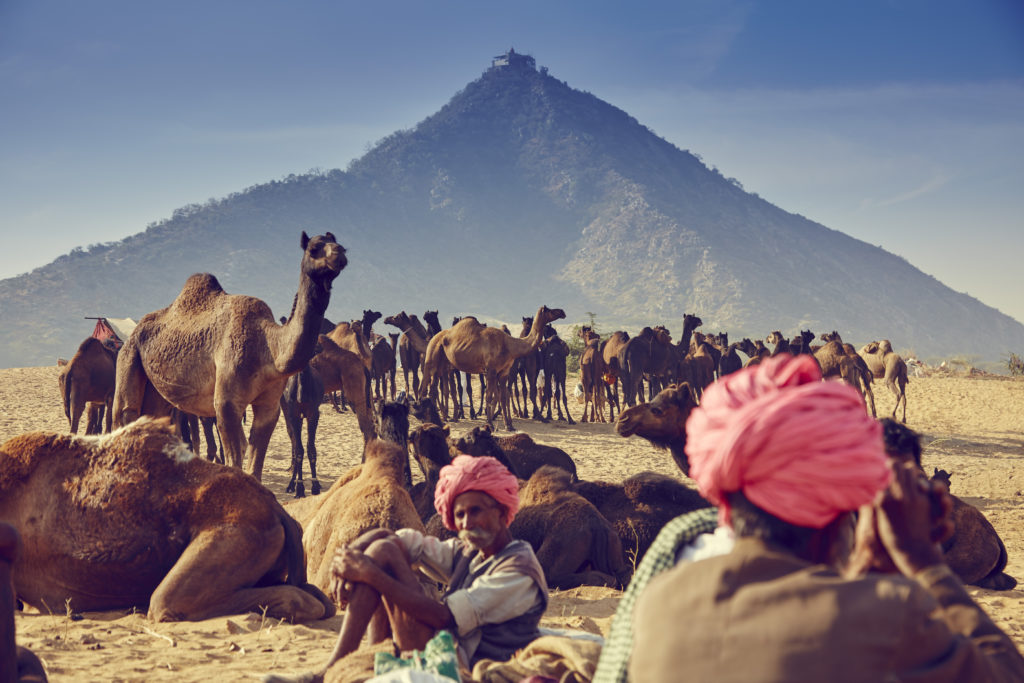
Incidentally, a slew on occurrences kept bringing me back to the State of Rajasthan this year. From the introduction to a heritage liqueur which inspired my royal cocktail post, to an invitation to visit the beautiful property of Taj Gateway in between Pushkar and Ajmer. The holy town of Pushkar was a place I had visited many moons ago, and an impending trip to Shreenathji later in November to celebrate my Mom’s 60th birthday with my immediate family being a part of the expedition. Udaipur (The Royal City of India) has become a stop for all things related and unrelated.
I have a little excerpt of the Taj properties from a previous association
“Taj is synonymous with luxury in India. Endorsed by the rich and famous, the Taj brand boasts of properties all over the country (and abroad too). From Taj Palaces embedded with history and culture in their design, service and food to business hotel offshoots from the same brand such as Vivanta (which is not slowly rechristening itself to a resort feel at some of their locations) and Ginger (the low budget hotel for the budget traveler). One such offshoot stands out amongst the others, much like an underdog, The Gateway Brand. It may be overshadowed amongst the groups giants i.e. the palaces because you will find these in the smaller cities of India and not the metros and you wonder why is it that the Taj Group has identified smaller towns as a possible target for their customers? Is it to heighten the brands presence in every nook and corner of the country (and the world?)? Or is it an urge to spread the name far and wide? Well apart from a nagging feeling that this might all be part of the bigger picture (I mean, pick any brand, they are here not only to survive but to also grow and make their presence felt) it is a simplistic matter of attracting the Urban Nomad. A perchance traveler, an on-the-go business traveler, a budget friendly vacation for a middle class family … all these formulate into a category who are part of the target audience for The Gateway Brand”
A few years after my visit to their Damdama property, it occurred to me that the brand has stayed true to their word and created this niche with their Gateway Brands for the urban nomad. It gives the wanderlust a place to park at and experience the smaller towns of India (with a ton of history) in an inimitable style. They have the people who run the show with passion rather than affiliation, they have food which is driven by this same passion and lets you experience the real deal using local products, produce, lost recipes and inspirations from the area and they bring to you a stay rich in tradition, hospitality and visual appeal in the lap of comfort – all in all an extension of Tajness —the group’s brand and operations philosophy for the future. For more than a century Taj has welcomed guests with a signature warmth, a practice of perfection, a culture of generosity and a clear sense of true Indian hospitality. Tajness seeks its inspiration from the nobility of this Indian heritage and blends it with local cultures to deliver an unparalleled experience of sincere care at its 100 hotels around the world.
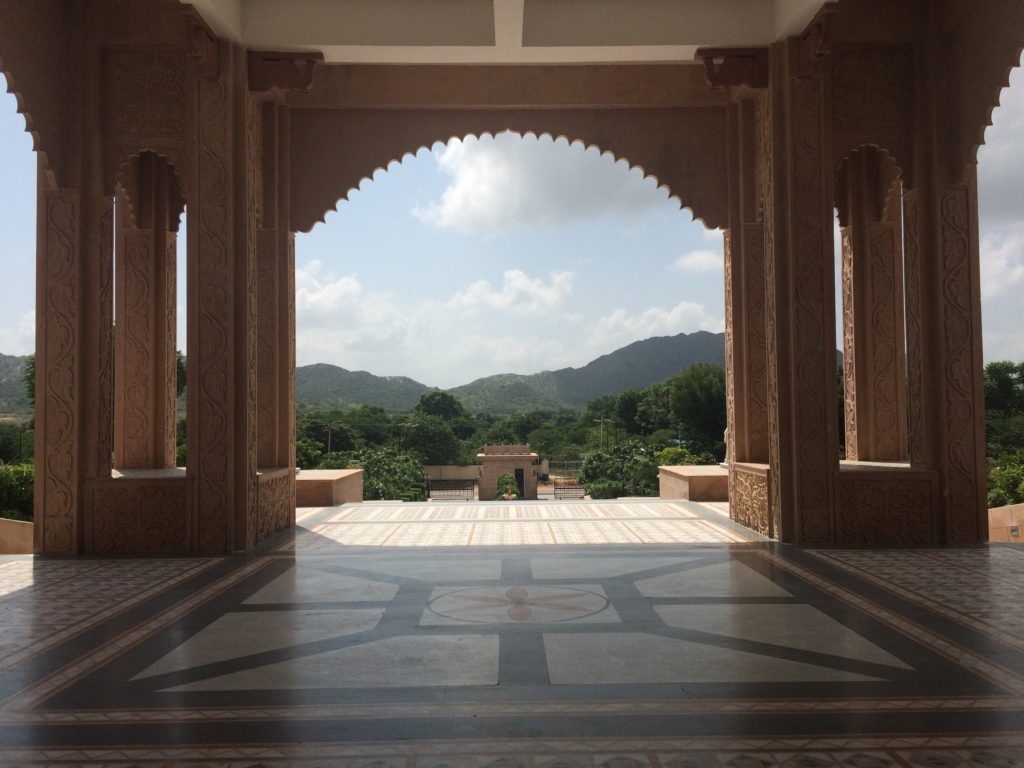
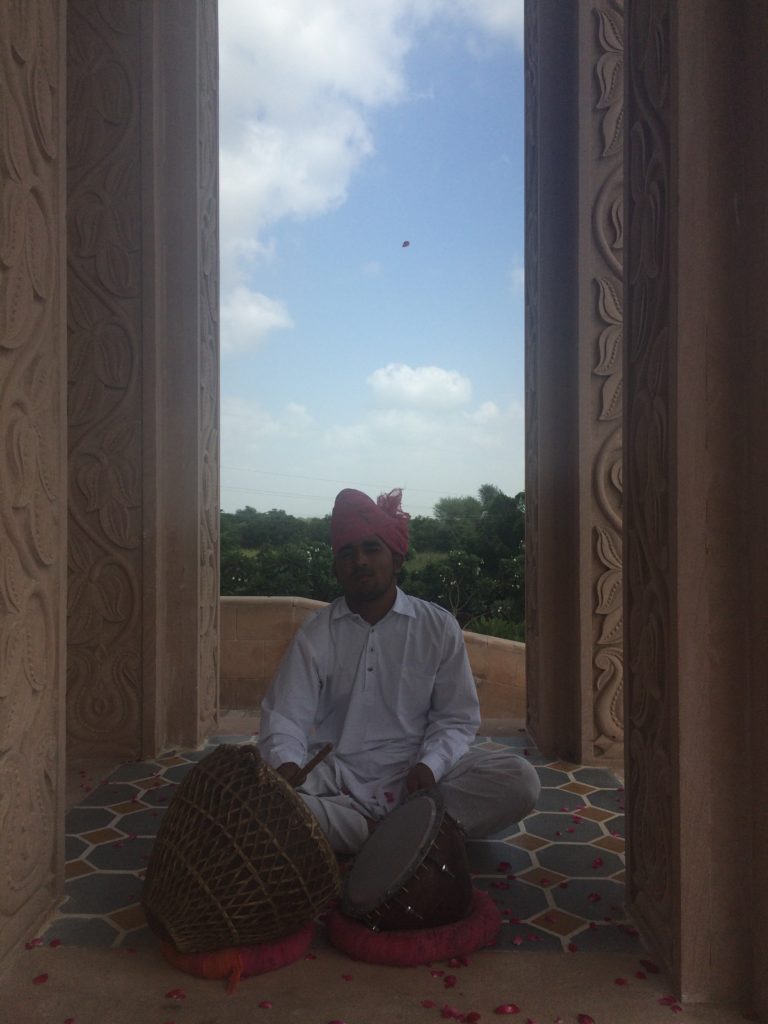
The Tajness experience started right at the beginning of the stay. It provided a taste of Indian tradition mixed with authentic local experiences. The boom of drums replicating the traditional welcome of Royalty at a palaces doorsteps, the rose petals strewn to scent the air with sweetness and the warm welcome by the team, an invitation to shut out the outside world and enter a realms of history.
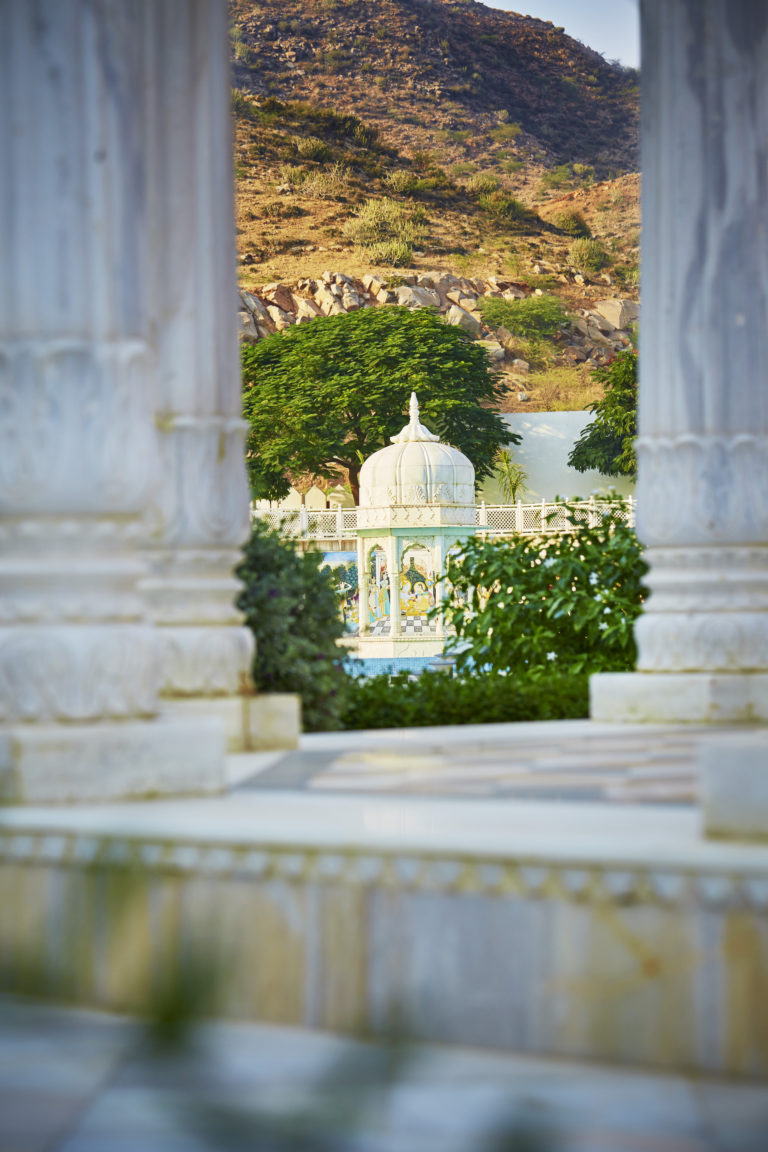
The hotel is taken over from a brand which has built this ‘palace’ and completely refurbished it to mirror the Taj design palate. It is set in the midst of a picturesque green oasis, wrapped 360 degrees with the magnificent Aravalli hills. They have the nuances of Royal splendor, giving you just a hint amongst marble, glass, turrets and chandeliers. A central poolside with the view of the hills where they hold cultural nights, an outskirted area (a mile or two away) where they have started dinner in the wilderness (the prettiest, most sublime experience you could have) and well appointed rooms (they have jhoolas (swings) in the room) with the quintessential Taj service. They also have an in-house spa, a much requested service which seems to be the norm with most properties.
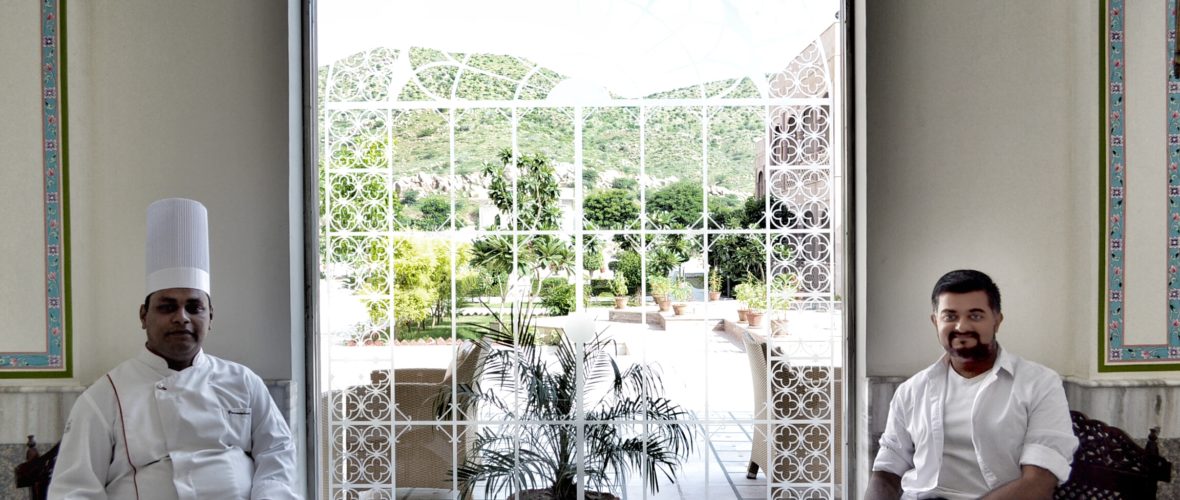
I was introduced to the team and I took up the opportunity of experiencing local food seeding a conversation with the Executive Chef in charge Chef Parmeshwar Sharma and the General Manager Mr. Narendra Singh Hada (who I later found out was so into cooking along with hiking that it surpassed the role he plays as the head of the hotel). What resulted in this little egging was a flurry of excitement within the team to set up a full-fledged outdoor kitchen and whipping up some traditional lost-recipes of the State. We shall come to that later with a fantastic cookout session with Chef Sharma and Nagendra who shared some secrets from their current hometown.
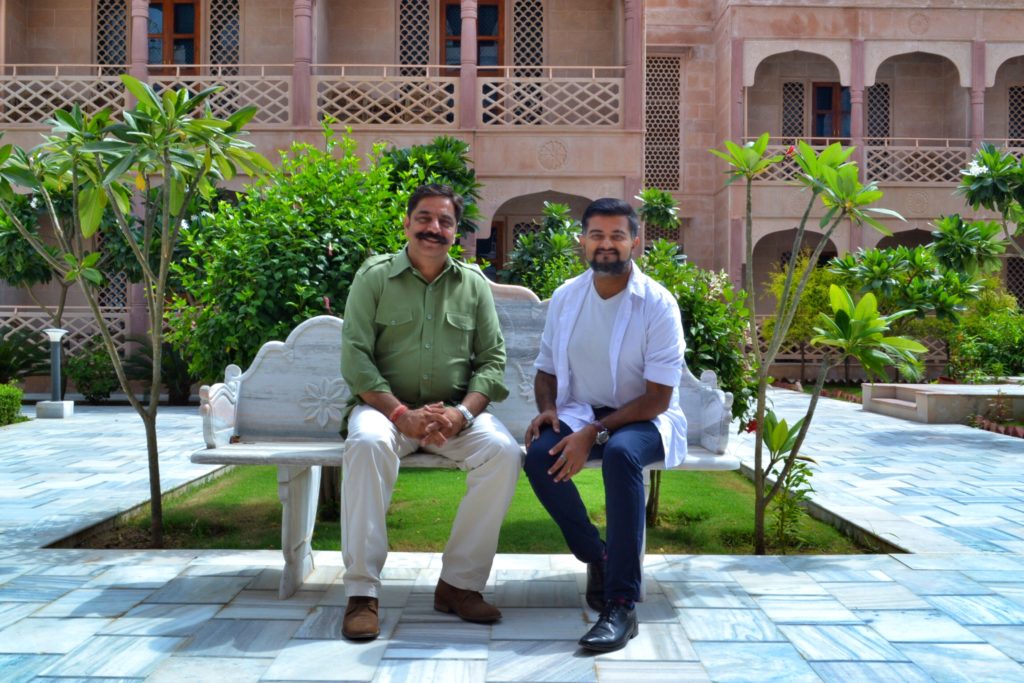
When Nagendra sat me down, he had least expected me to be so intrigued by cooking. If you were to meet me for the first time you too would not have inkling that the art of cooking is indeed ingrained in me. He turned out to be one of the most interesting people at the Hotel apart from being an excellent chef who whips up rustic culinary fare with as much élan as he runs his hotels. We connected instantly over food and my stay turned out to be focused on all (food!) things Rajasthani. Running a team with motivation and gumption comes from more than 25 years’ experience in the business. He has been a part of the Taj family since 1989 where he began his journey at Rambagh Palace, Jaipur as a trainee in the front office after finishing his graduation. Prior to this stint Nagendra was responsible for the four Taj Safari lodges at Kanha, Panna, Bandhavgarh and Pench.
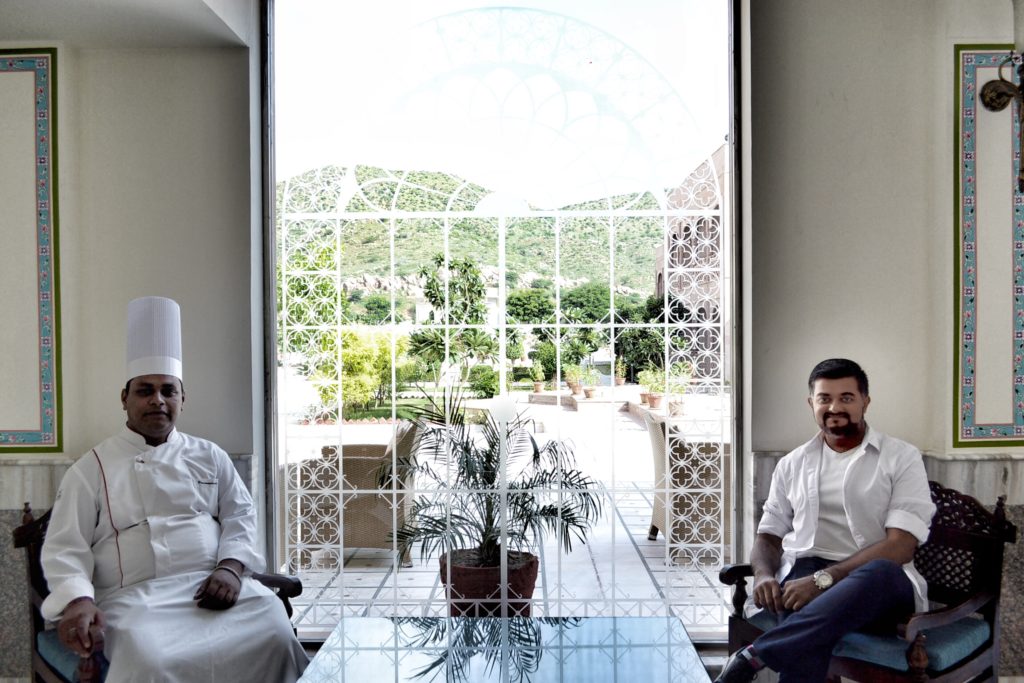
Chef Sharma is the man of the kitchen; he runs it like clockwork and has kept things simple. While the Indian and local delicacies stood out amongst all else (They too have the Active Foods Menu, synonymous with all Gateway properties) he has incorporated some multi cuisine fare on his menus. Aravali their 24×7 restaurant at the hotel offers a reasonably wide variety of dishes but their regional fare game is strong. Together the property is looking at introducing a fine dine ‘regional’ cuisine concept which is yet unnamed. I got a glimpse at the new restaurant (which was being constructed) as I urged them on to show me where they were going to put up these dishes which were introduced (and cooked!) for my stay there.
We got around the cooking expedition on the 2nd day itself. Born into an army family, outdoor adventures always appealed to Nagendra. He is passionate about wildlife and food! His love for the wildlife and adventure carved his career path. Dressed impeccably in hiking ware which include safari suits on formal hiking days (that’s a thing, balancing meetings and a hike up the hills – if he could he probably call his meetings in the middle of a valley), he had the old world charm about him.
That morning we started early and I could see he had set up his team (who stood in attendance) for his instructions. Our first dish to be cooked along with Chef Sharma was Junglee Maas. Now the most common Rajasthani dish with is famed for its heat and meat is the Laal Maas. The latter is represented around the world, is a little complex and boasts of the finer aspects of flavors while dining. The Junglee Maas on the other hand is a recipe which is so simple it can be memorized on first look.
The recipes story goes as such that when people (read: Maharajas) would go hunting (a Royal sport in the early days) they would hunt for pleasure and also spear a few for food. Mountain goats were in abundance and easy prey and made for a delicious meal. Now the hunters would hunt down the goats (along with the innumerable hours spent circling down on birds or tigers) but what does one do with the kill?
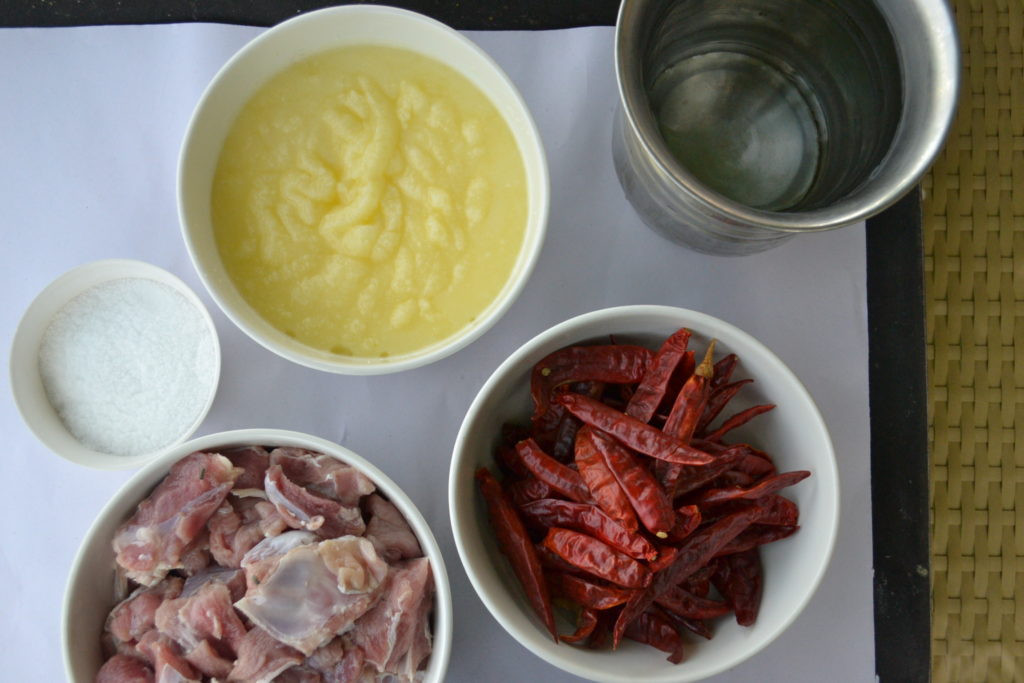
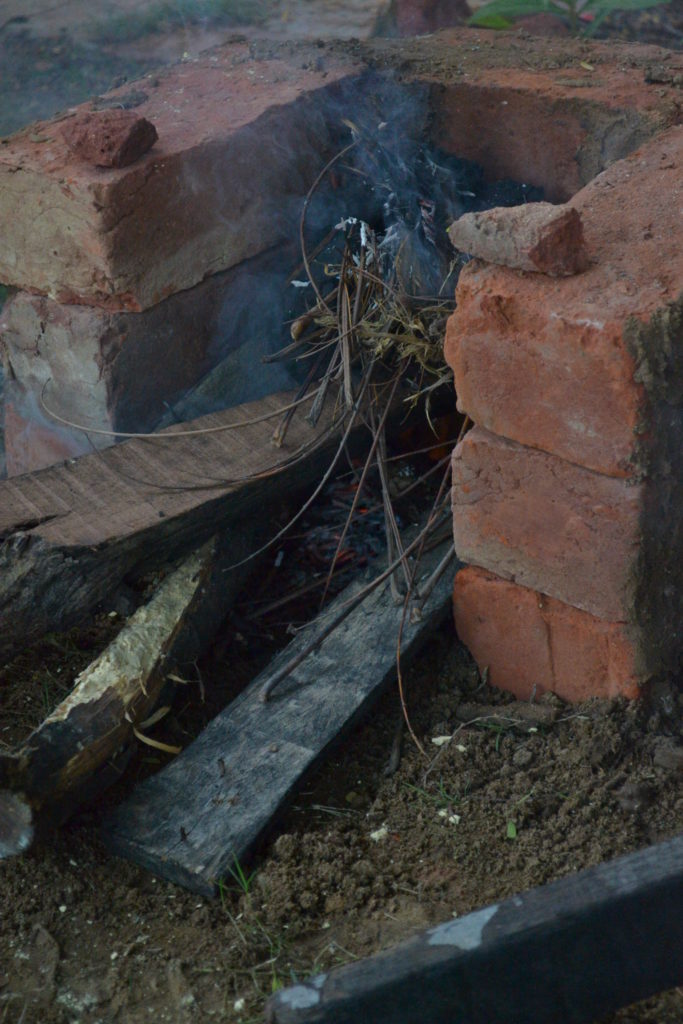
So out came natural forms of cooking which were adapted by tribes / inhabitants of the jungle – the wild people. The inhabitants who lived in little hutments had these within easy reach…
- And open fire
- Ghee (dairy is a big part of the diet given that cattle is widespread)
- Chillies (dried in-house and forming an integral part of their cooking)
- Salt
- Fresh water from a free flowing stream (meandering through the foliage)
Simple as the above requisites were, these were all that was needed to butcher the handsome goats and cook them (free range, eating greens from the forest and well bred as they were wild).
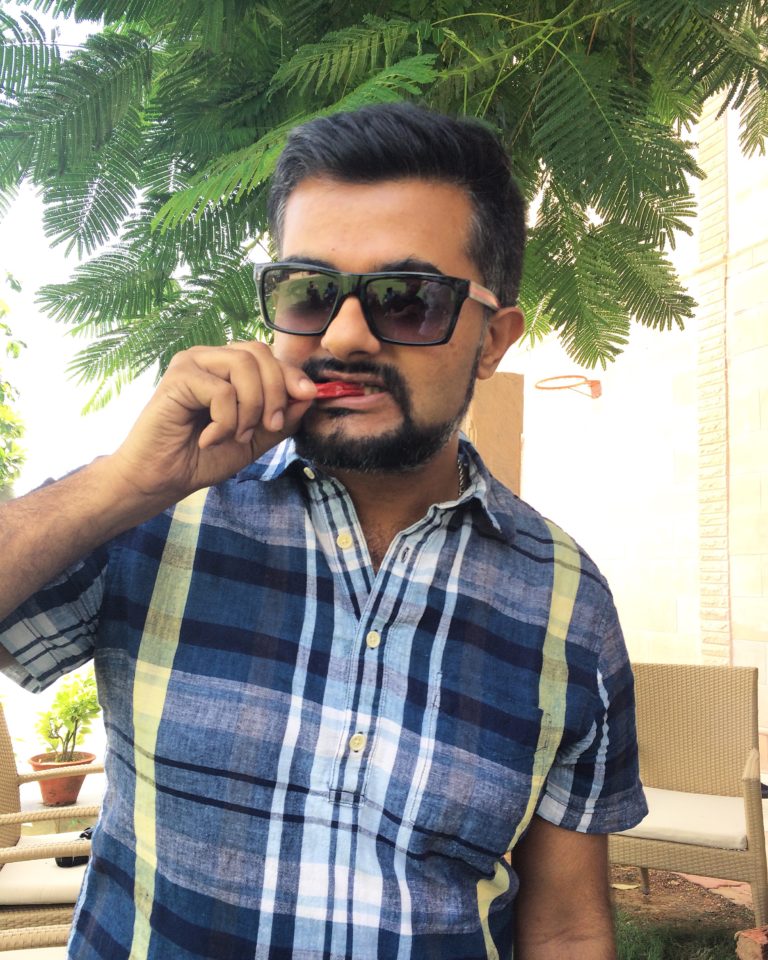
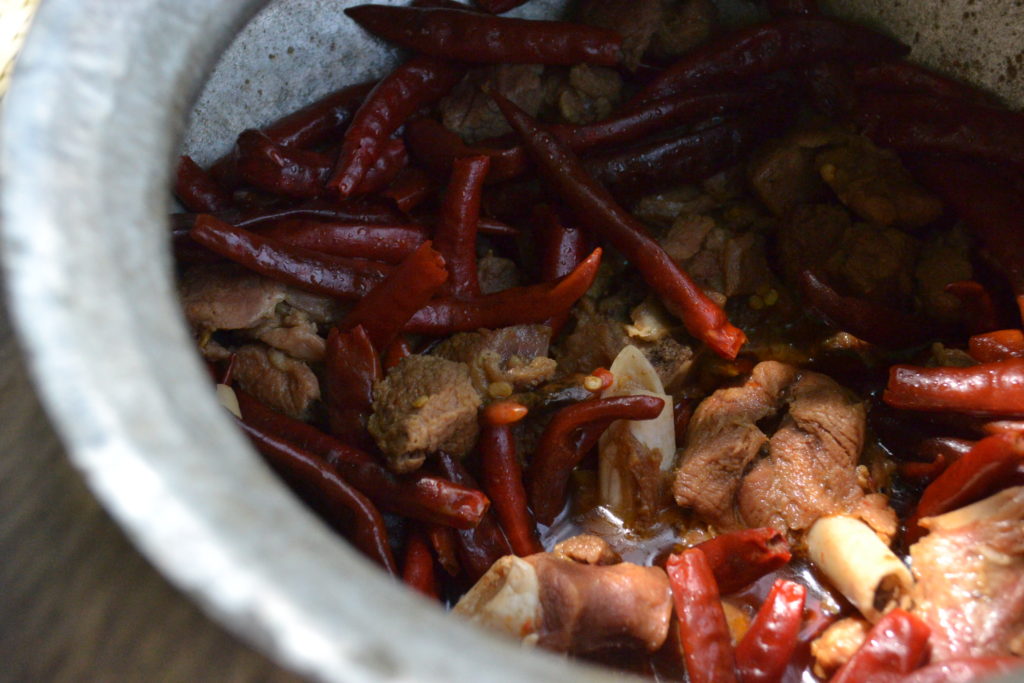
This recipe (with no sight of half naked tribal’s) has been a favourite of the locals since centuries and not found on many menus around exotic restaurants of the world. The key is in (not good) but great meat, equal amounts of fat, spice and seasoning and extremely slow cooking (the highlight which infuses flavor in the dish). Served with raw thickish roti’s (Indian bread), this recipe is raw, inhibited and packed with juiciness you can only dream of. Yes it is heavy and while I have given the original below, there is a variation for home use which will make you feel better about the amount of fat and spice you are adding.
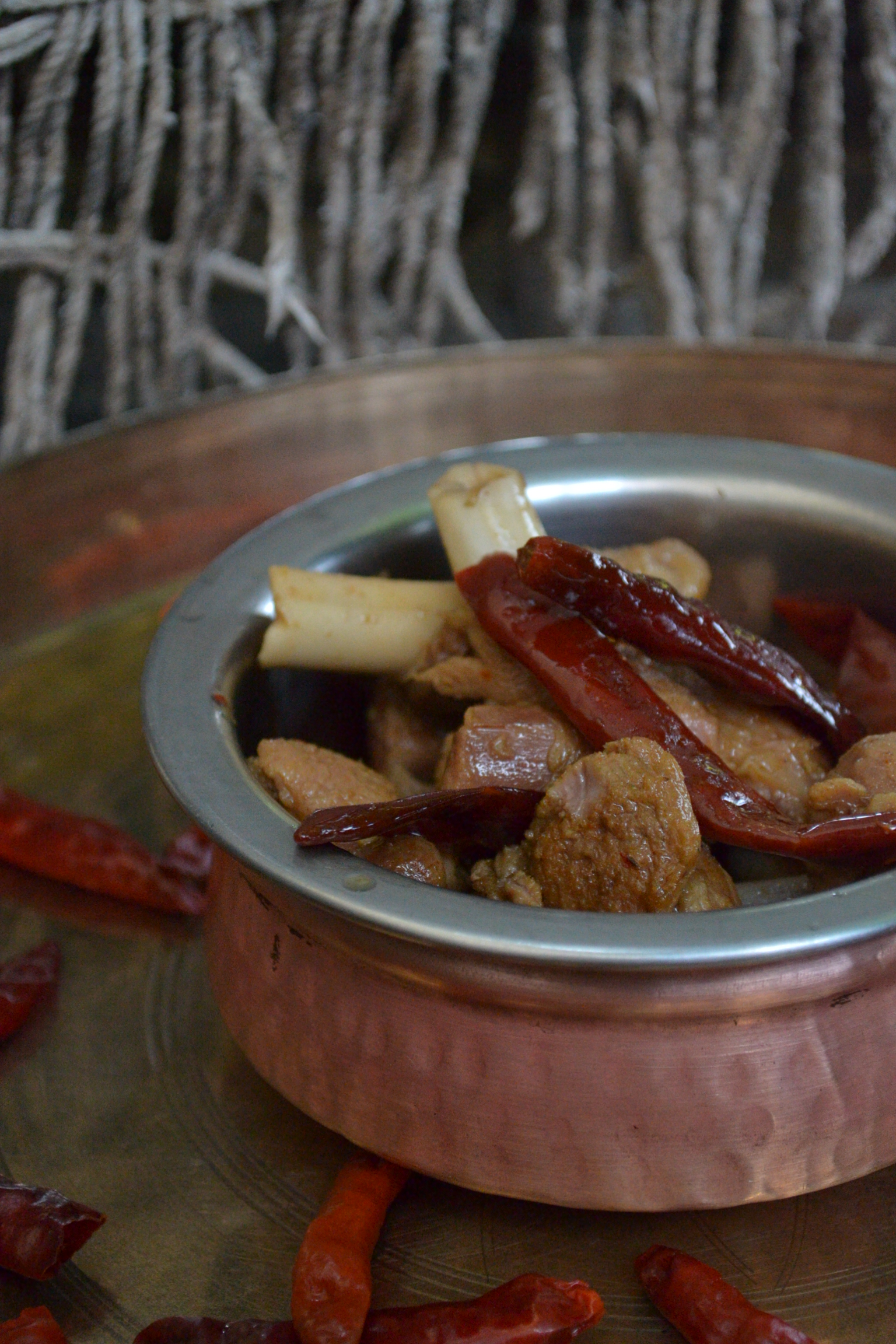
Junglee Maas
Ingredients
- 1 KG Mutton Cubes (Boneless)
- 1 KG Ghee
- 1 KG Whole Red Chillies
- 1 LITER Filtered Water
- SALT to taste
Meathod
- In a heavy bottom pan pour ghee and heat to a smoking point.
- Once smoky, add the mutton and cover and cook for about 15 minutes, stirring frequently
- By now the fat and moisture in the mutton would have infused with the ghee, at this point add the whole red chillies, cover and cook for half hour.
- Add salt to taste along with water and cook for an hour more.
- Serve with hot phulkas/ roti.
The recipe above is as per the local tradition; it is cooked on an open fire in a thick brass vessel. Most people have the means of starting a small fire in a bricked enclosure (pit), try doing it with hardwood and some coals for the smoky element.
There are some pointers as below for your reference in getting the best experience cooking wise as well as flavor palate wise to keep it authentic.
Nonchalant Tips
- If you don’t have access to a thick bottomed brass vessel but do have an open fire, try using a curved cast iron pan in between your regular cooking pot (made of any metal, aluminum or steel). This will ensure even distribution of heat apart from burning up the metal which may not be able to take on higher temperatures of the naked flame. The timings will be the same.
- If you are planning to cook this on your gas stove, use the same steps except keep the flame on a High-Medium throughout. Your cooking times will have to be added by around 30% depending on the flame. Since its slow cooking and there is enough fat in there, worrying about overcooking the meats is negligible, so keep it on the fire as much as you can, right up till serving point. End of the process, heat a small bit of coal and place in an aluminum foil shaped like a cup. Place this in the center of the preparation and with a spoon, spoon some of the surfaced fat (ghee) on to the coal, cover and let it smoke for a bit. Fish out the foil and coal and serve the dish. This is a trick to infuse some smoke into the dish without the need of an open fire.
- While the original has all equal quantums of ingredients, you can reduce the ghee to half (500gms) and the chillies to a quarter (250gms). And yes, don’t be overwhelmed with the amount of chillies they get subdued in the cooking process.
- Chillies used in the recipe were the dried while variety akin to Kashmiri (beautiful ruby red hued and fragrant with a delicious kick)
I have one more recipe to entice you with… wait up for my next post sometime in the near future, its complexity will blow your mind!
This trip was sponsored by the Taj Group of Hotels and our hosts The Gateway Resort, Pushkar bypass Ajmer, Rajasthan were attentive in the brands own inimitable way. Taj’s staff and management are handpicked across their various brands to reflect humbleness & attention to detail. I have lived in various Taj properties over the years and even as a kid. Their hospitality promises tradition and culture synonymous with Indian values, the same is extended without a switch, be it the media or a paying guest and I hope they continue to do so for years to come.

Ng Editor
Hospitality Writer | Culinary & Bar Consultant | Restaurateur | Brand Evangelist