
x
N
G

The Pearl of Flours
Since when did superfoods become a “thing”?
Now that I look back in my childhood, practically half the ingredients I consumed as a kid and was fed religiously were a bunch of superfoods all rolled into everything from gur-bajra (pearl millet) rotlas (Indian bread) to takmaria (similar to chia seeds) in our afternoon drinks to consuming khajur (dates) rubbed with homemade ghee and broken wheat sheera (a sweet dessert dish) amongst innumerable other traditional Indian foods. If I was to tally all those dishes and write them down, they would make for a super book.
Following many years later, we took our grandmothers and mothers for granted. Our meals now include(d) quick fixes from QSR’s and come out of cans and bottles. Our palates crave excess salt and sugar compared to the balance of flavors we were taught as kids. I see children today being so very fussy about food that I wonder when did vegetables go out of style? This trend seems to be spiraling out of nowhere and we are largely dependent on what the food trends dictate and expect. We take the easy way out as “oh, why bother cooking today, let’s just order in” or “I’m craving Pizza” or even worse, the words “Is that gluten free”?
We have been damaging our systems since a while now. On one hand the health brigade has wormed its way into our hearts and mind and on the other we are going into guiltless consumptions. Many a time I have seen people go gung-ho into a health spree, go on these various diets by suddenly stopping every possible ‘bad food’ they can come across not realizing this is a temporary solution. In a matter of time they are back to binge eating rubbish and latching on to trends as and when they pop up.
I have seen the rise of organic foods (its such a big industry and more so a money making racket) to realize that most of our food used to be organic till a decade and a half ago. When I was working on fair trade in India I came across farm produce which never reached our cities, they were all organic – Do you know why? Because the farmers had been tilling the fertile land since centuries and since many forefathers could not afford to buy pesticides or chemicals to sustain their crops. Their yield was small but there were large groups in villages together who could supply an great deal of ingredients which are pure and organic.
I have seen people go gluten free, saying they are gluten intolerant. Now everyone is at some level not tolerant to gluten and its fine if you want to go completely off it (your choice), but I have seen it more as a fad and being ‘in’ rather than those who are actually allergic to gluten and / or have chronic medical conditions such as auto immune disease. Then there are those who go vegan for the fun of it, go paleo to see how they get fit, give up meat and so on and so forth. It’s all so complicated and warped and there is so much information out there (all thanks to the internet and self doctoring), that people want to try ‘everything’.
Whatever happened to simplifying life?
I have never jumped on to a diet plan or been interested to give up something. Yes, I admit I have slowed down my consumption on certain not-so-good foods which include fats, sugar and amped up my health quotient by working out 5 times a week. It may also be due to the fact that I am on two ends of the food industry currently with the journalist part overtaking any possible reduction / giving up I may feel the need to do. But the one thing I learnt over time, to go back to the diet which I have grown up consuming when I eat at home, consciously.
Its science at the end of the day, I think I was vocal about it in my previous posts but I adapt it and made sure I was eating things I did in my formative years. I have seen a marked difference in the way my system works. I’ll give a few case studies, the first and my best decision – I have ‘given up’ bread but not in totality, I do grab the occasional slice or three and smear my jam and cheese to make sandwiches – as kids we would get to do that twice a week in our lunch tiffins. Second, I still eat bhajjias and other insanely good Indian fried stuff, maybe not as much as I used to, but I still indulge. I consume alcohol but not binge on it every consecutive day like I did when I was 18. Most of our meals, through the week would be wholesome, planned, fulfilling and healthy. Yes we had cooks (and still do) who would make atleast one whole meal a day and we would have to eat it come rain or shine.
The one thing I do miss is bread. As a lot of people may know, bread is my weakness. I have consumed whole baguettes and munched on a duo of bagels all in one day. I see hot bread at an Italian restaurant and devour half the basket without a blink of an eye. I sometimes still do it, but the one change I have brought on is not buying bread commercially, especially in India. I have formed an aversion to commercial sliced bread which you will find in most Indian homes at any given time. The option (which is a bane and a boon) of not having access to fresh baked bread with good quality ingredients where I reside has made me bake my own once in a while and my consumption much less frequent.
When I have people over I make my own bread. From the wholesome, traditional Country Milk Bread, to the healthy and rustic Honey Oats Loaf. I make my own scones, herbed white bread and dinner rolls and love the occasional baguette I can whip up.
I revisited this superfood trends many times in the past few months and was reading on good ol’ grains from our lands. I had contributed to a piece for a local weekly on these super-flours which have taken over the world by a storm and was intrigued to use them in different ways than the usual. So while I still enjoy my Bajra Rotla with Bharta I want to make use of these flours in various forms. Let me tell you, I am on an experimenting spree and ready to share it as and when I can.
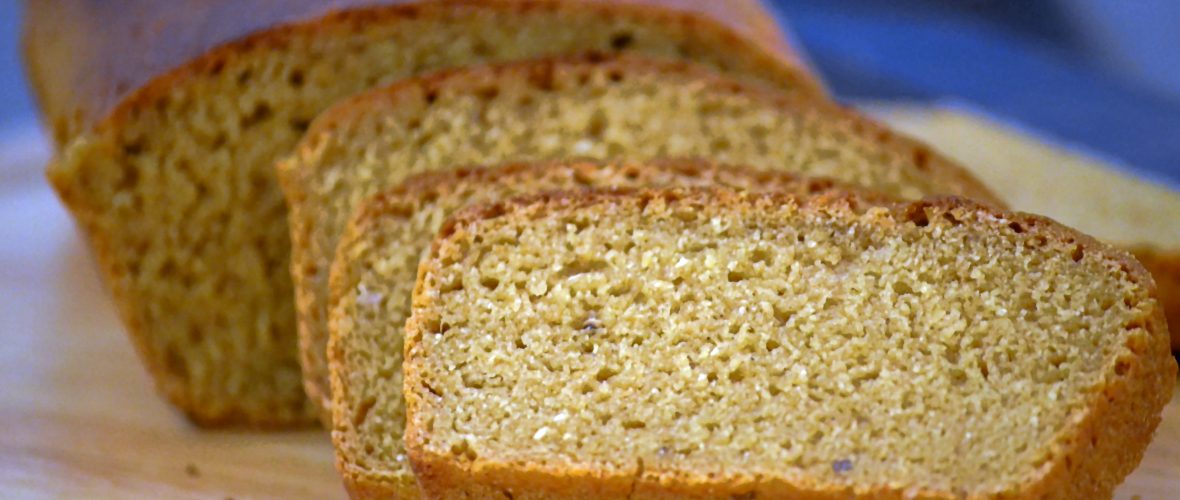
I was thinking what would make me happy using these flours the first thought that popped up was ‘bread’. Thankfully I am not on this GF spree so I read up and came up with this wholewheat cum pearl millet (Bajra) sandwich loaf recipe. The wholewheat adds the gluten element making it a proper bread and not some tasteless piece of raw, dry and non-palatable ‘health’ bread. All these elements combined in the recipe below actually made a very delicious loaf of bread but with this amazing boost of nutrients from our super-flour called Pearl Millet Flour or Bajra. Trust me, make it once and you will not go back to commercial bread. No harm in turning this out when you have guests over or are throwing together a delicious Italian dinner or a fancy egg-based brunch.
Pearl Millet (Bajra) has been around for centuries in Indian land, known to have been brought in from Africa. Its an ancient grain which boasts of essential nutrients such as methionine (an amino acid), B complex vitamins (niacin, thiamin, and riboflavin), folic acid, lecithin, potassium, magnesium, manganese and zinc. Niacin reduces cholesterol while magnesium is essential for maintaining good heart health, as it lowers blood pressure and reduces the risk of heart attacks. It’s rich in phosphorous and is a high-energy, GF food with an excellent source of protein and fiber. No wonder its called a super-food and we’ve been consuming this as Indians all along.
Having said what I did, there is a downside to eating certain flours like this – as they say too much of a good thing… too much consumption of millet can raise the risk of goiter and thyroid. We tend to take things too seriously and land up eating only ‘super foods’ and treating them as substitutes or replacements for other nutrient dense foods which have formed a part of our diet. Enjoy these flours and superfoods but don’t forget to add the normal ones to balance everything out. Meanwhile, enjoy this loaf to your hearts content.
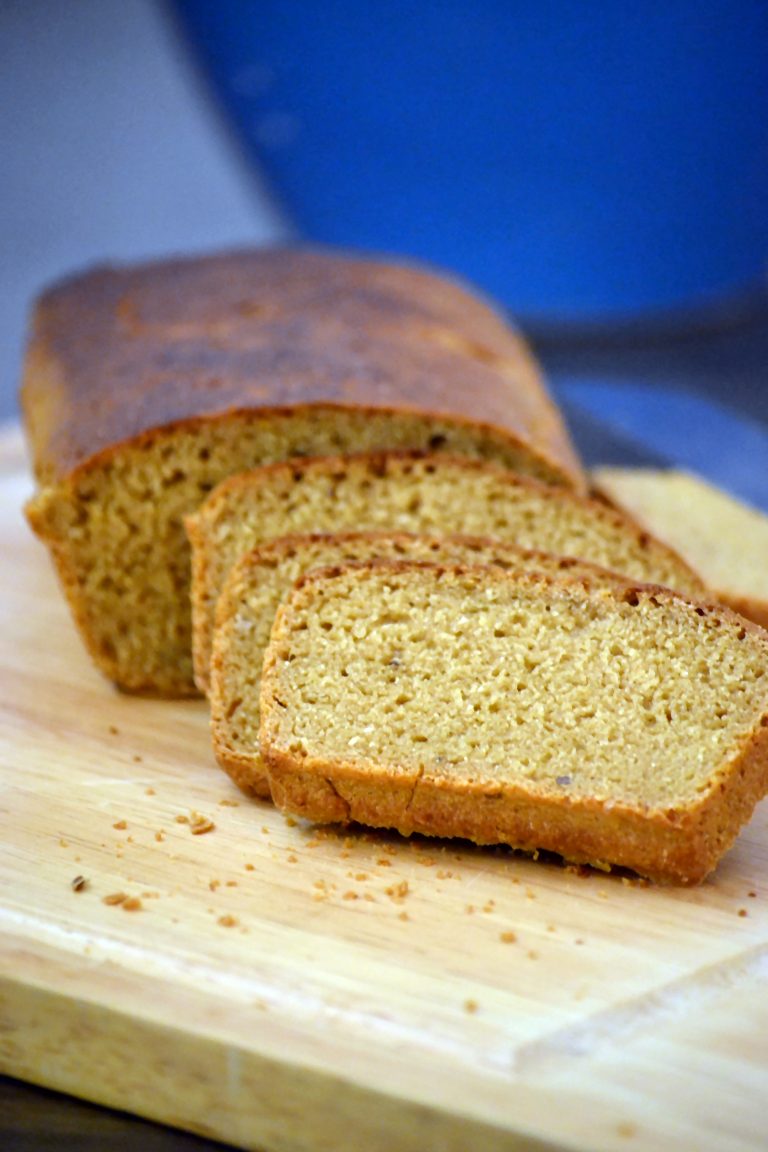
Pearl Millet (Bajra) Sandwich Loaf
Ingredients
- 1 cup Pearl Millet Flour (Bajra)
- 1 cup Whole Wheat Flour
- 1 Tsp + 1 Tbsp Brown Sugar
- 2 Tbsp Butter + More for brushing
- 1/4 cup Milk
- 1/2 cup + 1 Tbsp + 1 Tbsp Water (warm)
- 1 Packet Instant Yeast (7gms)*
- 2 Tsp Salt
- 2 Tsp Dill Seeds (Shuva)**
Method
- Preheat oven to 190 C and place a rack in the middle.
- Start by activating the yeast in a small bowl with 1 tsp of brown sugar and 1 tbsp of warm water. Squish the yeast and make sure it dissolves into a paste when added with these two ingredients. Set aside for 10 minutes. You will see it rise up to a puffy foam (if this does not happen, restart with another yeast packet or another yeast altogether).
- Prep the sugar-milk solution next but heating 1 tbsp of brown sugar in a heavy bottomed pan with 1 tbsp of warm water, let it turn a deep amber / brown and start smoking (stir continuously). Remove from fire and stir in the butter, whisking well. Add 1/4 cup cold milk and whisk well. It will turn in to a beautiful cafe au lait hue and you can put it back on the low heat to slightly warm. Set aside (Warm)
- Place the flours, dill seeds (Bajra is a very earthy, unflavored flour, it needs a subtle flavor boost to keep things exciting, I found dill seeds to go perfectly with this bread as they are sharp, spice riddled and aromatic) and salt. Make a well in the center and add the activated yeast along with the sugar-milk solution. Start binding, adding little water at a time from the 1/2 cup of warm water you have kept ready.
- Pearl Millet (Bajra) absorbs water quite well due to its gluten free properties and I used up half a cup of water and a sprinkle or two more. The idea is to get the consistency of a pliable dough, slightly softer than your roti / tortilla dough. Cover with shrink wrap and set aside in a warm humid place (I pop it in a cold oven with the light on / switched-off microwave to proof) to rise for about 1 hour.
- After it has had its first rise, peel open the shrink wrap. Knock back the dough with your fists and work some muscle in to bind it further.
- Now is the time for shaping and second rising. You will need an oven proof silicon / aluminum loaf pan. Shape the kneaded dough into a long log (the length of your loaf pan), place in the loaf pan and press down lightly at the edges to seal, this way you have a nice bulge in the center. Cover with shrink wrap once again for another hour of the second proof (rise).
- Your oven must be preheated by now, start by unwrapping the shrinkwrap, brushing the now risen dough with warm water (this allows the pores on the surface to be sealed with the water, the water will turn into steam and fuse with the dough to result in a soft, well textured loaf as the end result). Pop in for about 30 minutes or till you see the top of the loaf turning a deeper shade of greyish-brown.
- The best way to know if the bread is done is to give it a sharp tap in the center with your knuckles. It will sound hollow. This way you know its done through and through. Remove from the oven, quickly brush the top of the loaf with soft butter (this turns the top nice and shiny and will also prevent any moisture from escaping) and leave to cool for 5-8 minutes.
- Turn on to a wire rack to cool, you do not want to leave the bread in the pan for too long should it start sweating from the bottom, resulting in a soggy base.
- Be ready to serve it warm, right off the oven or the next day you can give it a quick refresh in the oven or slice it up and toast it for your sandwich.
Nonchalant Note
* For yeast, I have used several imported brands from Fleischmann to some German ones which are found in some specialty stores. I stay away from Indian brands as do not like the flavor and is not strong enough
** Feel free to experiment with other spices and seeds to spruce up your loaf. I make it quite often with flaxseeds, pumpkin seeds, sometimes even a mix of these two and poppy on the surface before baking. I have even added a few tbsp of quick cooking oats on the surface to give it a nice bumpy and crunchy surface.
If at first you find the bread to be dry, brittle or too dense, try adjusting the yeast (make it about 8-9 gms) and moisture content (warm water) to make an even more pliable dough and leave it for a longer time to prove during both rises. You will eventually learn to bake soft and moist loaves.

Ng Editor
Hospitality Writer | Culinary & Bar Consultant | Restaurateur | Brand Evangelist