
x
N
G
Surf’n Through
Cooking for me is a boon and a bane. For me to cook there is a a simple rule to follow and that is inspiration (apart from hunger, survival etc.). I get inspired from something as obscure as the color of a flower I see while walking through a street or one of the many social media accounts I follow to keep abreast of the happenings in the food world to my favorite activity – browsing the aisles of a fully loaded supermarket or the vegetable vendor and picking up fruits and veggies. I leave the combination with the ingredients I have in my pantry, when I don my apron.
The downside is I get bored easily. Not bored to cook (that is my getaway), but bored to decide what to eat. It’s almost ironic that one has the skills to possible make anything one likes under this planet with the right frame of mind, ingredients, urge and condition and yet be flummoxed when it comes to deciding what to cook. Having cooked my way through life it spoils you to a point when everything needs to be an exciting ‘process’. It is a drug, I admit. Creating magic and see various techniques applied to the same ingredients bringing you different results. What lands up happening is that I need to see things happen to the very same ingredients, differently, every time I am at it.
It is easier when I cook for the variety of people in my life, or throwing dinner parties or taking dishes for potluck, because there is a theme, an expectation, a desire, a request … makes my work a lot simpler! it is possibly the same when I am in work mode, whether developing menus or working on a new recipe mandate for a client and even writing for my various publications. More so because there is direction, a need to complete and the return to basics to build and complete the task in hand. But when I am cooking for myself, is when my mind starts churning up an inexplicable hunger to out do myself.
For me who cooks a variety of stuff every single day, or is surrounded by food the moment I am awake, it becomes more and more engaging and challenging when I step into the kitchen. While I believe I have experimented with every process possible (atleast the ones I have studied and been privy too) there is still so much out there to learn and replicate.
I take this as an evolving process. It is me surfing through my kitchen life and each wave of cooking being a different one. It brings excitement, a sense of adventure and the satisfaction of having smoothly sailed through without falling off. I have my moments of frustration and failures but that just keeps me wanting to make more and more.
my recent affection for seafood has borne many recipes which are personal to me. I love poaching seafood or stir frying shell fish. My most favorite way is ‘baking’ seafood now that I have mastered the art of ‘timing’. While I am mildly allergic to shell fish (not to the point of breaking out in hives or suffocating) where the fish I have handled gives me an intense itch, I am just happy with the fact that I am not full fledged allergic.
Seafood is the easiest to cook. If you are doing it from scratch then the initial cleaning and prepping can be tiresome (I once deveined and shelled 15 lbs of shrimp because the vendor brought in the wrong kind on the day I had a popup) but the cooking process makes up for the extended prep time. These days my experiments have gone above and beyond the smaller fish in the pond and I am cracking up shells to devise new and exciting recipes – including my latest obsession ‘Lobster’.
I have made a whole lobster couple of times in a professional kitchen and recorded the process. There was the time I assisted in it being made at the Singapore Airlines flight kitchen for their business class menu. It was made by Matt Moran – it was blanched, meat removed completely, cooked in a delicious sauce and served up in the shell. The second time was at the Trident and it was clean, split, meat-in and gratinated followed by baking and broiling technique. The real flavor is in the shell and while this was a great way of cooking a whole lobster by not prying the meat out the real beauty is in another technique called ‘piggybacking’.
What involves piggybacking a lobster is splitting the shell and pulling the meat upwards to sit it on the back of the shell without disjointing it. It is a much revered technique for lobster tails as it is considered the most flavorful part. In my opinion piggybacking works its charm as the meat is not fully removed yet you get most of the surface area to coat and season with. It is also easier to eat and looks delightful as a main. The beauty is the diner gets to eat every single morsel of the tender sweet meat and does not have to worry about digging in the shell, trying to pry out the cooked / stuck bits.
The best way to season / serve / coat this dish is the traditional way, i.e. Clarified butter. I have a twist of my own version of the seasoning butter and I am sure you will love it.
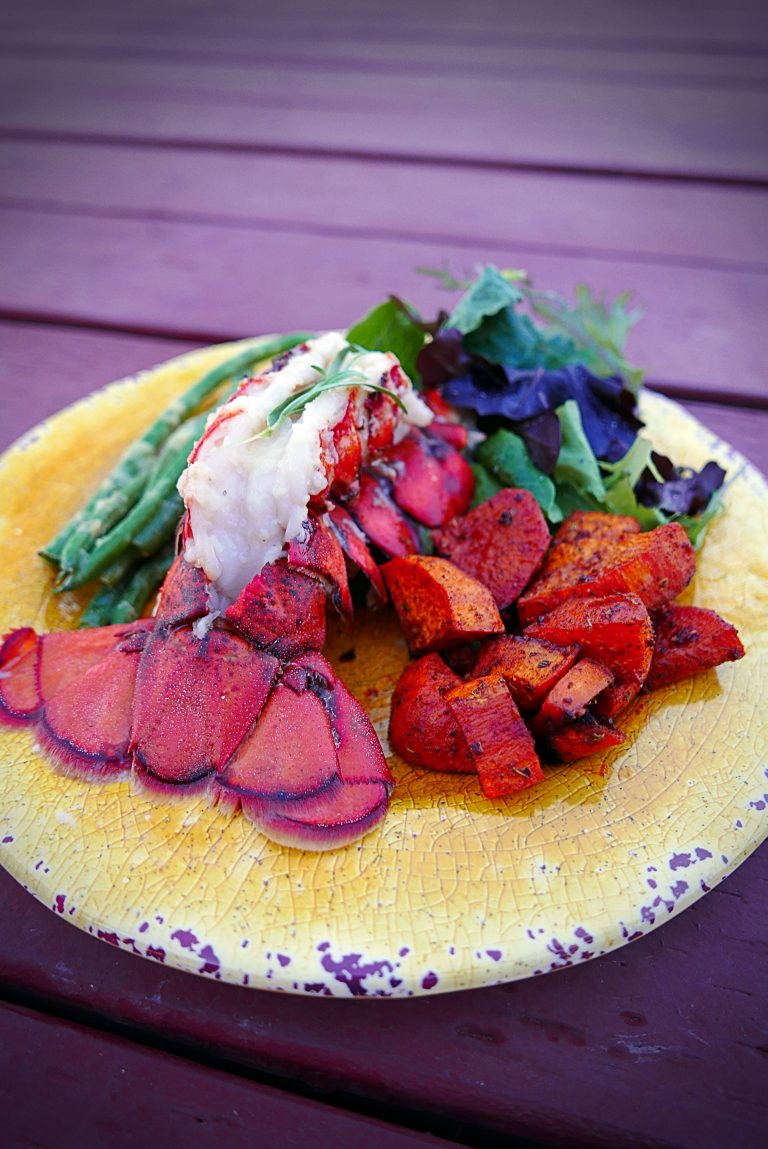
Baked Lobster with Garlic-Tarragon Clarified Butter
Ingredients
- 3 – 6oz Lobster Tails
- 1/3 cup Salted Butter
- 12 Fresh Tarragon Leaves
- 2 cloves Garlic
- A pinch of Salt and Pepper
Side: Roasted Sweet Yams
- 1 Large Yam (peeled and cubed into 1”)
- 1 tsp Cumin
- 1 tsp Smoked Paprika (or substitute for red chili powder)
- 2 Tbsp Olive Oil
- Salt & Pepper to taste
Side: French Dressed Steamed Beans
- 300 gms Haricot / French Beans
- 1 Tbsp Extra Virgin Olive Oil
- 1 Tbsp Lemon Juice
- 2 Tsp Dijon Mustard
- 1 Tsp Honey
- Salt & Pepper to taste
Method
- For Lobster Prep
- Prepping the lobster can be tricky if doing it or the first time, but the key is to a good sharp pair of kitchen shears. I have taken a video for easy reference and tweaked the conventional way of preparing a lobster. View the video and read up on the instructions below.
- If you see the video it starts with snipping off the little flippers and cracking the under-shell (or shall we call them ribs) from both ends. Most chefs would not remove the under-shell as it holds the shell in place while you pull the meat upwards giving it a nice ‘seat’ to sit on. But I have removed these as I find it easier to pry the meat upwards and not have any bits stuck to it while prepping. It also flattens the shell a bit but that is a process you can live with especially since you are dealing with pure meat and no flippers or shells coming the way of your eating experience.
- Once the under-shell is removed, turn it over and split the shell into half with the shears, right own in the middle leaving 1” from the tail end intact (you do not want to cut it all the way through. You may also be cutting some of the meat while doing this (a mm or two maybe) and that is indeed perfect since you will have a bit of a butterflied surface allowing the seasoning to go right in and cook the lobster evenly.
- Pry the shell open from the center and loosen the meat with your fingers on the edges, this should come off easy even though it feels delicate (it wont come apart), pull upwards gently (you can even push from the bottom now that the under-shell is removed). Keep pulling right till the end and place it gently ‘piggyback’ on the shell. The tail part which is not cut will hold the meat in place and you are now set to cook it.
- Heat the oven to 400F and have a baking dish ready.
- In a small sauce pot, melt the butter without stirring it while placing 2 cloves of garlic cut into half. Do not stir as you let the butter simmer, foam and finally separate into milk solids which will settle at the bottom.
- Pour out the lightly garlic flavored clarified butter while discarding the bottom leftovers. Add salt, pepper and finely chopped tarragon leaves (retaining a few leaves for topping)
- Brush the lobster meat all over (including the bottom) with some of the clarified butter, sprinkle a few tarragon leaves on top and place in the oven.
- Bake for 8 minutes or till you see the translucent meat turn white. (it will continue to cook as you remove to plate so do not worry. The magic number is 1.5 mins for every ounce of lobster used, nothing more – nothing less.
- Once removed, brush more clarified butter to moisten it and be ready to plate it up.
For Roasted Sweet Yams
- Mix all the ingredients together and pop in 400F oven for 30 minutes or until browned on the edges. You can substitute any tater or yam for this side.
For French Dressed Steam Beans
- Steam the beans and remove (it should take not more than 5 minutes)
- Toss the rest of the ingredients in a bowl and whisk well. Pour over steamed beans, stir and serve
How to Serve:
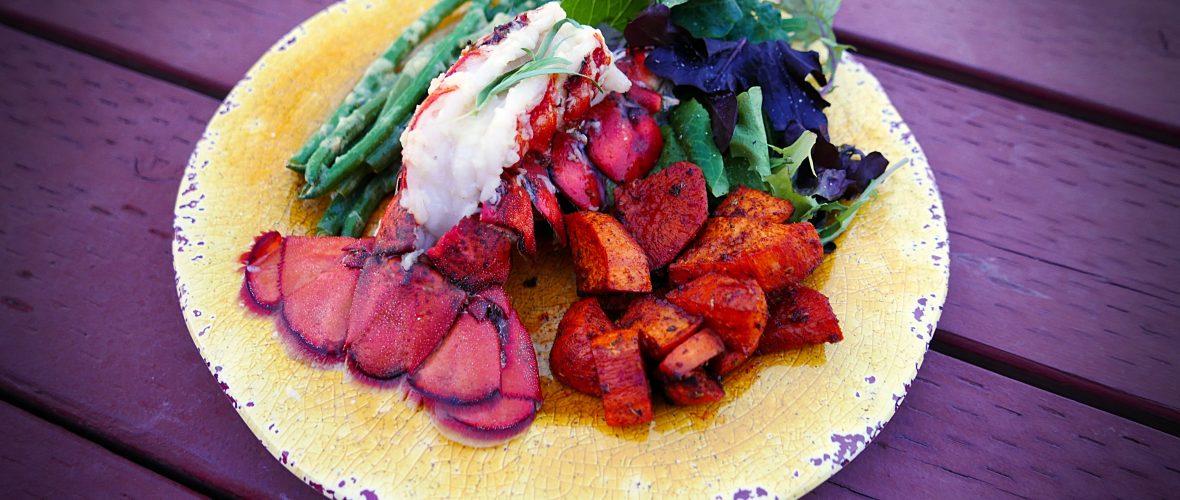
Place the lobster in the center of your dinner plate, place beans on one side and the yams on the other. Put some salad greens together in a bowl seasoned with either lemon-pepper-salt or balsamic-orange juice-tarragon. Spoon on any empty part of the plate. Serve this as a perfectly delicious meal with a crisp white wine.
I think my next experiment is probably going to be crab. till next time…
Nonchalant Trivia:
At one point in history – Lobster was considered low-level food. Food for the poor. It was easily available, not much in vogue and even served up to inmates in cells (internationally) everyday to a point that they were so fed up it became a rule to be given only 3 times a week.

Ng Editor
Hospitality Writer | Culinary & Bar Consultant | Restaurateur | Brand Evangelist